
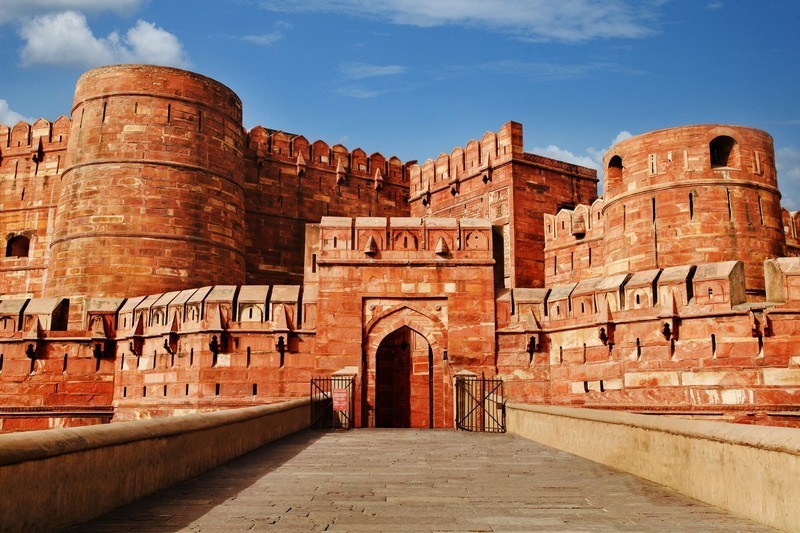
Golconda, situated on the eastern expanse of the Deccan plateau, functioned as a critical frontier province (Taraf) under the unified Bahmani Sultanate (1347–1527 CE). The region was initially consolidated by the Bahmanis after displacing the indigenous Kakatiya dynasty of Warangal. In 1496 CE, Sultan Quli Qutb-ul-Mulk, a Turkmen noble from Hamadan (Persia) belonging to the Afaqi faction, was appointed the governor of Telangana. As central Bahmani authority collapsed in Bidar, Sultan Quli steadily consolidated fiscal and military power. In 1518 CE, he asserted de facto independence, establishing the Qutb Shahi Dynasty and converting the mud-fortified outpost of Golconda into a sovereign capital.
Geopolitical Matrix and Territorial Boundaries
The Qutb Shahi Kingdom of Golconda occupied the eastern Deccan, covering modern Telangana, coastal Andhra Pradesh, and parts of adjoining Karnataka and Odisha. It was bordered by the Bidar and Bijapur Sultanates to the west, the Nizam Shahi Kingdom of Ahmadnagar to the northwest, and the Gajapati Kingdom of Odisha to the northeast. At its territorial peak under the sixth monarch, Muhammad Quli Qutb Shah, the sultanate pushed its borders south past the Krishna River to Machilipatnam on the Bay of Bengal, securing critical access to global maritime trade routes.
Chronology of the Qutb Shahi Monarchy
- 1518–1543 CE: Sultan Quli Qutb-ul-Mulk establishes the independent state, fortifies Golconda in stone, and defends the eastern frontiers against the Gajapatis.
- 1543–1550 CE: Jamsheed Quli Qutb Shah ascends the throne after a palace coup; a period marked by internal factionalism and brief civil wars.
- 1550–1580 CE: Ibrahim Quli Qutb Shah unifies the state, expands patronages to both Telugu and Persian cultures, and joins the anti-Vijayanagara league.
- 1580–1611 CE: Muhammad Quli Qutb Shah founds the new grid-planned capital city of Hyderabad in 1591 CE and builds the Charminar.
- 1611–1625 CE: Sultan Muhammad Qutb Shah consolidates internal administration, commissions the Mecca Masjid, and compiles extensive royal libraries.
- 1625–1672 CE: Abdullah Qutb Shah signs the Inqiyad-Nama (Deed of Submission) with Mughal Emperor Shah Jahan in 1636 CE, turning Golconda into a tributary state.
- 1672–1687 CE: Abul Hasan Qutb Shah (Tana Shah) rules as the final sovereign; appoints Brahmin ministers Madanna and Akkanna; fort falls to Aurangzeb in 1687 CE.
Geopolitical Conflicts, Alliances, and the Battle of Talikota
The Struggle over Telangana and Coastal Deltas
The external policies of Golconda were driven by a structural need to control the highly fertile Krishna-Godavari delta and the strategic commercial ports along the Coromandel Coast. This objective led to continuous military friction with the Gajapatis of Odisha and the Rayas of Vijayanagara. Golconda also engaged in shifting alignments with western neighbors like Bijapur and Bidar to secure the diamondiferous tracts of the lower Krishna valley.
The League of the Sultanates (1565 CE)
During the mid-16th century, the Vijayanagara regent Aliya Rama Raya exploited the rivalries between the Deccan Sultanates to annex border territories. Recognizing the collective threat, Ibrahim Quli Qutb Shah played a major diplomatic role in forging a grand coalition with Ahmadnagar, Bijapur, and Bidar. At the Battle of Talikota (Battle of Rakshasi-Tangadi) on January 23, 1565 CE, Golconda’s cavalry and archers formed the left flank of the allied force. The total defeat of the Vijayanagara army allowed Golconda to permanently annex Kondavidu, Rajahmundry, and nearby coastal trade networks.
The Diamond Economy and Coromandel Maritime Commerce
The Kollur Mine Complex and Global Monopoly
Golconda was universally renowned in the medieval world as the primary clearinghouse for high-quality diamonds. The sultanate controlled the rich alluvial diamond mines located along the Krishna River basin, most notably the Kollur Mine in Guntur district. The state maintained a strict royal monopoly over mining operations: all diamonds weighing above a specific carat threshold were automatically designated as properties of the royal treasury, while smaller gems were taxed heavily.
Port Infrastructure and Global Trade Networks
The Qutb Shahi state developed Machilipatnam (Masulipatnam) into its premier international seaport. Managed by royal port officers (Shahbandars), Machilipatnam exported fine Deccani textiles, iron ordnance, and indigo to Persia, Southeast Asia, and Europe. In return, the sultanate imported Arabian warhorses, Indonesian spices, Chinese silk, and massive quantities of silver bullion, making Golconda one of the most liquid and financially sound economies in South Asia.
Historic Diamonds Tracked to the Golconda Mines
- The Koh-i-Noor: Originally mined at Kollur, this legendary diamond passed through the Kakatiyas, Khiljis, and Babur before being embedded into Shah Jahan’s Peacock Throne.
- The Hope Diamond: Famed for its rare deep-blue phosphorescence, it was extracted from Golconda mines and purchased by the French merchant Jean-Baptiste Tavernier.
- The Daria-i-Noor: A massive pale-pink diamond that formed part of the Qutb Shahi royal collections before being taken to Persia during later invasions.
- The Regent Diamond: A brilliant white cushion-cut diamond discovered at Kollur that eventually became part of the French Crown Jewels.
Architectural Legacy and Urban Planning
Golconda Fort: The Pinnacle of Acoustic and Hydraulic Engineering
The capital citadel of Golconda is an architectural marvel built across an isolated granite hill rising 400 feet above the surrounding plains. It features an outer wall stretching over 6 miles, reinforced with 87 semicircular bastions and 8 massive iron-spiked gateways.
- Acoustic Signalling: The entry gateway (Bala Hissar Darwaza) is engineered so that a handclap struck beneath its central dome can be clearly heard at the highest pavilion (Bala Hissar), located nearly a kilometer away at the hilltop, serving as an early military alarm system.
- Gravity-Fed Hydrology: Water from the external Durgam Cheruvu lake was lifted using a multi-tiered Persian wheel system into massive stone overhead cisterns on the hill, supplying running water to the royal palaces and hanging gardens under high pressure.
Charminar and the Founded Capital of Hyderabad
Faced with water scarcity and sanitation issues inside the crowded walls of Golconda Fort, Muhammad Quli Qutb Shah founded the new city of Hyderabad in 1591 CE along the Musi River, employing a Persian grid-iron urban plan designed by Mir Momin Astarabadi.
- The Architectural Layout: The Charminar (Four Minarets) was constructed as the center point of this grand urban layout. It is a square monument featuring four massive structural arches facing the cardinal directions, topped by a mosque and an open-air school (madrasa). Each corner supports a 184-foot minaret decorated with delicate stucco patterns.
- Charkaman and Gulzar Hauz: Flanking the Charminar were four grand triumphal arches (Charkaman) representing the entry points to the royal quarters, surrounding a large central water fountain known as the Gulzar Hauz.
The Qutb Shahi Tombs and Royal Necropolis
Located just outside the fort walls, the royal necropolis contains the tombs of the rulers, built on elevated stone platforms. The architectural style blends Persian bulbous domes and low-slung arches with local Hindu decorative base structures, featuring lotus-petal decorations, chains, and balustrades carved out of solid local grey granite.
Cultural Syncretism, Art, and Literature
The Golconda School of Painting
The Qutb Shahi court patronized an elite school of Deccani miniature painting. It was distinct from the Mughal style due to its preference for vibrant, saturated greens and deep mineral blues, exaggerated profiles, and the widespread application of liquid gold leaf. The paintings frequently depicted court pageants, royal hunts, and themes from Sufi romance literature.
Telugu Literature and the Title of Malkibharama
Unlike the northern sultanates, the Qutb Shahi kings integrated local Hindu populations into senior administrative roles and heavily patronized local vernacular literature. Sultan Ibrahim Quli Qutb Shah was a fluent Telugu speaker and invited prominent local poets like Addanki Gangadhara Kavi and Ponnikanti Telaganarya to his court. The local populace fondly referred to him by the localized Telugu title of Malkibharama in their literary compositions.
Dakhni Urdu and the Diwan of Muhammad Quli
Sultan Muhammad Quli Qutb Shah was a pioneering poet who compiled the first Diwan (collected anthology) in Dakhni Urdu. His poetry reflected a unique fusion of Islamic cultural thought with local South Asian themes, capturing the daily life, festivals, seasons, and flora of the Deccan plateau.
Administrative and Fiscal Structure
Central and Provincial Governance
The Qutb Shahi state operated a highly centralized autocracy supported by an elite tier of civil and military officials. The administration maintained a careful balance between the foreign Afaqi nobility and indigenous Hindu administrative classes.
Comparative Matrix of Qutb Shahi Administrative Portfolios
| Portfolio Title | Core Institutional Function | Administrative Significance |
| Peshwa / Vakil | Prime Minister of the Sultanate | Coordinated the entire central secretariat and executed royal decrees. |
| Mir Jumla | Chief Revenue and Finance Minister | Managed diamond mine auctions, farming of sea customs, and land taxes. |
| Majumdar | Chief Accountant and Auditor | Verified provincial expenditure records against the central treasury balance. |
| Sarkhel | Chief Revenue Inspector of Ports | Managed the collection of duties at Machilipatnam and other coastal trade depots. |
The Revenue Farming System
For rural revenue collection, the state deployed the Mustajiri system (revenue farming). Under this model, the right to collect land revenues from specific districts was auctioned off annually to wealthy merchants and high-ranking officials in exchange for a fixed advance payment to the central treasury. While this system guaranteed immediate cash flow to the state, it frequently led to heavy financial pressure on the local peasantry.
Essential Facts for UPSC Prelims and Historical Trivia
The Fall of Golconda (1687 CE)
The independent existence of Golconda ended in October 1687 CE. Mughal Emperor Aurangzeb conducted an extensive eight-month siege of the fort, which remained unbreached due to its formidable architecture. The fort eventually fell only after an internal commander, Abdullah Khan Panni, was bribed to open the main entry gate (Fateh Darwaza) under the cover of night, leading to the capture of Abul Hasan Tana Shah and the annexation of the realm.
The Madanna and Akkanna Administration
During the final phase of the sultanate under Abul Hasan Tana Shah, two Telugu Brahmin brothers, Madanna and Akkanna, rose to hold the positions of Peshwa and Commander-in-Chief. This administrative arrangement marked the peak of local political integration within the Deccan Sultanates, though it caused friction with the northern Mughal court.
The Kanchi Gopanna Connection
Kancharla Gopanna (popularly known as Bhakta Ramadasu), a local revenue official (Tehsildar) working under Minister Madanna, utilized state tax collections to construct the famous Sri Sita Ramachandra Swamy Temple at Bhadrachalam. This act initially led to his imprisonment inside the Golconda Fort before he was pardoned by the Sultan.
The Mecca Masjid Brick Legend
Sultan Muhammad Qutb Shah initiated the construction of the grand Mecca Masjid in Hyderabad in 1614 CE. According to historical records, the central archways of the mosque were constructed using bricks cast from soil imported directly from the holy city of Mecca, giving the monument its name.
Last Modified: June 22, 2026