
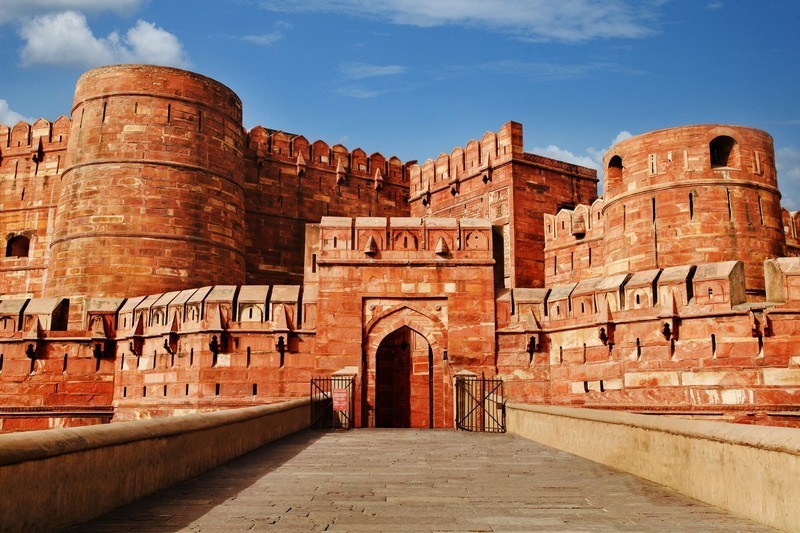
The strategic isolation of the Bengal region from Delhi, driven by its riverine terrain and distance, catalyzed recurrent rebellions by local governors. This led to the formation of the independent Bengal Sultanate in 1338, which persisted as a sovereign power until its integration into the Mughal Empire in 1576.
Genesis of Independence
- Initial Conquest: Ikhtiyar uddin Muhammad bin Bakhtiyar Khalji annexed Gauda between 1202 and 1204 CE, initiating Muslim rule.
- Imperial Consolidation: Sultan Iltutmish designated Bengal as a province of the Delhi Sultanate in 1225 CE to curb autonomous Khalji Maliks.
- Tripartite Division: Under Ghiyasuddin Tughlaq, the region was divided into three administrative units to prevent centralization of power: Lakhnauti (North Bengal), Satgaon (South-West Bengal), and Sonargaon (East Bengal).
- Proclamation of Sovereignty: Following the death of the Tughlaq governor Bahram Khan, Fakhruddin Mubarak Shah assumed independence in Sonargaon in 1338 CE.
Dynastic Chronology
| Dynasty | Timeline | Key Rulers | Historical Significance |
| Ilyas Shahi Dynasty | 1342–1415 CE | Shamsuddin Ilyas Shah, Sikandar Shah, Ghiyasuddin Azam Shah | Unified the three fractured regions; initiated diplomatic relations with Ming China; successfully resisted Tughlaq invasions. |
| House of Raja Ganesha | 1414–1435 CE | Raja Ganesha, Jalaluddin Muhammad Shah | A brief indigenous Hindu landlord interregnum; the successor converted to Islam and integrated local elements into the administration. |
| Restored Ilyas Shahi | 1435–1487 CE | Nasiruddin Mahmud Shah, Rukunuddin Barbak Shah | Witnessed heavy recruitment of Abyssinian military slaves (Habshis), leading to political destabilization. |
| Habshi Dynasty | 1487–1493 CE | Saifuddin Firuz Shah, Shamsuddin Muzaffar Shah | Marked by palace intrigues, military rule, and brief conquests of Kamata territories. |
| Hussain Shahi Dynasty | 1493–1538 CE | Alauddin Hussain Shah, Nasiruddin Nusrat Shah | The golden age of medieval Bengal; characterized by socio-religious pluralism, vernacular literary patronages, and territorial zenith. |
| Karrani Dynasty | 1555–1576 CE | Sulaiman Khan Karrani, Daud Khan Karrani | Last independent Afghan dynasty; collapsed after the Battle of Rajmahal against Akbar’s forces. |
Major Rulers and Key Achievements
Shamsuddin Ilyas Shah (1342–1358 CE)
- Unification of Bengal: He conquered Satgaon and Sonargaon, assuming the imperial title of Sultan-us-Salatin (Sultan of Sultans).
- Military Campaigns: He extended campaigns up to Nepal and Varanasi, and pushed into the Kamarupa kingdom (Assam), becoming the first Muslim ruler to capture Guwahati.
- Geopolitical Resistance: He successfully defended the fortress of Ekdala against Firuz Shah Tughlaq’s siege, forcing a peace treaty that recognized Bengal’s sovereignty.
Sikandar Shah (1358–1390 CE)
- Defeat of Delhi: He repulsed a second military campaign by Firuz Shah Tughlaq, cementing long-term independence from imperial Delhi.
- Architectural Legacy: He commissioned the monumental Adina Mosque at Pandua.
Ghiyasuddin Azam Shah (1390–1411 CE)
- Judicial Accountability: Renowned for his strict adherence to the rule of law; contemporary records highlight his submission to the judgements of the Qazi.
- International Relations: He exchanged embassies with the Ming Emperor of China and patronized Islamic institutions in Mecca and Medina.
- Literary Patronage: He was a patron of the Persian poet Hafiz and supported the poet Krittibas Ojha in translating the Ramayana into Bengali.
Alauddin Hussain Shah (1493–1519 CE)
- Administrative Pluralism: Known as the “Akbar of Bengal” due to his highly liberal religious policies. He appointed prominent Hindus to top administrative posts, including Sanatan Goswami as private secretary (Sakar Malik) and Rupa Goswami as minister.
- Cultural Renaissance: He provided royal patronage to Sri Chaitanya Mahaprabhu and the Gaudiya Vaishnavism movement.
- Territorial Consolidation: He minted coins with the title “Conqueror of Kamrupa, Kamata, Jajnagar, and Orissa.”
Administration and Economy
Administrative Apparatus
- Governance Model: The state functioned as an absolute monarchy but adopted a distinct Persianate court etiquette blended with indigenous bureaucratic traditions.
- Administrative Hubs (Mint Towns): Governance was decentralized through cities designated as mint towns, which regulated the fiscal and administrative stability of the surrounding agrarian hinterland.
- Military Composition: The army relied on infantry, war elephants (used for logistics and tactical breakthroughs), and a powerful riverine navy. Due to the humid climate, cavalry horses had to be imported continuously from Central Asia.
Economic Features
- Currency System: Silver Taka coins were minted uniformly across urban center networks. The coins frequently featured the name of the contemporary Abbasid Caliph alongside the Sultan’s name to legitimize authority.
- Agrarian Abundance: The deltaic soil facilitated intensive rice cultivation, rendering Bengal the “granary of the East.” Cash crops included sugarcane, cotton, betel nut, and coconut.
- Vibrant Commerce: European and Chinese travelers described the Sultanate as the “richest country to trade with.” Major manufacturing centers like Sonargaon produced fine muslin textiles.
- Maritime Infrastructure: The port of Chittagong connected Bengal directly to trading networks in Malacca, China, East Africa, and the Maldives.
Socio-Cultural Fabric and Architecture
Language and Literature
- Vernacular Recognition: While Persian remained the language of diplomacy and administration, the Bengal Sultans were the first to accord official court recognition to the Bengali language.
- Translations: Scholars were commissioned to translate Sanskrit classics like the Mahabharata and Ramayana into Bengali. Maladhar Basu was awarded the title Gunaraj Khan for his translation of the Bhagavata Purana as Sri Krishna Vijaya.
Distinctive Architectural Features
The Bengal Provincial Style deviated from the imperial Delhi style due to climatic demands and the availability of local building materials.
- Material Usage: Stone was scarce; buildings were constructed almost entirely of high-fired red bricks and mortar, embellished with intricate terracotta tiles.
- The “Bangla” Roof: Architects adapted the curved cornices and eave-lines of traditional local bamboo huts into permanent brick monuments to allow rapid drainage of heavy monsoon rain.
- Structural Elements: The style utilized short square brick pillars, multi-domed roofs supported by brick-pendentives, and low broad sloping arches known as “drop arches.”
Key Monuments
- Adina Mosque (Pandua): Built by Sikandar Shah in 1364 CE. It was the largest mosque in the Indian subcontinent at the time and the only hypostyle mosque structure in Bengal, incorporating materials salvaged from older monuments.
- Eklakhi Mausoleum (Pandua): Regarded as the prototype of the true Bengal style, featuring a single-domed square structure with characteristic curved cornices.
- Dakhil Darwaza (Gaur): A monumental gateway built of small red bricks and decorated with rich terracotta motifs, showcasing the mature phase of Sultanate architecture.
- Firoz Minar (Gaur): A five-story tower constructed by Sultan Saifuddin Firuz Shah, bearing structural resemblances to the Qutub Minar of Delhi.
- Chota Sona Masjid (Gaur): Built during the reign of Alauddin Hussain Shah by Wali Muhammad, known for its gilding work and blending of stone facing with brick cores.
Decline and Fall
Internal and External Triggers
- Sur Dynasty Interlude: In 1538 CE, Sher Shah Suri defeated Ghiyasuddin Mahmud Shah (the last Hussain Shahi ruler), temporarily bringing Bengal under the Afghan Sur Empire.
- The Final Conflict: After the collapse of the Sur Empire, the Afghan Karrani dynasty asserted local autonomy. However, Daud Khan Karrani’s refusal to acknowledge Mughal supremacy provoked an imperial response from Delhi.
- Battle of Rajmahal (1576 CE): The Mughal forces led by Khan-i-Jahan Husain Quli decisively defeated and executed Daud Khan Karrani. This marked the formal dissolution of the independent Bengal Sultanate and its absorption as a Subah (province) of the Mughal Empire.