
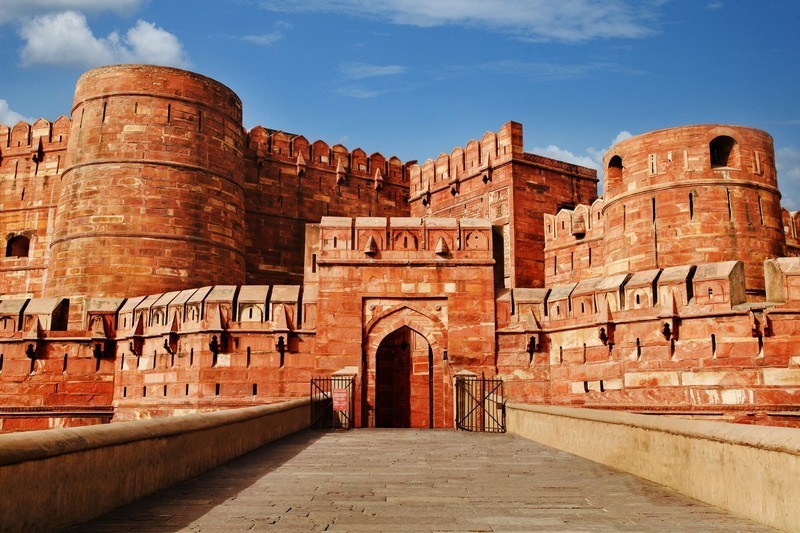
Ahmad Shah I (1411–1442 CE), the grandson of Muzaffar Shah I, was the true architect and consolidator of the independent Muzaffarid Dynasty of the Gujarat Sultanate. His reign marked the permanent transition of Gujarat from a vulnerable, newly independent province into a dominant, highly centralized maritime empire in western India.
Ascent to Power and Suppression of Rebellions
- The Succession Crisis: Upon his ascension in 1411 CE, Ahmad Shah I faced immediate domestic challenges, including a major rebellion led by his uncle, Firuz Khan, who claimed the throne with the backing of local Rajput chieftains.
- Pacification of the Aristocracy: He deployed a combination of rapid military maneuvers and strategic diplomatic alliances to crush the rebel factions, executing dissident Turkish nobles and replacing them with fiercely loyal military officers.
- Neutralization of Rival Sultanates: To secure his eastern and southern borders, Ahmad Shah I launched successful counter-offensives against the neighboring Malwa Sultanate under Hoshang Shah and the Bahmani Kingdom, establishing Gujarat as a primary military force in regional politics.
Major Military Campaigns and Territorial Integration
Ahmad Shah I pursued a policy of aggressive expansionism designed to bring independent Hindu principalities and border states under the fiscal and administrative control of the Ahmedabad court.
Subjugation of Rajput Principalities
- The Idar Campaigns: Ahmad Shah I launched continuous military expeditions against the strategic Rajput state of Idar. He forced its ruler, Rao Punja, to abandon his capital, retreat into the hills, and eventually acknowledge the suzerainty of the Sultanate by paying regular tribute (Khiraj).
- The Jhalawar and Dungarpur Expeditions: He marched his forces into Jhalawar, Dungarpur, and Mewar, extracting heavy financial indemnities and establishing permanent military garrisons (thanas) to monitor local trade routes.
Conquests in Saurashtra
- The Siege of Junagadh (1414 CE): Ahmad Shah I led a massive army against Rai Meliga, the Chudasama ruler of Junagadh in the Saurashtra peninsula. He besieged the historic hill-fort of Uparkot, forcing the Rai to surrender, pay a vast tribute, and accept the political dominance of the Sultanate.
- The Destruction of Diu and Delvada: He annexed the strategic coastal ports of Diu and Delvada, neutralizing local piracy networks and integrating these vital maritime outlets directly into the state’s commercial grid.
Institutional Administration and Socio-Economic Reforms
The Wantha Land Revenue Settlement
To stabilize the agrarian economy and permanently curb the military power of the traditional Rajput landholders (Girasias), Ahmad Shah I introduced the revolutionary Wantha system.
| Fiscal Category | Allocation Parameter | Administrative Control & Revenue Destination |
| Talpad | Three-fourths (75%) of village land | Confiscated directly by the Sultanate state; managed by royal revenue officers for the state treasury. |
| Wantha | One-fourth (25%) of village land | Retained by the original Rajput landlords in exchange for loyal military service and a fixed quit-rent (peshkash) paid to the Sultan. |
Commercial and Fiscal Consolidation
- Monetary Standardization: He overhauled the state mint networks, issuing high-purity silver and copper Taka coins from the central mint at Ahmedabad, which stabilized regional market prices.
- Maritime Customs Management: He centralized the collection of customs duties (mahsul) at the premier port of Cambay (Khambhat), transforming it into the primary gateway for international merchants trading across the Indian Ocean.
Urbanization and Architectural Legacy
The Founding of Ahmedabad (1411 CE)
- The Capital Shift: In 1411 CE, Ahmad Shah I shifted the permanent administrative capital of the Sultanate away from Anhilwada (Patan) to a new strategic site on the banks of the Sabarmati River, naming it Ahmedabad.
- Urban Infrastructure: The city was designed as a fortified metropolis, featuring the massive Bhadra Fort, royal palaces, wide commercial avenues, and specialized markets (bazars) that attracted textile weavers and merchants from across India.
The Ahmedabad Style of Architecture
Ahmad Shah I was a major patron of the distinctive Gujarat Provincial Style, which seamlessly combined local Hindu-Jain architectural skills (Maru-Gurjara tradition) with Islamic geometric and structural concepts.
- Jami Masjid of Ahmedabad (1424 CE): Considered one of the most beautiful congregational mosques in western India, it features a vast marble-paved courtyard and a prayer hall supported by 260 delicately carved stone pillars. Its unique multi-tiered roof and stone screens allowed natural light and ventilation to circulate throughout the sanctuary.
- The Tin Darwaza (Triple Gateway): A monumental triumphal archway that served as the formal entrance to the royal square (Maidan Shah) before the Bhadra Fort. It is celebrated for its perfectly proportioned arches and intricate stone relief carvings.
- The Tomb of Ahmad Shah: Located near the Jami Masjid, this square, multi-domed mausoleum established the structural template for royal funerary monuments in Gujarat, featuring fine perforated stone screens (jalis).
UPSC Prelims Historical Trivia
The Four Ahmads Foundation Legend
Contemporary chronicles record that the foundations of Ahmedabad were laid in the presence of the celebrated Sufi saint Shaikh Ahmad Khattu Ganj Baksh. According to historical legend, the city was founded by four individuals named Ahmad who had never missed a single midnight prayer (Tahajjud): Sultan Ahmad Shah, Shaikh Ahmad Khattu, Qazi Ahmad, and Malik Ahmad.
The Introduction of the Jizya
Ahmad Shah I was the first ruler of independent Gujarat to strictly institutionalize the collection of the Jizya (poll tax on non-Muslim subjects) and enforce orthodox Islamic laws across the central administration. This marked a major departure from the highly fluid policies of the earlier Tughlaq governors.
The Strategy of the Sabarmati Text
The historical text Mirat-i-Ahmadi notes that Ahmad Shah I selected the banks of the Sabarmati River for his new capital after witnessing a local hare aggressively chasing a hunting dog. The Sultan concluded that the unique climate and environment of the region infused its inhabitants with exceptional bravery and resilience, making it an ideal seat for his military empire.
Last Modified: June 22, 2026