
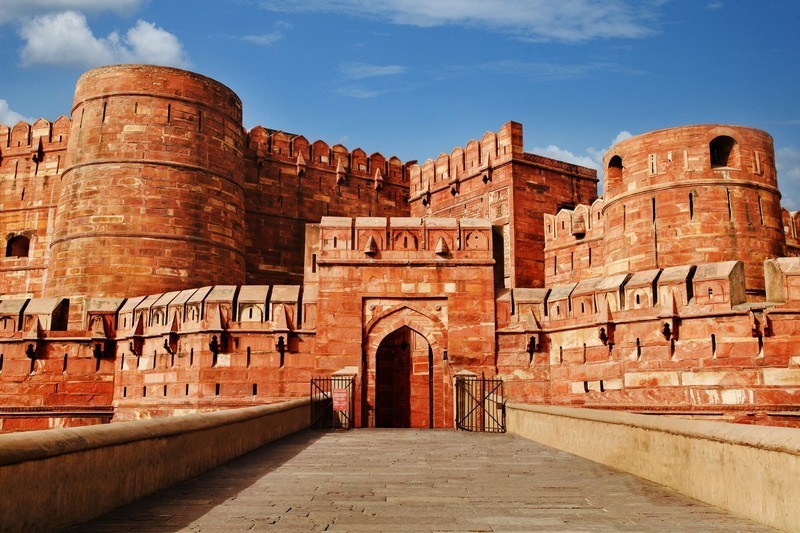
Ahmedabad emerged as the premier urban center, strategic hub, and permanent capital of the independent Muzaffarid Dynasty of the Gujarat Sultanate during the 15th century. Its establishment marked a permanent shift in the political center of gravity from northern Gujarat to the banks of the Sabarmati River.
Proclamation of the New Capital
- The Strategic Shift: In 1411 CE, Sultan Ahmad Shah I (1411–1442 CE) shifted the permanent imperial headquarters of the Sultanate away from Anhilwada (Patan) due to political and military vulnerabilities.
- The Foundation Legend: Contemporary Persian chronicles, such as the Mirat-i-Ahmadi, record that the city was founded on a site near the old settlement of Asawal. The foundations were laid under the spiritual guidance of the celebrated Sufi saint Shaikh Ahmad Khattu Ganj Baksh, alongside three other prominent figures named Ahmad who had never missed the midnight prayer (Tahajjud): Sultan Ahmad Shah, Qazi Ahmad, and Malik Ahmad.
- Geopolitical Consolidation: The location was chosen to enable the Sultanate to rapidly project military power into both the Saurashtra peninsula to the west and the rebellious Rajput borderlands to the north and east.
Chronological Matrix of Urban Development
| Phase / Era | Chronological Timeline | Key Rulers / Administrative Actions | Structural and Commercial Impact |
| Foundational Phase | 1411–1442 CE | Ahmad Shah I | Construction of the Bhadra Fort, royal palaces, Tin Darwaza, and the Jami Masjid; initial organization of commercial markets (bazars). |
| Expansionist Phase | 1458–1511 CE | Mahmud Begarha | Establishment of the suburbs of Sarkhej and Shah-i-Alam; development of extensive water-harvesting stepwells and gardens. |
| Zenith and Internationalization | Early 16th Century | Muzaffar Shah II, Bahadur Shah | Consolidation as a global textile hub; first major direct interactions with Portuguese and other European mercantile groups. |
| Mughal Absorption | 1572–1573 CE | Akbar / Fall of Muzaffar Shah III | Transition from an imperial independent capital into the headquarters of a prosperous Mughal Subah (province). |
Urban Planning, Defenses, and Fiscal Administration
The Fortified Layout and Citadel Architecture
- The Bhadra Fort: The urban blueprint was anchored on the Bhadra Fort, a massive stone citadel built of high-fired brick and faced with sandstone, containing the royal palaces, administrative departments, and the treasury.
- The Twelve Gates: The residential and commercial zones of the city were enclosed within a defensive brick wall measuring approximately six miles in circumference, fortified by numerous bastions and accessed via twelve distinct ceremonial gateways, including the Khanpur Gate, Shahpur Gate, and Delhi Gate.
- The Tin Darwaza: Serving as the formal entrance to the royal square (Maidan Shah) before the Bhadra Fort, this monumental triple-arched gateway was built with perfectly proportioned arches and intricate relief carvings, functioning as the stage for royal proclamations.
Fiscal and Industrial Administration
- Centralization of the Mint: Ahmedabad operated as the primary mint town (Dar-ul-Zarb) of the Muzaffarid state, issuing high-purity silver and copper Taka coins that established monetary standardization across western India.
- The Textile Karkhanas: The Sultanate institutionalized state-controlled royal workshops (Karkhanas) within the city, attracting skilled weavers, dyers, and block-printers who specialized in manufacturing velvet, gold brocades, and fine calico textiles.
- The Indigo Conduit: The city regulated the massive trade in high-grade indigo cultivated in the surrounding agrarian hinterland, particularly in the suburb of Sarkhej, which served as a critical raw material for international maritime export.
The Ahmedabad Provincial Architectural Style
Ahmedabad served as the primary laboratory for the development of the Gujarat Provincial Style of architecture, celebrated for its unique structural synthesis of indigenous Hindu-Jain architectural skills (Maru-Gurjara tradition) with Islamic arcuate concepts.
Distinctive Engineering Elements
- The Trabeate-Arcuate Hybrid: Local master craftsmen combined traditional Indian beam-and-bracket (trabeate) structural engineering with Islamic arches and domes (arcuate), resulting in columned interior prayer spaces underneath traditional Islamic exterior profiles.
- Delicate Sandstone Jalis: The architectural style was characterized by its intricate openwork stone screens (jalis), which transformed window panels into detailed geometric configurations and natural floral displays carved out of solid sandstone blocks.
- The Minaret Metamorphosis: Minarets evolved from plain functional towers into heavily decorated, slender structural pillars attached directly to the central facade of mosques, featuring corbelled balconies and detailed stone relief bands.
Monumental Masterpieces of the Sultanate Capital
Jami Masjid of Ahmedabad
- Construction: Completed in 1424 CE under the direct patronage of Sultan Ahmad Shah I.
- Features: It features a spacious marble-paved congregational courtyard and a primary prayer hall supported by 260 delicately carved stone pillars. The roof contains 15 domes arranged in a multi-tiered layout designed to allow indirect natural light and ventilation to pass through the stone screens into the sanctuary.
Sidi Saiyyed Mosque
- Construction: Built in 1572–1573 CE by a prominent Abyssinian noble named Sidi Saiyyed during the final years of the independent Sultanate.
- Features: The mosque is universally renowned for its semi-circular stone windows featuring exquisite openwork screens. The most famous panel depicts the intertwined “Tree of Life” motif, showing palm branches and foliage carved with mathematical accuracy.
Sarkhej Roza Complex
- Construction: Started under Muhammad Shah II and expanded by Mahmud Begarha in the late 15th century.
- Features: Located on the outskirts of the capital, this expansive architectural matrix surrounds a large artificial water tank. It houses the mausoleum of the Sufi saint Shaikh Ahmad Khattu Ganj Baksh, the tombs of Mahmud Begarha and his queen, and royal palaces, earning it the description of the “Acropolis of Ahmedabad” by architectural historians.
Stepwells (Vavs) of the Capital Region
- Adalaj Stepwell: Commissioned in 1498 CE by Queen Rudabai, the consort of a local Vaghela Rajput chief, and completed under the political protection of Mahmud Begarha. It is a five-story deep subterranean stone stepwell decorated with intricate carvings that manage water conservation and community gatherings.
- Dada Harir Stepwell: Built in 1499 CE by Dhai Harir, a prominent lady of the royal harem under Mahmud Begarha, featuring deep octagonal shafts and multi-tiered galleries that showcase advanced hydro-engineering.
Socio-Cultural Fabric and Global Maritime Linkages
The Convergence of Merchant Capitalism
- The Mahajan System: The commercial stability of Ahmedabad relied on an institutionalized network of merchant guilds (Mahajans) directed by a chief merchant (Nagarsheth). This system managed market disputes, regulated trade quality, and provided credit across religious communities, integrating local Jain and Hindu financiers into the Sultanate’s economy.
- The Sufi Intellectual Matrix: The city developed as a major center for Islamic intellectual life and Islamic mysticism, particularly under the influence of the Maghrebi and Shadhili Sufi lineages, whose hospices (Khanqahs) operated as centers for education and social relief.
Global Commercial Connectivity
- The Cambay Pipeline: While Cambay (Khambhat) served as the primary physical deep-water port on the coastline, Ahmedabad functioned as the primary administrative and production nerve center that directed the manufacturing of items bound for export.
- The Maritime Arms: International travelers, including the Italian traveler Ludovico di Varthema and the Portuguese official Tomé Pires, documented that the products processed in the markets of Ahmedabad reached global destinations including Aden, Hormuz, Cairo, Malacca, and Sumatra.
UPSC Prelims Historical Trivia
The Jhulta Minar (Shaking Minarets) Phenomenon
The mosque of Sidi Bashir in Ahmedabad features a unique engineering design known as the “Shaking Minarets.” When one of the tall stone minarets is shaken, the vibration travels through the central connecting roof bridge to the opposing minaret within seconds, while the intervening floor space remains completely stable. This architectural technique was engineered to protect tall masonry towers from destruction during regional earthquake shocks.
The Introduction of the Wantha Settlement
It was within the administrative offices of Ahmedabad that Ahmad Shah I institutionalized the Wantha land revenue settlement. To suppress Rajput resistance, he divided all agricultural lands into Talpad (three-fourths of the land confiscated for the Sultanate treasury) and Wantha (one-fourth of the land left with the original Rajput landholders in exchange for military loyalty and a fixed quit-rent), successfully integrating old local lineages into the state machinery.
The Humayun Inscription at the Citadel
Following the Mughal invasion of Gujarat in 1535 CE, the Emperor Humayun occupied the citadel of Ahmedabad for a brief period, attempting to redirect the administrative machinery of the Muzaffarid state to Delhi. This short occupation was the initial step toward the city’s final integration into the Mughal Empire under Akbar four decades later.
Last Modified: June 22, 2026