
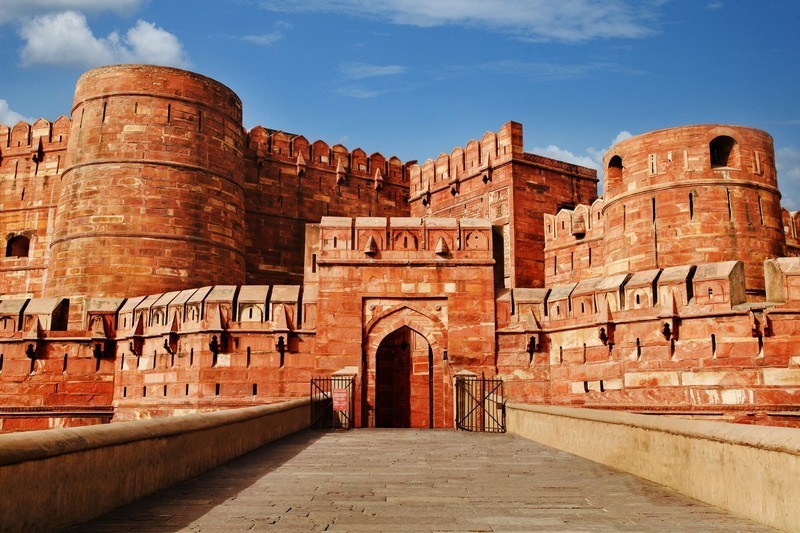
The medieval history of Assam and the Eastern Frontier presents a distinct geopolitical structure where the Brahmaputra Valley functioned as a central core surrounded by highly volatile frontier buffers. This region interacted dynamically across three strategic frontiers:
- The Eastern Region (The Valley Core): Centered around the fertile alluvial plains of the Brahmaputra River, dominated sequentially by the Kamata, Chutiya, Koch, and Ahom kingdoms. This area served as the agricultural engine and population center of the frontier.
- The Western Region (The Bengal Interface): The volatile borderland stretching along the Karatoya and Manas rivers. This frontier functioned as a geopolitical buffer zone where northeast Indian powers directly confronted the expansionist designs of the Delhi Sultanate, the Bengal Sultanate, and later, the Mughal Empire.
- The Frontier Highlands (Tribal Peripheries): The rugged mountain terrains surrounding the valley, inhabited by autonomous hill tribes including the Nagas, Bhutias, Mishmis, Daflas (Nyishi), and Miris (Mishing). These frontiers required complex diplomatic mechanisms to manage trade and prevent structural raids into the valley.
Geographical Factors in Defense and Warfare
The unique topography of the Brahmaputra Valley, characterized by dense subtropical jungles, marshy riverine networks, and violent monsoon cycles, dictated medieval statecraft and military strategy. Large-scale cavalry forces from northern and eastern India regularly faced logistical failure in this terrain, allowing regional dynasties to maintain sovereignty through specialized amphibious and guerrilla warfare tactics.
Key Dynasties and Territorial Consolidation
The Ahom Kingdom (1228–1826 CE)
The Ahom dynasty was founded by Chaolung Sukaphaa, a Shan prince who migrated from Mong Mao (modern Yunnan-Myanmar border) across the Patkai hills into Upper Assam in 1228 CE. Sukaphaa established his permanent capital at Charaideo and initiated a process of state formation based on the assimilation of indigenous tribes such as the Morans and Borahis. The Ahoms expanded their territory systematically, conquering the Chutiya kingdom in the northeast and the Kachari kingdom in the south, eventually dominating the entire Brahmaputra Valley.
The Koch Kingdom (Kamata)
The Koch dynasty emerged in the early sixteenth century under the leadership of Biswa Singha, who united the Mech and Koch tribes to fill the power vacuum left by the collapse of the Kamata kingdom. The dynasty reached its zenith under King Nara Narayan and his legendary commander-brother, Sukladhwaj (famously known as Chilarai or the Kite Prince). Chilarai launched sweeping military expeditions across the northeast, subjugating the Ahoms, Kacharis, Jaintias, and Manipuris, briefly establishing the Koch kingdom as the dominant power on the Eastern Frontier.
The Chutiya and Kachari Kingdoms
The Chutiya kingdom ruled the strategic northeastern tract around Sadiya, controlling the overland trade routes to Tibet and China until their annexation by the Ahoms in the early sixteenth century. The Kachari (Dimasa) kingdom occupied central Assam and the Dhansiri valley, moving their capital south to Maibabang and Khaspur under relentless Ahom military pressure. | Dynasty / Kingdom | Capital Seats | Core Geopolitical Zone | Key Historical Sovereigns | | | | | | | Ahom Dynasty | Charaideo, Garhgaon, Rangpur, Jorhat | Upper and Central Brahmaputra Valley | Sukaphaa, Suhungmung, Pratap Singha, Rudra Singha | | Koch Dynasty | Chikana, Cooch Behar | Western Assam and Northern Bengal | Biswa Singha, Nara Narayan, Raghudev | | Chutiya Kingdom | Swarnagiri, Ratnapur, Sadiya | Far Northeastern Assam and Foothills | Birpal, Ratnadhwajpal, Sati Sadhani | | Kachari Kingdom | Dimapur, Maibabang, Khaspur | Kapili Valley and Cachar Hills | Mahamanikya, Tamradhwaj Narayan |
Military Engineering and Frontier Defense Operations
The Paik System as a Military Foundation
The structural resilience of the Ahom state relied on the Paik system, a meticulous system of compulsory labor and military conscription. Every adult male between the ages of fifteen and fifty was registered as a Paik.
- Got Structure: Four (later reduced to three) Paiks formed a structural unit called a Got. One member of the Got rendered active service to the state in rotation, while the remaining members managed his agricultural land.
- Hierarchical Command: Paiks were organized under strict military-administrative lines. A Bora commanded 20 Paiks, a Saikia commanded 100, a Hazarika commanded 1,000, a Rajkhowa commanded 3,000, and a Phukan commanded 6,000. This system allowed for rapid military mobilization without the maintenance of an expensive standing army.
Riverine and Fortified Warfare
The Ahoms developed advanced skills in amphibious warfare and riverine engineering. They constructed massive earthen ramparts called Gars (such as the Chamdhara Gar and Mumai Tamuli Gar) across strategic choke points to block enemy advances. The Ahom navy utilized specialized warboats called Bacharis, designed for maneuverability in the shifting channels of the Brahmaputra River.
The Battle of Saraighat (1671 CE)
The Battle of Saraighat represents the definitive clash between the Ahom Kingdom and the Mughal Empire on the Western Frontier. The Mughal forces, led by Rajput Raja Ram Singh under the orders of Aurangzeb, sought to re-annex Lower Assam. The Ahom forces, commanded by Borphukan Lachit Borphukan, exploited the geographic bottleneck of the Brahmaputra at Saraighat (near Guwahati). Lachit Borphukan deployed brilliant naval maneuvers, combined with rigorous psychological warfare and guerrilla tactics, to decisively defeat the Mughal fleet, securing the independence of the Eastern Frontier.
Socio-Economic Systems and Trade Infrastructure
Agrarian Organization and Non-Monetized Economy
The medieval economy of the Eastern Frontier was primarily agrarian, centered on wet rice cultivation (Sali paddy). The Paik system formed the bedrock of the agricultural economy, as the state paid its officials with land grants (Gati-Paik lands) rather than cash. Monetization remained low until the late Ahom period, with transactions heavily reliant on barter and cowrie shells.
Frontier Trade Protocols and the Posa System
The valley kingdoms maintained trade relations with the surrounding hill tribes through regulated frontier markets called Duars (passes). To manage raids from the northern hill tribes, the Ahom state institutionalized the Posa system. Under this mechanism, specific hill tribes (such as the Bhutias and Daflas) were granted the legal right to collect specific amounts of agricultural produce, grain, and labor directly from designated valley villages (Posa Paiks). In return, the tribal chieftains swore oaths to maintain peace along the frontier and refrain from predatory incursions.
Structural Export Commodities
Despite its geographic isolation, the Eastern Frontier exported valuable commodities to Bengal and neighboring international markets through the Hadirachauki trade outpost:
- Muga and Pat Silk: Indigenous variants of high-grade wild silk produced exclusively in the Brahmaputra Valley.
- Agarwood and Ivory: Sourced from the dense frontier forests, highly prized in West Asian and East Asian royal courts.
- Rhinoceros Horns and Elephants: Extracted for military and medicinal use across medieval Asia.
Religious Transformations and Cultural Synthesis
The Neo-Vaishnavite Movement
The cultural landscape of medieval Assam was transformed by the Ekasarana Dharma, a monotheistic Neo-Vaishnavite movement initiated by Srimanta Sankardeva (1449–1568 CE) and his disciple Madhavdeva. Rejecting complex Brahmanical rituals and caste hierarchies, the movement preached devotion to Krishna through community singing and recitation (Sravana-Kirttana).
The Institution of Satras and Namghars
Sankardeva established a socio-religious infrastructure that reshaped the administration of the Eastern Frontier:
- Satras: Monastic institutional centers that served as hubs for education, agriculture, art, and administrative dispute resolution.
- Namghars: Village prayer halls functioning as democratic community spaces for both religious worship and local self-governance.
- State Patronage: Although the Ahom rulers initially adhered to their ancestral Tai-Ahom religion and later patronized Shaktism (culminating in the construction of the Kamakhya Temple structures), they eventually integrated the Satras into the state structure, granting them extensive tax-free land endowments (Lakhiraj).
Historical Chronicles: The Buranjis
The Ahoms introduced a rigorous tradition of historiography to the Indian subcontinent through the Buranjis. Written initially in the Tai-Ahom language and later in Assamese, these official chronicles recorded court proceedings, diplomatic dispatches (Chakati Bhajia Buranji), military campaigns, and state decrees with precision. The maintenance of Buranjis was a mandatory state function, providing a comprehensive historical record of the medieval Eastern Frontier.
High-Yield Facts for UPSC Prelims
The Title of “Patra-Mantri” Council
The central administration of the Ahom state was run by a high-powered council of state ministers called the Patra-Mantri. It originally consisted of the Burhagohain and the Borgohain, and was later expanded to include the Borpatrogohain, the Barbaruah (Chief Justiciar and administrative head), and the Borphukan (Veroy of Lower Assam and chief diplomat for the Western Frontier).
The Treaty of Asurar Ali (1639 CE)
Signed between the Ahom general Momai Tamuli Borbarua and the Mughal faujdar Allah Yar Khan, this treaty fixed the Barnadi River on the north bank and the Asurar Ali (near Guwahati) on the south bank of the Brahmaputra as the permanent boundary between the Ahom and Mughal empires, establishing peace on the Western Frontier for several decades.
Suklenmung and Coinage Introduction
Ahom King Suklenmung (1539–1552 CE), also known as the Garhgayan Raja, was the first Ahom monarch to introduce minted coins to the region. The coins were struck in an octagonal shape, conforming to traditional Tai cosmological views that the world was octagonal in structure, a design element maintained by all subsequent Ahom rulers.
Chilarai’s Military Title
Sukladhwaj, the commander-in-chief of the Koch army under Nara Narayan, earned the title Chilarai (Kite Prince) because his military movements and cavalry maneuvers across the rugged frontier terrains were noted for being as swift as a kite (Chila).
The Moamoria Rebellion (1769–1806 CE)
A protracted internal conflict that broke out between the Ahom monarchs and the disciples of the Mayamara Satra, who belonged to lower-caste tribal groups like the Morans. This mass peasant uprising weakened the structural foundation of the Ahom state, leaving the Eastern Frontier vulnerable to Burmese invasions and the eventual entry of the British East India Company via the Treaty of Yandabo in 1826 CE.
Last Modified: June 22, 2026