
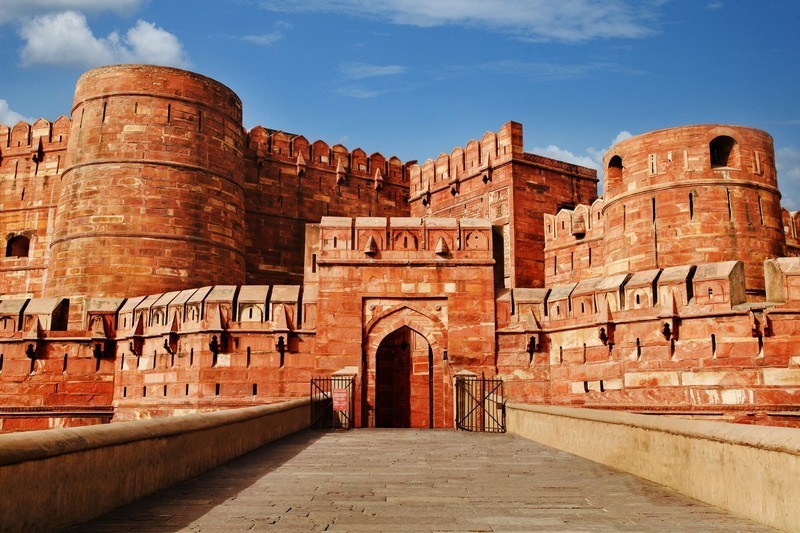
The Koch Kingdom emerged in the early sixteenth century in the geopolitical space of the erstwhile Kamata Kingdom, filling a power vacuum created by the collapse of the Khen dynasty. The polity successfully operated across three highly interconnected zones:
- The Eastern Region (The Valley Core): Encompassed the western Brahmaputra Valley, Lower Assam, and the fertile plains along the Sankosh, Teesta, and Dharla rivers. This zone served as the agricultural engine and central base of the dynasty.
- The Western Region (The Bengal Interface): Bounded by the volatile Karatoya River, which acted as a historic political frontier separating the indigenous northeastern polities from the expansionist designs of the Bengal Sultanate and, subsequently, the Mughal Empire.
- The Frontier Highlands (Tribal Peripheries): Included the sub-Himalayan mountain foothills bordering Bhutan, Tibet, and the Garo and Khasi hill tracts. These zones required active diplomatic and military management to control trans-frontier trade passes (Duars) and extract forest resources.
Tribal Ethno-Genesis and State Formation
The foundation of the Koch dynasty represents a classic example of medieval state formation through the Sanskritization of indigenous tribal communities. The core populations comprised the Mech, Koch, and Bodo-Kachari ethno-linguistic groups belonging to the Tibeto-Burman family. Under the leadership of Hariya Mandal, a prominent Mech chieftain from the Chiknabari hills, these disparate clans formed a loose confederation that resisted both regional landlord coalitions (Bhuyans) and Islamic incursions from Bengal.
Key Sovereigns and Imperial Consolidation
Biswa Singha (reign circa 1515–1540 CE)
Biswa Singha is recognized as the founder of the sovereign Koch dynasty. He consolidated authority by systematically crushing the independent Bhuyan chieftains of western Assam and moving his administrative capital to Cooch Behar. To legitimize his rule over a diverse population, he embraced Hinduism, claimed descent from the god Shiva, and invited Vedic Brahmans from Bengal and Mithila to establish settlements in his kingdom, initiating a major socio-religious transformation.
Nara Narayan (reign 1540–1587 CE)
The Koch Kingdom reached its political and military zenith under King Nara Narayan, the son of Biswa Singha. Educated in Varanasi, Nara Narayan introduced sophisticated administrative reforms and pursued an aggressive expansionist policy. He transformed Cooch Behar into a premier urban and intellectual hub, establishing diplomatic ties with the Mughal Emperor Akbar to secure his western flank against the rulers of Bengal.
Sukladhwaj alias Chilarai (The Kite Prince)
Sukladhwaj, the younger brother and commander-in-chief of Nara Narayan’s imperial army, was the military architect of the Koch Empire. Renowned for his lightning-fast cavalry maneuvers and amphibious military strategy, he earned the popular title Chilarai (Kite Prince). He launched sweeping military expeditions across Northeast India, subjugating the Ahom, Kachari, Jaintia, Tipperah (Tripura), and Manipuri kingdoms, forcing them to pay regular tributes to the Koch crown. | Monarch / Commander | Core Strategic Achievement | Primary Geopolitical Frontier Impact | | | | | | Biswa Singha | Dynasty founder; initiated state centralization and Sanskritization. | Unified Mech-Koch clans; shifted the capital to Cooch Behar. | | Nara Narayan | Height of political and cultural synthesis; allied with Mughals. | Stabilized western frontier; patronized early vernacular literature. | | Chilarai (Sukladhwaj) | Supreme military commander; master of lightning warfare tactics. | Subjugated Ahoms and neighboring tribal kingdoms across the eastern frontier. | | Raghudev | Led territorial rebellion; split the empire into Koch Hajo. | Created permanent administrative fracture on the eastern front. |
Administrative Infrastructure and Economic Resources
Bureaucratic Hierarchy and Land Management
The Koch administration maintained a highly centralized monarchy supported by a stratified bureaucratic network. The empire was divided into large administrative units called Chaklas, which were further subdivided into Parganas for revenue collection. The state utilized a specialized title-distribution system to organize civil and military hierarchies.
- Karjis: The highest-ranking ministers who advised the king on foreign policy, war, and judicial administration.
- Nazirs: High officials in charge of the royal household, internal security, and state intelligence networks.
- Bhuyans: Local landed barons integrated into the state structure to manage agrarian labor and rural taxation.
Agrarian Surplus and Transit Trade Revenue
The economic stability of the state relied heavily on wet-rice cultivation (Sali paddy) in the alluvial plains. The Koch kings commissioned extensive networks of embankments and dikes to regularize irrigation and protect crops from seasonal floods. Additionally, the kingdom exploited its position as a vital trade hub connecting Bengal with Bhutan, Tibet, and China. The state generated significant revenue by levying transit duties (Chauki taxes) at strategic riverine checkpoints.
Export Monopolies and Strategic Commodities
The Koch crown maintained tight control over trade with external markets, exporting highly lucrative regional commodities through specific frontier outposts:
- War Elephants: Sourced from the dense sub-Himalayan forests and exported to the cavalry-starved armies of the Bengal Sultanate.
- Agarwood and Musk: Sourced from the northern tribal hills, highly valued in luxury and medicinal markets across Asia.
- Muga and Endi Silk: High-grade wild silk textiles manufactured by local artisanal weaving guilds.
Socio-Religious Transformation and Cultural Synthesis
Revival of the Kamakhya Temple Cult
The Koch kings sophistication used religious patronage to legitimize their sovereign status. Following the destruction of the Kamakhya Temple at Nilachal Hill by the Bengal Sultanate’s general Kalapahar, King Nara Narayan and Chilarai ordered its complete reconstruction in 1565 CE. They rebuilt the temple using a unique architectural hybrid style known as the Nilachal type, which combined a traditional Nagara shikhara with an Islamic-style dome, symbolizing the cultural cross-currents of the western frontier.
Patronage of Srimanta Sankardeva and Neo-Vaishnavism
When Srimanta Sankardeva, the founder of the Neo-Vaishnavite Ekasarana Dharma movement, faced persecution in the neighboring Ahom Kingdom, Nara Narayan provided him political asylum. The Koch court became a safe haven for the proliferation of Neo-Vaishnavite literature, theater (Ankiya Naat), and monastic institutions (Satras). This state patronage facilitated a massive socio-cultural integration, breaking down rigid caste barriers among the newly assimilated tribal populations of the kingdom.
High-Yield Facts for UPSC Prelims
The Imperial Fracture: Koch Bihar and Koch Hajo
In 1581 CE, internal dynastic rivalry led to a permanent division of the empire. Raghudev, the son of Chilarai, revolted against his uncle Nara Narayan. To prevent a civil war, the empire was split along the Sankosh River:
- Koch Bihar: The western kingdom, ruling territories west of the Sankosh River, which later became a princely state allied with the Mughals and British.
- Koch Hajo: The eastern kingdom, ruling territories east of the Sankosh River, which constantly clashed with the Ahoms and was eventually absorbed by them and the Mughals.
Nara Narayani Coinage Standard
King Nara Narayan introduced a highly standardized silver currency known as the Nara Narayani Rupee. Minted in round shapes with inscriptions in the archaic Assamese script, these coins became the dominant medium of exchange not only within the Koch territories but also in the neighboring hill kingdoms of Bhutan and Tibet, reflecting the economic dominance of the Koch state.
The Title “Kamateswar”
In continuation of the political legacy of the Kamata Kingdom, the Koch sovereigns proudly assumed the official epigraphic title Kamateswar (Lord of Kamata) in all their land charters, stone inscriptions, and copper-plate grants to assert historical legitimacy over the region.
Last Modified: June 22, 2026