
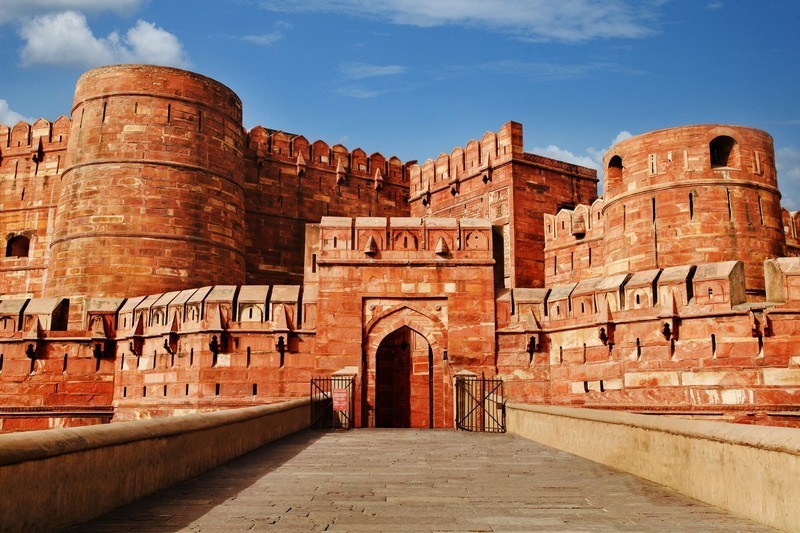
Maharana Kumbhakaran, popularly known as Rana Kumbha (reign 1433–1468 CE), was the structural architect of medieval Mewar’s multi-regional hegemony. Ascending the throne of Chittorgarh during a period of acute internal clan rivalries and aggressive external encirclement, he reorganized Mewar into a centralized military power. His geopolitical operations systematically targeted three distinct strategic theaters:
- The Eastern Region (The Plains Core and Bundelkhand Interface): This zone encompassed the fertile plains of the Banas River basin, extending toward Hadoti (Bundi), Chappan, and the borders of the Malwa Sultanate. It served as the primary agricultural and tax-revenue base of the empire.
- The Western Region (The Desert Front and Marwar Buffer): Bounding the arid tracts of Godwar and the rival Rathore kingdom of Marwar (Jodhpur). Kumbha fortified this vulnerable frontier to secure control over vital trade routes connecting the Delhi-Agra hinterlands to the maritime ports of Gujarat.
- The Frontier Highlands (The Southern and Southwestern Rim): Comprising the rugged, high-altitude Aravalli ranges inhabited by the autonomous Bhil and Meena tribes. This frontier bordered the Sultanates of Gujarat and Malwa, acting as an natural defensive barrier and a laboratory for mountain warfare.
Topographical Exploitation and Fortification Policy
Rana Kumbha’s defensive statecraft was anchored in the absolute militarization of topography. According to the contemporary text Vir Vinod, out of the 84 major fortresses built to defend the structural integrity of Mewar against external Islamic polities, Rana Kumbha personally commissioned, designed, or extensively reconstructed 32. This dense network of stone fortifications was strategically placed at narrow mountain passes (Naals), high-altitude peaks, and river junctions to completely neutralize the cavalry and heavy siege artillery of invading armies.
Military Campaigns and Frontier Management
The Southern and Southwestern Frontier: Confrontation with Gujarat
The southwestern frontier was a zone of chronic vulnerability due to the expansionist designs of the Gujarat Sultanate under Ahmad Shah I and Mahmud Begada. Kumbha checked their advances by annexing Nagaur, a strategic Muslim principality, and placing his vassal on its throne. He repeatedly repulsed the combined forces of Gujarat at Abu and Mandalgarh, successfully securing the trade channels passing through southwestern Rajasthan.
The Southeastern Frontier: Wars with the Malwa Sultanate
The defining military rivalry of Kumbha’s reign was with Sultan Mahmud Khalji of Malwa. The conflict peaked at the Battle of Sarangpur (1437 CE), where Kumbha’s forces routed the Malwa army, captured Sultan Mahmud Khalji, and held him prisoner at Chittorgarh for six months before releasing him to maintain a diplomatic balance of power. Khalji launched subsequent retaliatory campaigns, leading to the Battles of Mandalgarh and Banas, but failed to breach Kumbha’s core defensive lines.
The Western Frontier: Containment of Marwar
Following the assassination of the Rathore regent Rao Ranmal at Chittorgarh, a bitter feud erupted between Mewar and Marwar. Rana Kumbha’s forces pursued Ranmal’s son, Rao Jodha, capturing Mandore and occupying Marwar for twelve years. To stabilize this frontier, Kumbha eventually negotiated the Aonla-Chawla Sandhi (c. 1453 CE), which permanently fixed the border where the Aonla (myrobalan) trees of Mewar met the Chawla (desert bushes) of Marwar, and sealed the peace through a matrimonial alliance.
The Frontier Alliance: The Treaty of Champaner (1456 CE)
Recognizing that Rana Kumbha could not be defeated individually, Sultan Muhammad Shah of Gujarat and Sultan Mahmud Khalji of Malwa signed the Treaty of Champaner in 1456 CE. This offensive military pact aimed to launch a coordinated dual-front invasion of Mewar, partitioning its territories between Gujarat and Malwa. Kumbha demonstrated supreme tactical brilliance by engaging the two armies separately on the frontiers, fracturing their coalition, and retaining absolute territorial sovereignty. | Military Engagement / Treaty | Chronology | Primary Adversary | Strategic and Territorial Outcome | | | | | | | Battle of Sarangpur | 1437 CE | Mahmud Khalji (Malwa Sultanate) | Decisive Mewar victory; capture of the Sultan; led to the construction of the Vijay Stambha. | | Siege of Mandore | 1438 CE | Rao Jodha (Marwar) | Annexation of Mandore; twelve-year Mewar occupation of the Marwar capital. | | Aonla-Chawla Sandhi | c. 1453 CE | Rao Jodha (Marwar) | Diplomatic demarcation of the Mewar-Marwar geographic boundary. | | Treaty of Champaner | 1456 CE | Gujarat & Malwa Sultanates | A joint alliance formed to partition Mewar; successfully neutralized by Kumbha. | | Battle of Badanore | 1457 CE | Combined armies of Malwa & Gujarat | Kumbha crushed the allied forces attempting to execute the Champaner pact. |
Administrative Infrastructure and Resource Extraction
The Feudal-Clan Hierarchy and Military Organization
Rana Kumbha restructured Mewar’s decentralized feudal apparatus into a highly responsive administrative hierarchy. The kingdom’s territory was sharply divided into Khalsa (crown lands governed directly by royal appointees) and Jagirs (fiefs held by feudal nobles). He strictly categorized the Rajput nobility into ranked classes to formalize court protocols and assign fixed military responsibilities for frontier defense.
Structural Tiers of Nobility and Offices
- The Solah (The Sixteen): First-class nobles holding extensive border estates, responsible for maintaining specialized cavalry contingents for immediate imperial deployment.
- The Battis (The Thirty-Two): Second-class barons tasked with regional judicial administration and the garrisoning of internal fortresses.
- Pradhan: The Prime Minister and chief coordinator of the central civil bureaucracy.
- Sandhivigrahi: The Minister of War, Peace, and Foreign Diplomatic Relations.
- Shri Bhandari: The Imperial Treasurer overseeing state accounts and tax allocations.
Fiscal Management and Mining Economics
The construction of Kumbha’s extensive defensive architecture required massive financial resources. The state treasury was funded through a system of agricultural and mineral extractions:
- Bhag and Bhog: Grain-tax assessments scaled according to soil classification and access to state-constructed stepwells (Baoris) and canals.
- Dani System: Internal customs duties and transit tolls collected at strategic mountain passes (Naals) from commercial merchant caravans traveling between Delhi and the Gulf of Khambhat.
- Zawar Silver and Lead Mines: Located near Udaipur, these mines experienced structural expansion under Kumbha. The deep-shaft extraction of silver and zinc provided the precious metals needed to mint coins, purchase Central Asian warhorses, and finance the construction of massive stone fortresses.
Renaissance of Art, Literature, and Architecture
Mastery of Architecture and Master Mandan
Rana Kumbha’s court was the epicenter of a cultural renaissance that codified traditional Indian architectural styles. He patronized Mandan, a master architect and scholar who authored foundational Sanskrit treatises that standardized medieval civic and military planning:
- Prasada Mandana: A comprehensive technical manual detailing the design, proportions, and iconographic placement of Hindu temples.
- Rupa Mandana: A text dedicated entirely to sculpture, iconometry, and the casting of divine idols.
- Rajavallabha Mandana: A treatise on urban planning, civic engineering, residential palaces, and defensive fortifications.
Iconic Structural Monuments
- Kumbhalgarh Fort: Positioned on the western frontier to monitor Marwar and Gujarat, this fort is an architectural masterpiece. It features a continuous outer stone wall extending over 36 kilometers, recognized as one of the longest continuous walls in the world, enclosing hundreds of ancient temples and agricultural plots to survive prolonged sieges.
- Vijay Stambha (Tower of Victory): Constructed inside Chittorgarh Fort between 1440 and 1448 CE to commemorate his victory over the Malwa Sultanate at Sarangpur. Dedicated to Lord Vishnu, this nine-story tower is carved with an extensive encyclopedia of Hindu deities, celestial bodies, and architectural patterns.
Royal Authorship and Literary Patronage
Rana Kumbha was a polymath scholar, linguist, and musicologist who wrote extensively in Sanskrit and Prakrit dialects. He authored several landmark treatises:
- Sangeet Raja: The definitive medieval encyclopedia on classical music, musicology, dance choreography, and dramaturgy, divided into five distinct chapters (Ratnakosas).
- Sangeet Mimansa & Sudha Prabandha: Advanced technical treatises analyzing classical Indian musical scales, string instruments, and rhythm metrics.
- Rasika Priya: A sophisticated Sanskrit commentary on Jayadeva’s Gita Govinda, integrating musical notations and theological interpretations.
- Patronage of Scholars: His court patronized prominent intellectuals, including his poetry guru Jain scholar Kanha Vyas (author of the Ekalinga Mahatmya), and the structural scholar Kupa Mandan.
Factful Trivia for UPSC Prelims Aspirants
Theocratic Regency and the Title of Diwan
Rana Kumbha did not claim absolute divine sovereignty. In accordance with Mewar tradition, the true legal sovereign of the state was Shri Eklingji (a manifestation of Lord Shiva). The Maharana ruled exclusively as the Diwan (Prime Regent) of the deity, a political theory that discouraged internal rebellions by equating treason with sacrilege.
Epigraphic Titles of Rana Kumbha
Inscriptions on the Kumbhalgarh copper plates and the Kirti Stambha prasasti record a series of grand imperial titles bestowed upon Rana Kumbha, reflecting his multi-regional achievements:
- Hindu Surtran: Protector of Hindu princes, a Sanskritized adaptation of the Islamic title ‘Sultan’.
- Abhinav Bhartacharya: A title celebrating his supreme mastery over music, drama, and fine arts, comparing him to the ancient sage Bharata Muni.
- Rano Raso: The supreme patron of literature, royal poets, and multi-lingual chroniclers.
- Hal Guru: Master of mountain warfare, celebrating his tactical deployment of high-altitude forts and pass blockades.
- Dan Guru: The Great Almsgiver, denoting his extensive land grants (Agraharas) to scholars and temples.
The Construction of Ranakpur Jain Temple
During Rana Kumbha’s reign, his wealthy Jain minister Dharanashah commissioned the construction of the Chaturmukha Dharanavihara (Ranakpur Jain Temple) in 1439 CE. Designed by the architect Depa, this white marble structure is renowned for its 1,444 intricately carved pillars, demonstrating the religious pluralism and economic prosperity fostered under Kumbha’s administration.
Tragical Succession
Despite his peerless contributions to the stabilization of the Indian frontiers, Rana Kumbha’s reign ended tragically in 1468 CE. He was patricidally assassinated by his eldest son, Udaykaran (popularly known as Uda Singh I), who murdered the Maharana while he was offering prayers at the Mama Dev stepwell tank inside Kumbhalgarh Fort.
Last Modified: June 22, 2026