
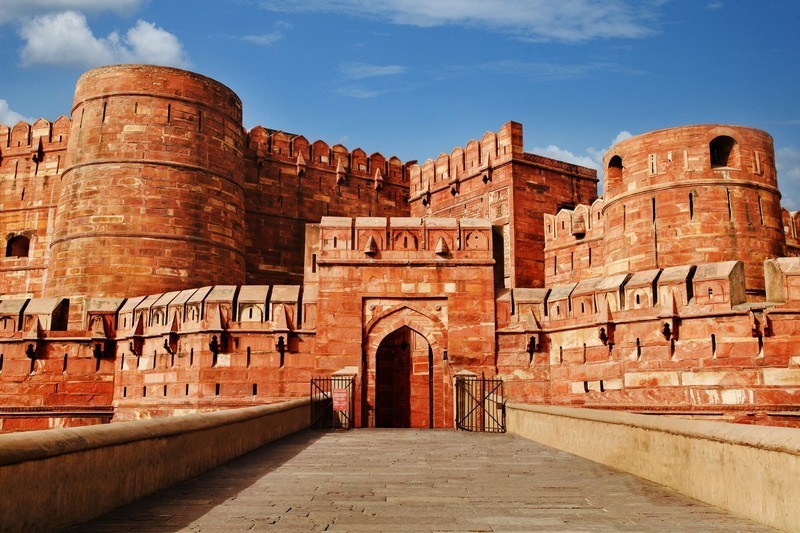
On the eve of European maritime arrival in the late 15th century, the Indian subcontinent did not form a single political entity. Instead, it was structured across three major macro-regions—the Eastern, Western, and Frontier zones—each featuring distinct administrative mechanisms, commercial networks, and military doctrines. This multi-centric state system was characterized by high agricultural productivity, active Indian Ocean commercial networks, and specialized frontier defense systems.
Topographical Determinants of Medieval Statecraft
The political geography of late medieval states was closely tied to their river systems, coastal access points, and mountain barriers. In the Eastern floodplains, riverine networks dictated internal communications and defense, while the Western maritime coast served as the primary connection to global commerce. The Frontier mountain rims regulated overland trade routes and managed tribal interactions through unique tributary systems.
The Eastern Region: Agrarian Substructure and Maritime Networks
The Gajapati Kingdom of Odisha (Suryavamsi Dynasty)
The Gajapati Kingdom (c. 1434–1541 CE) controlled the eastern seaboard from the Ganges delta down to the Kaveri River. Founded by Kapilendra Deva, this military-centric state checked the southern expansion of the Delhi Sultanate and contested territories with the Vijayanagara Empire and the Bahmani Sultanate.
- Theocratic Sovereignty: The Gajapatis ruled as Routas (viceroys) of the state deity, Lord Jagannath of Puri, using religious authority to unify their regional administration and legitimize political decrees.
- The Paikali System: A specialized military-land tenure framework where the state granted hereditary, rent-free agricultural lands (Paik Jagirs) to peasant-warriors (Paiks) in exchange for mandatory military service during campaigns.
The Hussain Shahi Dynasty of Bengal
Following a period of political instability, Alauddin Husain Shah established the Hussain Shahi Dynasty (c. 1494–1538 CE), initiating a cultural and economic golden age in Bengal.
- Agrarian Expansion: The state promoted the reclamation of the eastern delta marshlands, transforming them into highly productive rice and indigo-producing tracts.
- Global Textual and Maritime Trade: Operating through the premier port city of Chittagong (termed Porto Grande by early Portuguese visitors) and Satgaon (Porto Pequeno), Bengal exported fine muslin, silk textiles, and food grains across the Bay of Bengal network.
The Kamata and Early Koch Kingdoms
Occupying the Brahmaputra valley interface, the Kamata kingdom served as a vital political buffer between the Islamic sultanates of Bengal and the tribal polities of the northeastern hills. By the early 16th century, Biswa Singha laid the foundations of the Koch dynasty, which filled the political vacuum left by the collapse of the Khen dynasty, utilizing a highly mobile infantry force to secure the sub-Himalayan trade corridors.
The Western Region: Mercantile Engines and Coastal Polities
The Gujarat Sultanate under the Muzaffarids
Separating from the Delhi Sultanate in the early 15th century, the Gujarat Sultanate emerged as a dominant commercial power under rulers like Mahmud Begarha (reign c. 1458–1511 CE).
- The Port of Khambhat (Cambay): This harbor acted as a primary commercial hub of the western Indian Ocean, exchanging Gujarati cotton textiles, indigo, and carnelian beads for West Asian horses, bullion, and African ivory.
- Naval Consolidation: To counter growing Portuguese interference in the Arabian Sea, the Gujarat Sultanate established a specialized naval station at Diu, under the command of the governor Malik Ayyaz, and allied with the Mamluk Sultanate of Cairo.
The Bahmani Sultanate and its Successor States
By the late 15th century, the unified Bahmani Sultanate fragmented into five independent Deccan Sultanates: Ahmadnagar, Bijapur, Golconda, Berar, and Bidar.
- The Afaqi-Deccani Polarity: The administrative framework was complicated by intense political rivalries between the Deccanis (indigenous local Muslim elites) and the Afaqis (foreign immigrants from Persia, Iraq, and Central Asia who occupied high military and administrative posts).
- The Maritime Outlets: Principalities like Bijapur controlled critical western ports such as Goa and Dabhol, which regulated the importation of warhorses from the Persian Gulf, a resource essential for maintaining military balance against the Vijayanagara Empire.
The Zamorins of Calicut (Nediyirippu Swaroopam)
Controlled by the Eradi clan, the Hindu kingdom of Calicut established absolute commercial dominance over the Malabar Coast by forming a strategic partnership with Arab (Paradesi) and local Mappila Muslim merchants. The Zamorins maintained an open, free-port system at Kozhikode, ensuring the unhindered flow of the spice trade without state-enforced monopolies.
The Frontier Regions: Defensive Zones and Tribal Interfaces
The Ahom Kingdom of Assam
Founded by the Shan prince Sukaphaa in 1228 CE, the Ahom kingdom created a distinct political structure in the upper Brahmaputra valley that resisted expansionist attempts from Bengal Sultanates and later Mughal armies.
- The Paik System: A rigorous system of compulsory state labor and military conscription. Every adult male (Paik) was registered into four-member groups (Gots), serving the state in rotation as agriculturists, canal builders, or soldiers.
- The Buranjis: The Ahoms introduced a systematic tradition of historical writing. These official chronicles were meticulously maintained in the Ahom language and later in Assamese, serving as vital state records for administrative and diplomatic precedents.
The Rajput Principalities of Mewar and Marwar
In the semi-arid western frontier, the Rajput clans consolidated independent states centered around formidable fortress systems.
- Mewar (The Sisodias): Under Rana Kumbha (reign c. 1433–1468 CE), Mewar built a network of 32 strategic mountain fortresses, including Kumbhalgarh, and implemented defensive guerrilla tactics. Sovereignty was exercised under a theocratic regency model, with the rulers governing as ministers of the state deity, Lord Eklingji.
- Marwar (The Rathores): Centered at Mehrangarh Fort (Jodhpur), the Rathores utilized the Bhai-Bant system, a decentralized socio-political structure where land and administrative authority were distributed among paternal kinsmen, ensuring rapid clan mobilization during frontier invasions.
The Sindh Frontier under the Sammas
Governed by indigenous rulers holding the title of Jam, the Samma Dynasty (c. 1351–1524 CE) managed the volatile lower Indus valley from their capital at Thatta. The Sammas constructed extensive canal networks to support floodplain agriculture (Kacha) and fortified northern outposts like Sukkur and Bukkur to secure the Bolan Pass trade routes against Central Asian nomadic incursions.
Comparative Regional Matrix: Political and Fiscal Structures
| Macro-Region | Dominant Polities | Primary Administrative Capitols | Definitive Fiscal Systems | Core Military Specialization |
| Eastern Region | Gajapatis, Hussain Shahis, Kochs | Puri, Cuttack, Gaur, Chittagong | Paikali allotments, deltaic agrarian land revenue, salt monopolies | Riverine naval fleets, war-elephant corps, peasant-infantry militias |
| Western Region | Gujarat Sultanate, Deccan Sultanates, Zamorins | Ahmedabad, Champaner, Bijapur, Calicut | Mahsul (port customs), horse-import duties, Chowki transit tolls | Heavy cavalry, coastal artillery fortifications, Ghrab warboat fleets |
| Frontier Regions | Ahoms, Sisodias, Rathores, Sammas | Charaideo, Chittorgarh, Jodhpur, Thatta | Paik labor rotation, Bhai-Bant clan holdings, Charkhi irrigation taxes | Mountain fortress defense, riverine engineering (Gars), guerrilla infantry |
Administrative Machinery and Resource Mobilization
Feudal and Intermediary Overlords
Across all three macro-regions, late medieval statecraft relied on a tiered network of indigenous intermediaries to manage revenue collection and local security:
- Waderos and Chieftains: In the western desert and riverine zones, hereditary landholders exercised local civil and judicial authority, acting as buffers between the royal court and the agrarian peasantry.
- The Naduvazhi and Desavazhi Hierarchy: In the southern maritime sectors, kingdoms were divided into districts (Nadus) and sub-districts (Desams). Hereditary governors (Naduvazhis) maintained private infantry contingents (Nairs) trained in martial academies (Kalaris).
Central Bureaucratic Frameworks
The central secretariats of these pre-modern states featured highly specialized offices tasked with managing trade wealth and territorial defense:
- Mir-i-Bahr (Lord of the Admiralty): A critical administrative office in coastal and riverine states (such as Bengal, Gujarat, and Sindh) responsible for building riverine navies, maintaining transport vessels, and regulating harbor transit.
- Shahbandar (King of the Port): The chief financial and customs official at major international ports, who managed foreign merchant communities, collected maritime trade taxes, and supervised warehouses.
Monetary Systems and Trade Corporations
Economic activity was supported by regional currencies and powerful merchant guilds:
- Ganga Fanam and Mahmudi Coins: The Eastern regions relied on small gold Fanams and silver Tangas, while the Western zones circulated the Mahmudi (silver currency of Gujarat) and imported European bullion.
- The Transnational Guild System: Trade operations were managed by autonomous corporate merchant guilds, such as the Anchuvannam and Manigramam in the south and the Lohanas in the northwest, which maintained independent security forces and negotiated directly with royal courts.
Socio-Religious Governance and Cultural Landmarks
The Syncretic Core and State Legitimization
Sovereigns across late medieval India routinely used religious patronage to legitimize their political power and unify diverse populations:
- The Janmi-Devaswam Matrix: In the southern coastal zones, Hindu temples operated as powerful socio-economic corporations (Devaswams) that controlled vast tracts of fertile land, managed rural credit systems, and provided institutional backing to the ruling dynasties.
- Sufi-Bhakti Institutionalization: Courts across Bengal, Sindh, and the Deccan granted rent-free lands (Madad-i-Maash) to Sufi khanqahs and Bhakti saints. This patronage helped integrate frontier populations and created enduring cultural centers like the Makli Necropolis in Sindh.
Shared Cultural Practices and Sacred Spaces
Socio-commercial interactions fostered several syncretic traditions along the frontiers. The dual veneration of Jhulelal (revered as the river deity Varuna by Hindus and as the water saint Khwaja Khizr by Muslims) helped maintain communal stability, securing vital trade routes across the Indus delta and the Thar desert interfaces.
High-Yield Facts for UPSC Prelims
The Battle of Diu (1509 CE)
A historic naval engagement fought in the Arabian Sea off Diu, where a joint fleet comprising the Gujarat Sultanate, the Zamorin of Calicut, and the Mamluk Sultanate of Egypt confronted the Portuguese navy led by Francisco de Almeida. The Portuguese victory secured their naval dominance over the western Indian Ocean and initiated the Cartaz maritime permit system.
The Kunjali Marakkars
The hereditary naval commanders of the Zamorins of Calicut. Operating from their coastal stronghold at Marakkar Kotta, they designed and deployed swift, maneuverable warboats (Paros) to conduct effective naval guerrilla warfare against Portuguese shipping lanes.
The Posa System of the Northeast
A frontier management framework developed by the Ahom state. To secure the sub-Himalayan borderlands, the Ahoms granted specific tribal groups (Bhutiya and Dafla clans) the right to collect fixed quantities of agricultural produce and labor from designated lowland villages (Posa), preventing catastrophic hill raids.
The Chachnama and Ali Kufi
Although recording the early 8th-century Arab campaigns in Sindh, this foundational historical text was translated from Arabic into Persian by Ali Kufi in 1216 CE under the patronage of the Nasiruddin Qabacha administration, serving as a key manual for medieval Islamic statecraft in the region.
The Revathi Pattathanam
An annual, seven-day assembly of Vedic scholarship and philosophical debate institutionalized by the Zamorins at the Tali Shiva Temple in Calicut. It attracted leading intellectuals from across South India, who competed for the prestigious title of Bhatta and accompanying royal rewards.
Last Modified: June 22, 2026