
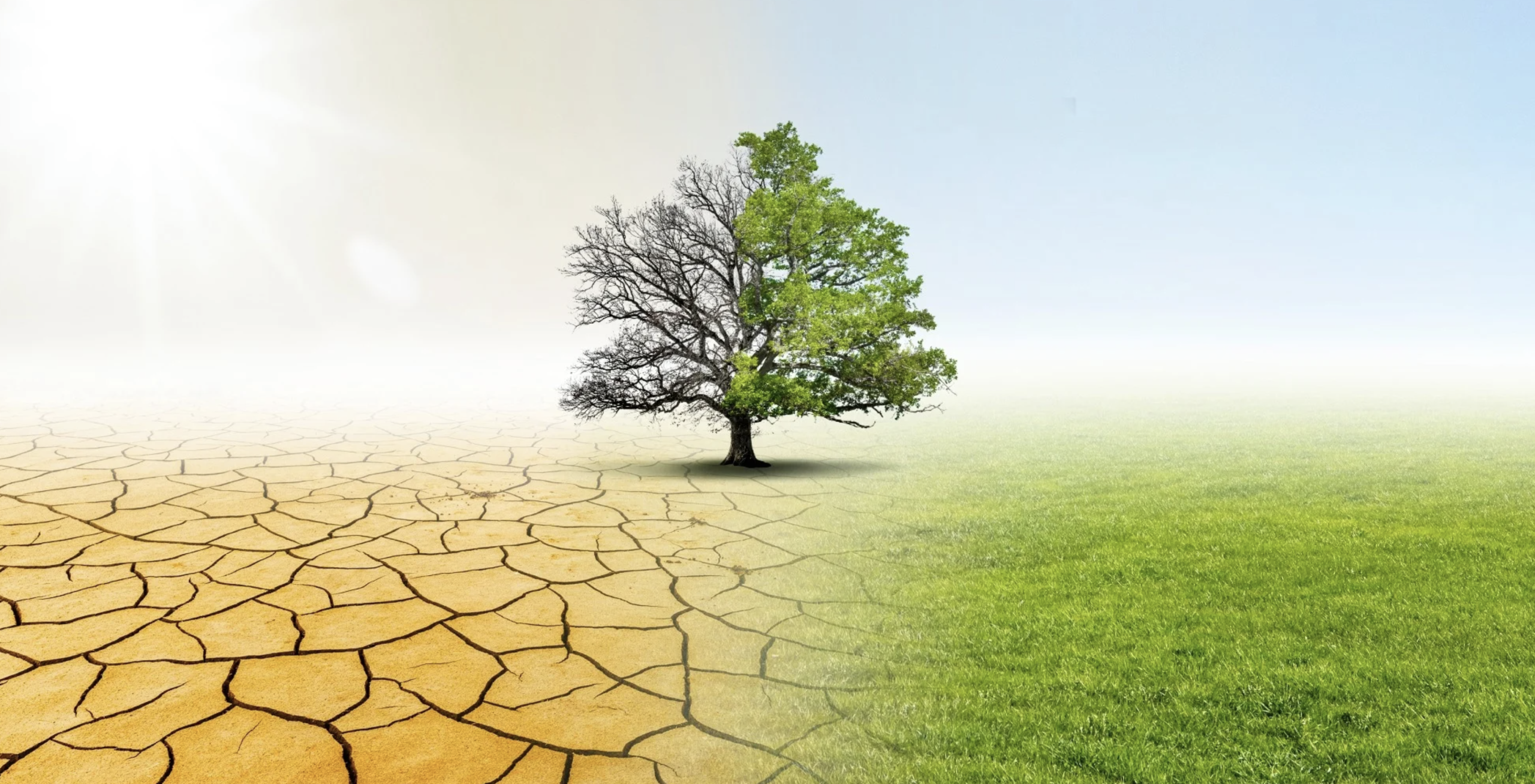
Adaptation refers to any morphological, physiological, or behavioral attribute of an organism that enables it to survive and reproduce in its specific environment. It is the result of long-term evolutionary processes guided by natural selection. Adaptations are not instantaneous; they are genetically fixed traits that increase an organism’s “fitness.”
Types of Adaptations
Organisms employ various strategies to cope with environmental stressors like extreme temperatures, water scarcity, or high salinity.
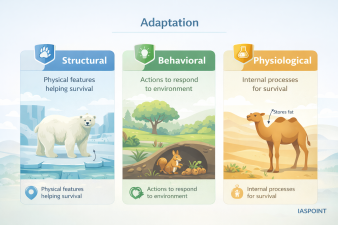
1. Morphological Adaptations
Physical changes in the body structure or external appearance.
- Xerophytes (Desert Plants): Features include thick cuticles on leaf surfaces, sunken stomata to minimize transpiration, and leaves reduced to spines (e.g., Opuntia). Some use the CAM (Crassulacean Acid Metabolism) pathway to keep stomata closed during the day.
- Hydrophytes (Aquatic Plants): Presence of aerenchyma (large air cavities) for buoyancy and gas exchange.
- Allen’s Rule: Mammals from colder climates generally have shorter ears and limbs to minimize heat loss.
2. Physiological Adaptations
Internal functional changes that allow survival in harsh conditions.
- Kangaroo Rat: Found in North American deserts; it meets its water requirements through internal fat oxidation (metabolic water) and produces highly concentrated urine.
- High Altitude Adaptation: Humans residing at high altitudes (e.g., Himalayas) compensate for low oxygen availability by increasing Red Blood Cell (RBC) production, decreasing the binding affinity of hemoglobin, and increasing breathing rates.
- Antifreeze Proteins: Certain fish in Antarctic waters possess proteins that prevent their blood from freezing in sub-zero temperatures.
3. Behavioral Adaptations
Changes in activity patterns or responses to the environment.
- Desert Lizards: Unlike mammals, they lack physiological mechanisms to deal with high temperatures. They bask in the sun to absorb heat when body temperature drops and move to shade when it rises.
- Migration: Seasonal movement of animals to more hospitable areas (e.g., Siberian Cranes migrating to Keoladeo National Park, Rajasthan).
- Hibernation and Aestivation: Winter sleep (e.g., Bears) and summer sleep (e.g., some snails and fish) to avoid extreme cold or heat/desiccation.
Classification based on Environmental Stress
| Adaptive Strategy | Description | Example |
| Ephemerals | Drought-evaders that complete their life cycle in a very short period during rains. | Cassia tora |
| Halophytes | Plants adapted to high salinity; use pneumatophores (respiratory roots) and vivipary (germination while attached to parent). | Mangroves (Rhizophora) |
| Sciophytes | Shade-loving plants that thrive in lower light intensities. | Ferns and Orchids |
| Heliophytes | Sun-loving plants requiring high light intensity for growth. | Sunflowers, Teak |
Adaptation to Temperature: Thermal Strategies
- Ectotherms (Poikilotherms): “Cold-blooded” animals whose body temperature matches the environment (e.g., reptiles, amphibians, fish).
- Endotherms (Homeotherms): “Warm-blooded” animals that maintain a constant internal body temperature regardless of external conditions (e.g., birds, mammals).
Ecological Concepts Related to Adaptation
1. Bergmann’s Rule
Within a broadly distributed taxonomic clade, populations and species of larger size are found in colder environments, while populations and species of smaller size are found in warmer regions. This is because larger bodies have a smaller surface-area-to-volume ratio, conserving heat better.
2. Gloger’s Rule
Among endotherms, individuals living in warm and humid environments tend to have more melanin (darker pigmentation) than those in cool and dry environments.
3. Jordan’s Rule
Fish living in colder waters tend to have more vertebrae than those living in warmer waters.
Important Facts for UPSC Prelims
- Pneumatophores: These are specialized “breathing roots” in mangroves that grow upwards out of the water/mud to get oxygen.
- Vivipary: A unique feature where seeds germinate while still attached to the mother plant; essential in saline swampy areas where normal germination is difficult.
- Benthic Organisms: Animals living at the bottom of the ocean. They are adapted to withstand extremely high pressure and live in total darkness, often relying on chemosynthesis or detritus.