
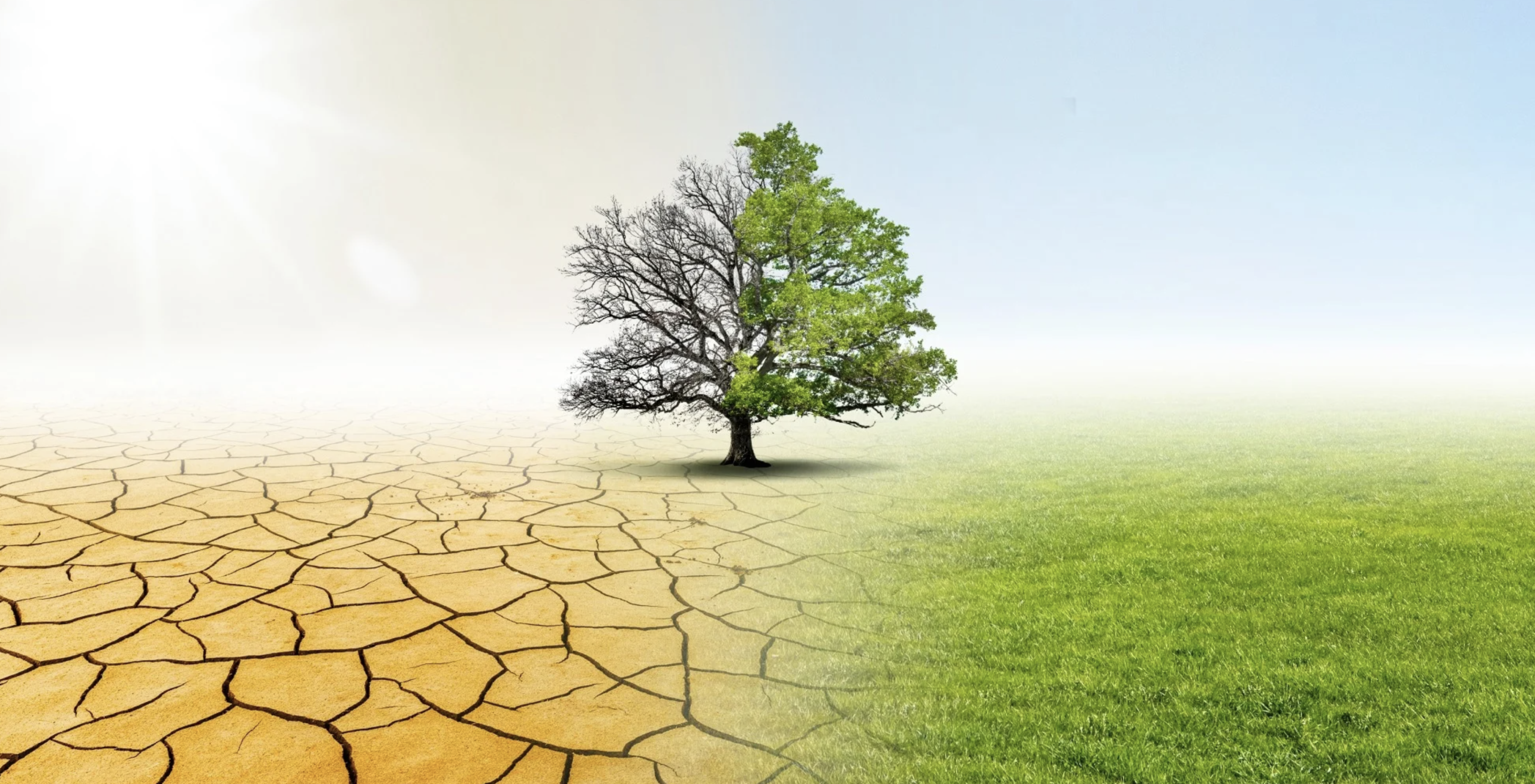
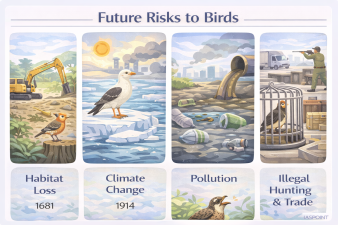
The future of avian biodiversity is increasingly precarious, with the State of India’s Birds (SoIB) 2023 and the State of the World’s Birds 2024 reports highlighting a dramatic acceleration in threats. Beyond traditional habitat loss, emerging risks like climate-driven phenological mismatches, energy infrastructure, and “silent” chemical pollutants are now the primary drivers of projected declines.
1. Climate Change and Phenological Mismatch
Climate change acts as a “threat multiplier” for birds, particularly affecting migratory species that rely on precise environmental cues.
- Phenological Mismatch: Rising temperatures cause trees to leaf out and insects to emerge earlier. Migratory birds, arriving at their traditional times, miss the peak food availability for their chicks.
- Bergmann’s Rule Violation: Studies (e.g., Chicago 2023, Amazon 2024) show birds are physically shrinking in body mass while their wings lengthen to dissipate heat more efficiently. Smaller-brained birds are showing more drastic size reductions, potentially impacting cognitive survival skills.
- Range Shifts: Species are moving toward higher latitudes (poles) or higher altitudes to escape heat, leading to “mountain-top extinctions” where species have no higher ground to occupy.
2. Infrastructure and Energy Transition Risks
While the shift to renewable energy is vital for the climate, it poses specific “green-on-green” conflicts for avian conservation.
- Linear Infrastructure: High-voltage power lines are the single greatest threat to large-bodied birds like the Great Indian Bustard (GIB) and Lesser Florican due to their poor frontal vision.
- Wind Turbines: Collisions with turbine blades are a rising cause of mortality for raptors and migratory soaring birds. In India, this is a critical concern in the coastal and arid regions of Gujarat and Tamil Nadu.
- Solar Parks: Large-scale solar installations in “wastelands” (which are actually vital open natural ecosystems) destroy the habitat of specialized grassland birds.
3. Environmental Pollutants and “Silent” Killers
Chemical threats have evolved beyond the well-known case of Diclofenac and vultures.
| Pollutant Type | Specific Source | Impact on Birds |
| NSAIDs | Nimesulide, Ketoprofen | Fatal kidney failure in vultures (similar to Diclofenac). |
| Anticoagulants | Rodenticides (Rat poison) | Accumulates in raptors (Owls, Hawks) causing internal bleeding. |
| Neonicotinoids | Pesticides | Decimates insect populations, starving insectivorous birds. |
| Heavy Metals | Lead (from ammunition/fishing) | Lead poisoning in waterbirds and scavenging raptors. |
4. The Rise of Avian Pandemics
Zoonotic diseases are no longer isolated events but persistent future risks.
- Highly Pathogenic Avian Influenza (HPAI – H5N1): Recent outbreaks have caused mass mortality in wild bird colonies globally, including migratory geese and cranes in India’s wetlands.
- Avian Malaria: Warmer temperatures allow mosquitoes to reach higher altitudes, threatening island endemics and mountain species that have no natural immunity.
5. Urbanization and Generalist Domination
Future landscapes are trending toward “biotic homogenization,” where a few resilient species replace a diverse range of specialists.
- Generalists on the Rise: Species like the Indian Peafowl, Asian Koel, and Feral Pigeon are expanding rapidly because they can exploit human-modified environments.
- Specialists in Decline: Birds requiring specific niches—such as the Great Hornbill (old-growth forests) or the Yellow-wattled Lapwing (dry grasslands)—face local extinctions.
- Light Pollution: Increasing “skyglow” in urban areas disorients nocturnal migrants, leading to fatal collisions with glass buildings.
UPSC Prelims: Key Reports and Indices
- State of India’s Birds (SoIB) 2023: A collaborative report by 13 organizations (including WII, SACON, and ZSI) using 30 million observations from eBird. It identified 178 species as High Conservation Priority.
- The 3 indices of SoIB:
- Long-term Trend (over 30 years).
- Current Annual Trend (over the last 8 years).
- Distribution Range Size.
- Open Natural Ecosystems (ONEs): Often misclassified as “wastelands” in policy, these are the most threatened habitats for future bird survival in India.
- Tipping Point Species: A term used for species that have lost more than 50% of their population in the last 50 years and are on track to lose another 50% without intervention.