
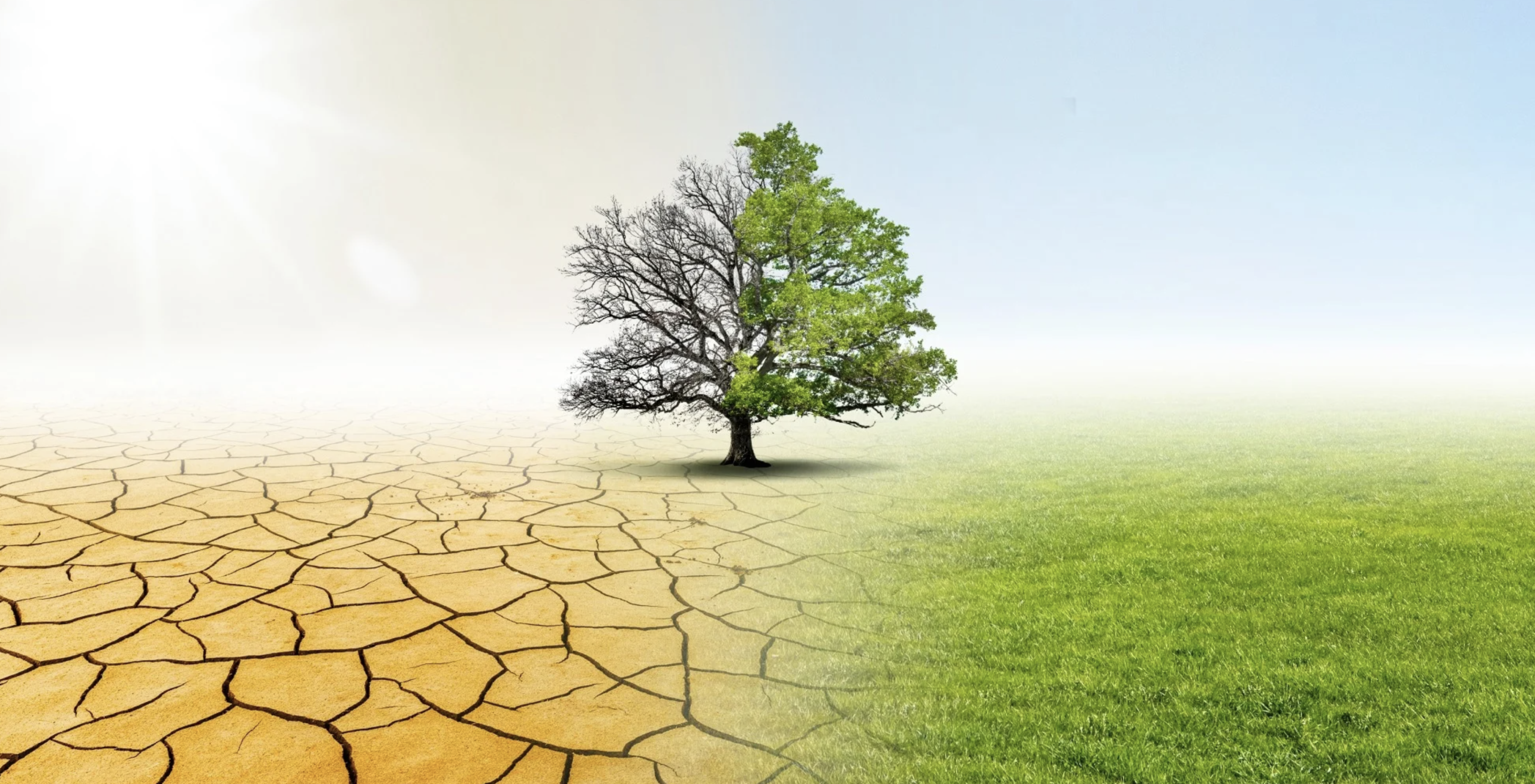
Global warming refers to the long-term rise in the average temperature of Earth’s climate system. It is a major aspect of climate change and has been demonstrated by direct temperature measurements and by measurements of various effects of the warming.
The Science of Global Warming
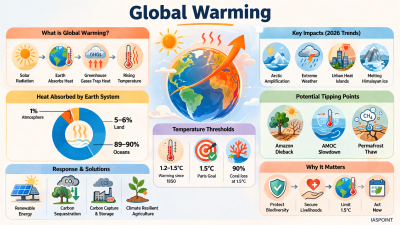
Temperature Thresholds and the 1.5°C Goal
Under the Paris Agreement (2015), the global community committed to limiting the temperature increase to well below 2°C above pre-industrial levels, with efforts to limit it to 1.5°C.
- Current Status (2024-2025): 2024 was the first individual year to exceed the 1.5°C threshold across all twelve months.
- Impact of 1.5°C vs 2.0°C: A 0.5°C difference significantly alters the survival of coral reefs (90% loss at 1.5°C vs. near-total extinction at 2°C) and the frequency of extreme heatwaves.
Heat Capacity of the Earth System
- Atmospheric Warming: While most visible to humans, the atmosphere has absorbed only about 1% of the total excess heat since 1971.
- Ocean Warming: The oceans have absorbed approximately 89-90% of the heat, leading to marine heatwaves and coral bleaching.
- Cryosphere and Land: The remaining heat goes into melting ice (4%) and warming the land surface (5-6%).
Regional Impacts and Vulnerabilities
The Arctic Amplification
The Arctic is warming at nearly four times the global average. This phenomenon, known as Arctic Amplification, occurs because the loss of sea ice reduces the Earth’s Albedo (reflectivity), causing the dark ocean water to absorb more solar radiation.
Impact on the Indian Subcontinent
India is uniquely vulnerable due to its diverse geography and dependence on the monsoon.
- Third Pole Melting: The Hindu Kush Himalayan (HKH) region is losing ice rapidly, threatening the perennial flow of the Indus, Ganga, and Brahmaputra.
- Monsoon Variability: Warming leads to more frequent “break cycles” in the monsoon and an increase in Mesoscale convective systems, causing intense short-duration rainfall.
- Urban Heat Islands (UHI): Indian cities like Delhi and Mumbai experience temperatures 3–5°C higher than surrounding rural areas due to concrete density and lack of green cover.
Key Indicators and Observed Changes
| Indicator | Trend observed up to 2026 | Significance |
| Global Surface Temperature | Up by ~1.2°C to 1.5°C since 1850. | Primary metric for global warming. |
| Specific Humidity | Increasing by ~7% per degree of warming. | Fuels more intense storms and floods. |
| Ocean Stratification | Increasing (layers not mixing). | Reduces nutrient supply for marine life. |
| Vegetation Phenology | Shifting (earlier flowering/migration). | Causes “Ecological Mismatch” between species. |
Potential Tipping Points
Tipping points are thresholds where a small change can lead to a large, irreversible shift in the state of the climate system.
- Amazon Dieback: The rainforest could transition into a dry savanna, releasing billions of tons of CO2.
- AMOC Shutdown: The Atlantic Meridional Overturning Circulation (the “conveyor belt” of ocean currents) is slowing down, which could freeze parts of Europe while warming the tropics further.
- Permafrost Thaw: A self-reinforcing cycle where methane release causes more warming and more thawing.
Global Response Framework
The IPCC Reports
The Intergovernmental Panel on Climate Change (IPCC) provides the scientific basis for global negotiations.
- AR6 Synthesis Report: Emphasizes that “the window of opportunity to secure a liveable and sustainable future for all is rapidly closing.”
- Working Group I: Physical Science Basis.
- Working Group II: Impacts, Adaptation, and Vulnerability.
- Working Group III: Mitigation of Climate Change.
Mitigation Strategies
- Carbon Sequestration: Using technologies like Carbon Capture and Storage (CCS) or natural solutions like afforestation.
- Energy Transition: Moving from fossil fuels to Renewables (Solar, Wind, Green Hydrogen).
- Climate Resilient Agriculture (CRA): Developing heat-resistant crop varieties and efficient irrigation (e.g., “Per Drop More Crop”).
UPSC Trivia: Carbon Budget
The Carbon Budget is the maximum amount of cumulative net global anthropogenic CO2 emissions that would result in limiting global warming to a given level (e.g., 1.5°C). As of 2026, the remaining budget for a 50% chance of staying below 1.5°C is nearly exhausted, requiring Net Zero emissions by 2050.
Last Modified: April 20, 2026