
Wetlands are ecotones—transition zones between terrestrial and aquatic ecosystems. They are areas where water is the primary factor controlling the environment and associated life. In India, wetlands cover approximately 4.63% of the total geographical area.
Ramsar Convention and Status 2026
The Ramsar Convention (1971) is an intergovernmental treaty for the conservation and “wise use” of wetlands. India became a party to it in 1982.
- Total Ramsar Sites: As of April 2026, India has 98 Ramsar Sites, the highest in South Asia and third globally (after the UK and Mexico).
- Recent Additions (2026): Patna Bird Sanctuary (Uttar Pradesh) and Chhari-Dhand (Gujarat) are the latest entrants.
- State with Highest Sites: Tamil Nadu (currently holds the maximum number of Ramsar sites in India).
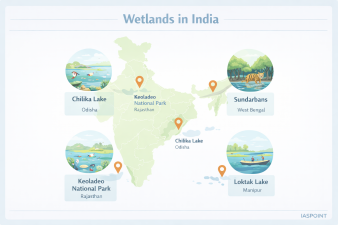
- Oldest Sites: Chilika Lake (Odisha) and Keoladeo National Park (Rajasthan) were the first to be designated in 1981.
Classification of Indian Wetlands
Wetlands are categorized based on their location and hydrological characteristics:
| Category | Sub-types | Key Examples |
| Inland Wetlands | Lakes, Ox-bow lakes, Marshes, Swamps | Kanwar Taal (Bihar), Deepor Beel (Assam) |
| Coastal Wetlands | Mangroves, Coral Reefs, Estuaries, Lagoons | Sundarbans (WB), Chilika Lake (Odisha) |
| High Altitude | Glacial lakes in Himalayas | Tso Kar (Ladakh), Chandra Taal (HP) |
| Man-made | Reservoirs, Tanks, Ash ponds | Harike (Punjab), Bhoj Wetland (MP) |
Legal and Institutional Framework
Wetlands in India are governed by specific regulations to prevent their conversion to non-wetland use.
Wetlands (Conservation and Management) Rules, 2017
- Decentralized Governance: It delegated powers to the State Wetland Authority (SWA) for each state and the Union Territory Wetland Authority.
- Prohibited Activities: Encroachment, setting up of industries, solid waste dumping, and discharge of untreated effluents are strictly banned.
- Exclusions: The 2017 rules specifically exclude river channels, paddy fields, human-made water bodies for drinking water/irrigation, and salt pans from the definition of “protected wetlands.”
Montreux Record
A register of wetland sites on the List of Ramsar wetlands where changes in ecological character have occurred, are occurring, or are likely to occur as a result of technological developments, pollution, or other human interference.
- Current Indian Sites: Keoladeo National Park (Rajasthan) and Loktak Lake (Manipur).
- Removed Sites: Chilika Lake (Odisha) was removed from the record in 2002 following successful restoration.
Ecological and Economic Importance
- Carbon Sequestration: Mangroves and peatlands are “Blue Carbon” sinks, sequestering carbon significantly faster than terrestrial forests.
- Flood Mitigation: Act as natural “sponges,” absorbing excess rainfall and reducing the impact of urban flash floods.
- Biodiversity Hotspots: Host 40% of all global species; serve as critical stopovers for migratory birds on the Central Asian Flyway.
- Economic Value: Support inland fisheries, agriculture (e.g., Makhana in Bihar), and provide “Wise Use” opportunities like eco-tourism.
Significant Ramsar Sites: Key Facts for Prelims
- Sundarbans (West Bengal): Largest Ramsar site in India; world’s largest mangrove forest.
- Renuka Wetland (Himachal Pradesh): Smallest Ramsar site in India.
- Loktak Lake (Manipur): Famous for Phumdis (floating islands) and the Keibul Lamjao National Park—the only floating national park in the world.
- Chilika Lake (Odisha): India’s largest brackish water lagoon; home to the Irrawaddy Dolphin.
- Vembanad-Kol (Kerala): Longest lake in India and a significant site for the Nehru Trophy Boat Race.
Major Threats to Indian Wetlands
- Urbanization: Rapid encroachment for residential and commercial infrastructure.
- Eutrophication: Nutrient runoff from agricultural fields (nitrogen/phosphorus) leading to algal blooms.
- Hydrological Alteration: Construction of dams and canals that disrupt the natural flow and siltation patterns.
- Invasive Species: Proliferation of Water Hyacinth (Eichhornia crassipes) which chokes aquatic oxygen levels.