
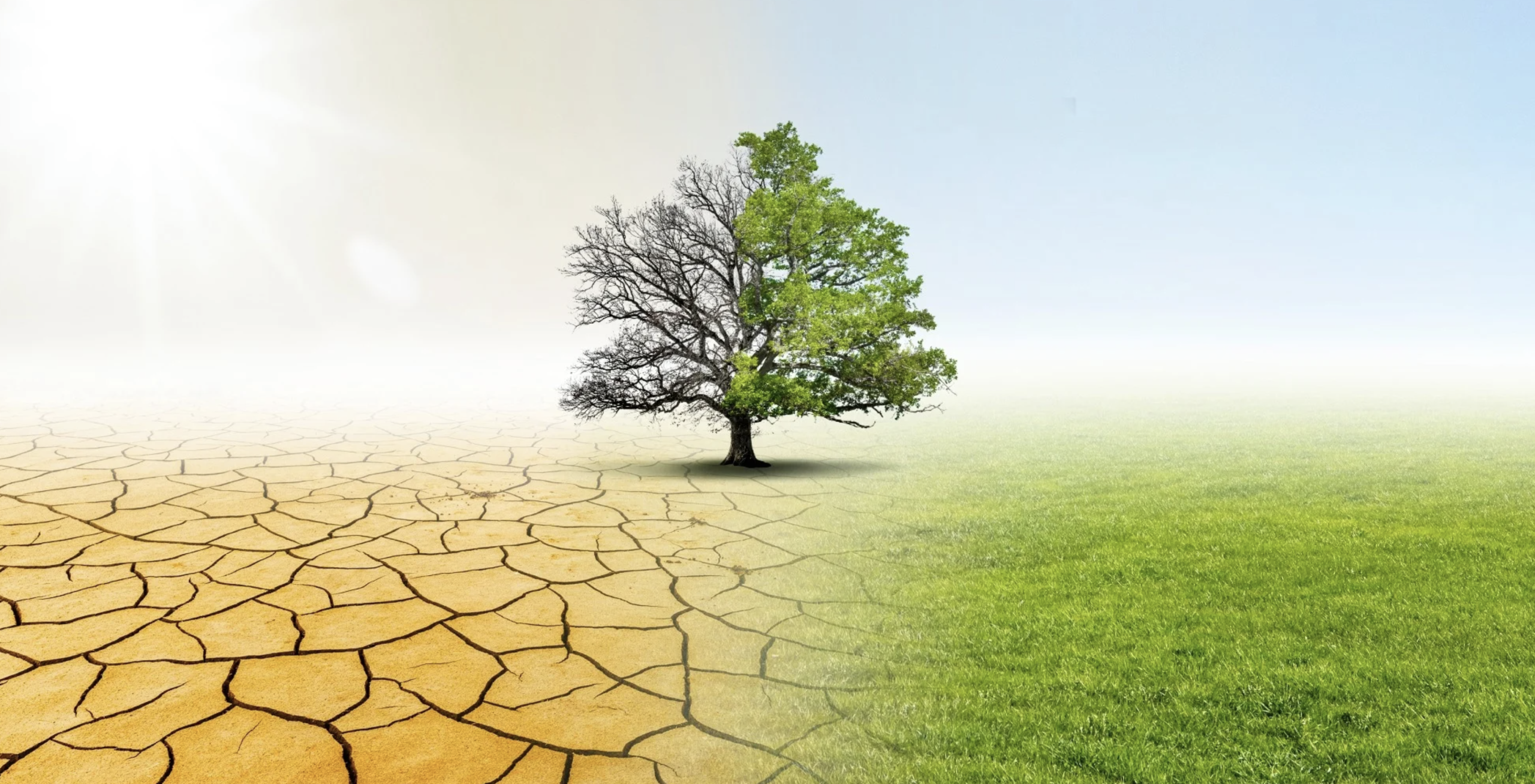
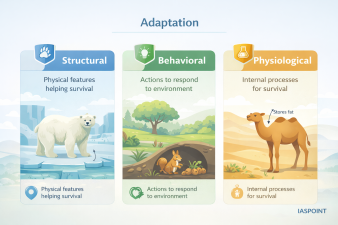
Adaptation refers to adjustments in ecological, social, or economic systems in response to actual or expected climatic stimuli and their effects. Unlike mitigation, which targets the cause of climate change, adaptation focuses on managing the consequences to protect lives, livelihoods, and ecosystems.
Principles of Effective Adaptation
Adaptation strategies are designed to reduce “Climate Risk,” which is a function of Hazard, Exposure, and Vulnerability.
- Anticipatory Adaptation: Taking action before impacts are observed (e.g., building sea walls in anticipation of sea-level rise).
- Autonomous Adaptation: Spontaneous responses by individuals or ecosystems without organized government intervention (e.g., farmers shifting planting dates).
- Planned Adaptation: Result of deliberate policy decisions based on an awareness that conditions have changed or are about to change.
Key Sectors for Adaptation in India
India’s adaptation efforts are primarily guided by the National Adaptation Fund for Climate Change (NAFCC) and state-level action plans.
Agriculture and Food Security
- Climate-Resilient Crops: Developing heat-tolerant and salt-tolerant varieties (e.g., Sahbhagi Dhan for drought-prone areas).
- Precision Irrigation: Using Drip and Sprinkler systems to manage water scarcity under the Per Drop More Crop initiative.
- Agro-forestry: Integrating trees into farmlands to regulate micro-climates and improve soil moisture retention.
Water Resource Management
- Rainwater Harvesting: Large-scale implementation of “Catch the Rain” campaigns to recharge groundwater.
- Desalination: Constructing plants in coastal states like Tamil Nadu and Gujarat to secure drinking water against saltwater intrusion.
- Restoration of Traditional Water Bodies: Reviving tanks and “Baolis” (stepwells) to manage local hydrological cycles.
Coastal Zone Management
- Nature-Based Defenses: Strengthening the “Bio-shield” through mangrove plantation (MISHTI Scheme) and coral reef restoration.
- Integrated Coastal Zone Management (ICZM): Mapping “Hazard Lines” to restrict permanent infrastructure in high-vulnerability zones.
Disaster Risk Reduction (DRR)
- Early Warning Systems (EWS): Utilizing satellite data for real-time tracking of cyclones and heatwaves.
- Resilient Infrastructure: Constructing cyclone shelters and elevated roads in flood-prone districts.
Global Frameworks for Adaptation
The international community has shifted focus toward adaptation to assist developing nations that are disproportionately affected by climate change.
- Global Goal on Adaptation (GGA): Established under the Paris Agreement to enhance adaptive capacity and reduce vulnerability globally.
- Adaptation Fund (AF): Specifically finances projects and programs that help vulnerable communities in developing countries adapt.
- Race to Resilience: A global campaign to catalyze a step-change in global ambition for climate resilience, aiming to protect 4 billion people by 2030.
Adaptation Metrics and Concepts
| Term | Definition |
| Adaptive Capacity | The ability of systems and organisms to adjust to potential damage or take advantage of opportunities. |
| Maladaptation | Actions that may lead to increased risk of adverse climate-related outcomes (e.g., building a sea wall that causes erosion further down the coast). |
| Climate Refugia | Areas that remain relatively buffered from contemporary climate change and enable species to persist. |
| Resilience | The capacity of a system to absorb disturbance and reorganize while undergoing change so as to still retain essentially the same function. |
India’s Institutional Mechanisms for Adaptation
- National Adaptation Fund for Climate Change (NAFCC): A central sector scheme that supports concrete adaptation activities in states and UTs that are particularly vulnerable.
- State Action Plans on Climate Change (SAPCC): Decentralized strategies formulated by individual states to address local climate sensitivities (e.g., GLOFs in Sikkim, Heatwaves in Odisha).
- Coalition for Disaster Resilient Infrastructure (CDRI): An Indian-led initiative focusing on making essential services (telecom, power, transport) resilient to extreme events.
Important Facts for UPSC Prelims
- The Adaptation Gap Report: Published annually by the UNEP, it measures the difference between the estimated costs of adaptation and the actual finance flowing to developing countries.
- Social Protection as Adaptation: Schemes like MGNREGA act as a safety net during climate-induced crop failures, providing “Livelihood Adaptation.”
- Ecosystem-based Adaptation (EbA): The use of biodiversity and ecosystem services as part of an overall adaptation strategy (e.g., using wetlands to manage floodwaters instead of concrete dams).
- Sponge Cities: An urban design concept (being explored in Indian cities like Chennai) that uses permeable surfaces and green spaces to absorb and filter rainwater.