
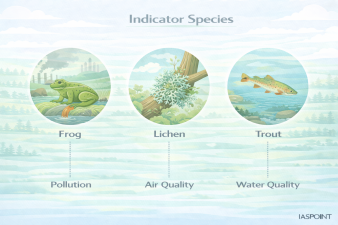
An Indicator Species is an organism whose presence, absence, or abundance reflects a specific environmental condition, the health of an ecosystem, or the impact of environmental change. These species act as “biological proxies” or “early warning systems,” allowing scientists to monitor ecological health without measuring every chemical or physical variable.
Functional Roles of Indicator Species
Indicator species are utilized to monitor three primary environmental aspects:
- Environmental Quality: Identifying the presence of pollutants or changes in nutrient levels.
- Ecosystem Health: Assessing the integrity of biological processes and food web stability.
- Climate Change: Detecting shifts in temperature or moisture through changes in species range or behavior.
Key Examples and Their Significance
Indicator species are found across all taxa and ecosystems. The following table highlights the most significant examples relevant to environmental studies.
| Indicator Species | Habitat / Context | What it Indicates |
| Lichens | Terrestrial / Air | Air Quality: They are extremely sensitive to Sulfur Dioxide (SO2). Their disappearance indicates high air pollution. |
| Amphibians (Frogs/Toads) | Wetland / Terrestrial | Ecological Health: Their permeable skin makes them highly sensitive to toxins, UV radiation, and habitat fragmentation. |
| Stoneflies / Mayflies | Freshwater (Streams) | Water Quality: Their presence indicates high dissolved oxygen and low organic pollution. |
| Corals | Marine | Ocean Temperature: Coral bleaching indicates thermal stress and rising ocean temperatures. |
| Wood Storks | Wetlands (Everglades) | Hydrological Integrity: Their nesting success indicates the health of the water cycle and prey availability in wetlands. |
| Tubifex Worms | Freshwater (Benthic) | Organic Pollution: Unlike mayflies, these thrive in oxygen-poor, highly polluted water (Sewerage). |
Types of Indicators
1. Biological Indicators (Bioindicators)
These are species used to monitor the health of an environment. For example, the presence of certain Diatoms (microscopic algae) in water bodies can indicate the level of phosphorus or nitrogen (Eutrophication).
2. Sentinel Species
Species that are particularly sensitive to a specific pathogen or toxin and can provide an early warning of a threat to human health.
- Classic Example: The Canary in the coal mine. Canaries were used to detect carbon monoxide; if the bird died, it signaled miners to evacuate immediately.
Criteria for Selecting an Indicator Species
For a species to be considered an effective indicator, it must meet several scientific criteria:
- Sensitivity: It must show a measurable response to the environmental change being monitored.
- Specific Response: The response should be clearly linked to a specific stressor (e.g., a specific pollutant).
- Wide Distribution: The species should be common enough to be easily observed or sampled.
- Cost-Effective: Monitoring the species should be cheaper and faster than complex chemical analysis.
- Representative: The species’ response should reflect the response of other species in the same ecosystem.
Indicator Species vs. Other Ecological Categories
| Category | Primary Focus | Example |
| Indicator Species | Environmental health/pollution monitoring. | Lichens, Frogs. |
| Keystone Species | Maintaining ecosystem structure. | Sea Otter, Tiger. |
| Flagship Species | Public relations and conservation funding. | Giant Panda, Great Indian Bustard. |
| Umbrella Species | Protecting a large habitat for many species. | Tiger, Elephant. |
UPSC Prelims Trivia: The “Pollution Index” Organisms
- Benthic Macroinvertebrates: In India, the Central Pollution Control Board (CPCB) often uses the presence of specific insects in rivers to determine the Biological Water Quality Criteria (BWQC).
- Otters: In riverine ecosystems, the presence of smooth-coated otters indicates a clean, undisturbed river with a healthy fish population.
- Peregrine Falcons: These were historic indicators for the harmful effects of DDT. Their thinning eggshells led to the global ban on the pesticide.