
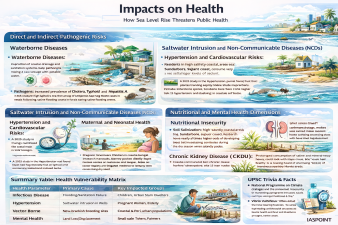
The health impacts of Sea Level Rise (SLR) are often “slow-onset” but catastrophic, transitioning from environmental hazards to public health emergencies.
Direct and Indirect Pathogenic Risks
As sea levels rise, the hydrological cycle in coastal regions is disrupted, leading to the proliferation of various diseases.
- Waterborne Diseases: ” Contamination: Inundation of coastal drainage and sanitation systems leads to the mixing of raw sewage with potable water.
- Pathogens: Increased prevalence of Cholera, Typhoid, and Hepatitis A. A 2024 analysis highlighted a significant surge in Leptospirosis (Rat Fever) cases in Kerala following saline flooding events.
- Vector-Borne Diseases (VBDs): ” Stagnant Saline Water: SLR creates new brackish water pockets. While many mosquitoes prefer freshwater, species like Anopheles sundaicus (a major malaria vector) thrive in brackish water.
- Expanded Range: Warmer coastal temperatures and shifting humidity extend the breeding season for Aedes aegypti (Dengue and Chikungunya), which saw a record burden of over 2.3 lakh cases in India by late 2024.
Saltwater Intrusion and Non-Communicable Diseases (NCDs)
One of the most insidious impacts of SLR is the “salinization” of drinking water sources (aquifers).
- Hypertension and Cardiovascular Risks: ” Residents in high-salinity coastal areas (e.g., Sundarbans, Gujarat coast) consume significantly higher levels of sodium.
- A 2025 study in the Hypertension journal found that individuals drinking slightly saline water have a 17% to 42% higher risk of hypertension compared to those with freshwater access.
- Maternal and Neonatal Health: ” High salt intake is a direct driver of Preeclampsia and Gestational Hypertension in pregnant women.
- Research in coastal Bengal and Bangladesh indicates that women in these regions have nearly 5 times higher odds of developing these life-threatening conditions during the dry season when salinity peaks.
- Chronic Kidney Disease (CKD): Prolonged consumption of saline and mineral-heavy water, combined with heat stress (the “ocean heat” factor), is a leading cause of the rising “CKD of unknown etiology” (CKDu) in coastal farming communities.
Nutritional and Mental Health Dimensions
SLR affects health through the breakdown of the “Social Determinants of Health.”
- Nutritional Insecurity: ” Soil Salinization: Rising sea levels make coastal soil infertile for staple crops like rice. This leads to a local “hidden hunger” crisis—malnutrition caused by a lack of diverse, fresh produce.
- Impact on Grains: Elevated CO2 levels (the driver of SLR) are proven to reduce protein, zinc, and iron concentrations in staple grains.
- Mental Health (Eco-Anxiety & Solastalgia): ” Coastal communities face chronic stress from the “anticipatory loss” of their homes and livelihoods.
- Solastalgia: The distress caused by environmental change in one’s home environment. This is increasingly documented in “sinking” island territories and the Sundarbans.
Summary Table: Health Vulnerability Matrix
| Health Parameter | Primary Cause | Key Impacted Groups |
| Infectious Disease | Flooding/Sanitation failure | Children, Urban Slum Dwellers |
| Hypertension | Saltwater Intrusion in Wells | Pregnant Women, Elderly |
| Vector-Borne | New brackish breeding sites | Coastal & Peri-urban populations |
| Mental Health | Land loss/Displacement | Small-scale fishers, Farmers |
UPSC Trivia & Facts
- National Programme on Climate Change and Human Health (NPCCHH): Launched by India to build healthcare capacity for tackling climate-sensitive diseases like those induced by SLR.
- Vibrio Vulnerificus: Often called the “flesh-eating bacteria,” its range is expanding northward as coastal waters warm and sea levels fluctuate, posing a risk to seafood consumers and coastal workers.
- One Health Approach: A strategy integrating human, animal, and environmental health to prevent zoonotic spillovers, which are exacerbated when SLR forces coastal wildlife into human-occupied inland areas.