
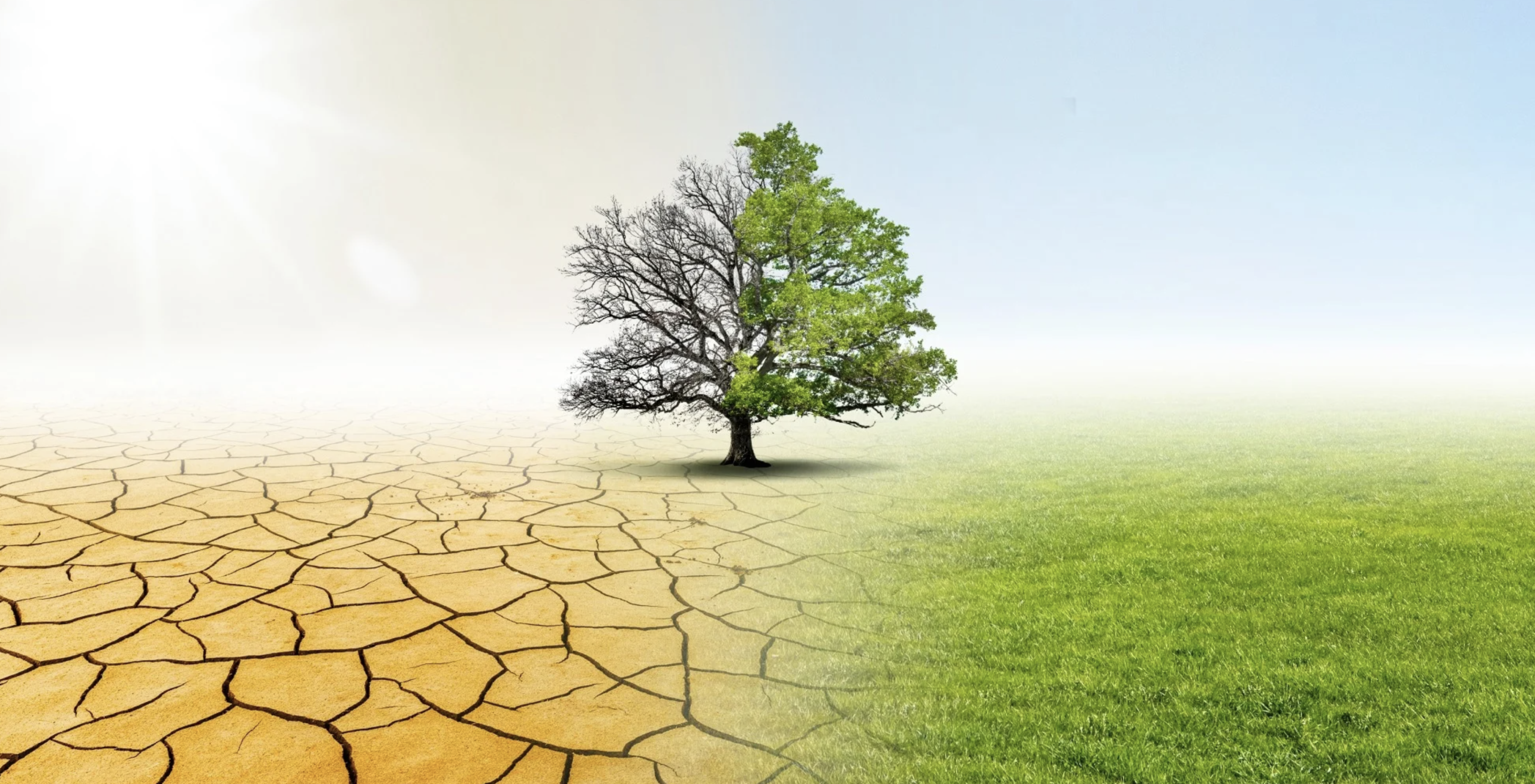
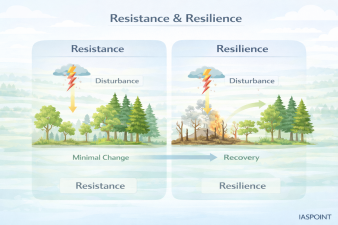
Stability is not a static state but the ability of an ecosystem to maintain its functions when faced with disturbances. This stability is measured through two distinct but related properties: Resistance and Resilience. Together, they determine the “Robustness” of an ecosystem.
Resistance (The Ability to Withstand)
Resistance is the property of an ecosystem to remain essentially unchanged when subjected to a disturbance. It is a measure of how much an ecosystem “resists” being pushed away from its equilibrium state.
- High Resistance: An ecosystem that requires a massive amount of force to change its structure. For example, a mature Tropical Rainforest is highly resistant to minor temperature fluctuations or small-scale pest outbreaks because of its dense structure and high species diversity.
- Low Resistance: An ecosystem that changes rapidly even with small disturbances. For example, a Tundra ecosystem is highly sensitive to physical disturbances; a single tire track from a vehicle can damage the moss layer for decades.
Resilience (The Ability to Recover)
Resilience is the speed and ability of an ecosystem to return to its original state after being disturbed. It focuses on the recovery phase rather than the initial impact.
- High Resilience: An ecosystem that “bounces back” quickly. A Grassland has high resilience; even if it is completely burned by a fire, the grasses grow back rapidly as soon as the rains arrive.
- Low Resilience: An ecosystem that takes a very long time to recover, or may never recover, once the damage is done. A Coral Reef has low resilience; if bleaching occurs, it may take decades for the calcium carbonate structure to rebuild, and if the water conditions remain poor, it may shift to an algal-dominated state permanently.
Comparison of Ecological Stability Properties
| Ecosystem Type | Resistance | Resilience | Explanation |
| Tropical Rainforest | High | Low | Hard to destroy, but once a large area is cleared, the nutrient-poor soil makes recovery nearly impossible. |
| Grassland | Low | High | Easily destroyed by fire or drought, but the simple life forms and underground buds allow for rapid regrowth. |
| Coral Reefs | Moderate | Low | Can withstand some physical stress, but very slow to recover from chemical or thermal changes. |
| Agricultural Field | Low | Low | Lacks diversity; a single pest can wipe it out, and it requires human intervention to “recover.” |
Factors Influencing Stability
The level of resistance and resilience in a system is governed by several ecological factors:
- Biodiversity: Generally, higher biodiversity leads to higher stability (The Insurance Hypothesis). If one species fails, another with a similar functional role can take over.
- Complexity of Food Webs: More links in a food web provide alternative energy pathways, increasing the system’s buffering capacity.
- Nutrient Availability: High nutrient cycling rates can assist in faster recovery (Resilience).
- Frequency of Disturbance: Ecosystems that experience frequent, moderate disturbances (like seasonal flooding) often evolve higher resilience to those specific events.
Key UPSC Concepts: Thresholds and Tipping Points
- Homeostatic Plateau: The range within which an ecosystem can maintain stability through its internal feedback mechanisms.
- Tipping Point (Threshold): The point at which a disturbance is so great that the ecosystem’s resistance is overcome, and its resilience is insufficient to bring it back. The system then undergoes a Regime Shift to a new, often less productive, stable state.
- Hysteresis: A phenomenon where the path to recovery is different from the path of degradation. Even if the original conditions are restored, the ecosystem may not automatically return to its original state.
Ecological Significance for Prelims
- Climate Change: Aspirants should note that climate change is testing the “Resistance” of polar ecosystems and the “Resilience” of coastal mangroves.
- Invasive Species: These often reduce the resilience of local ecosystems by outcompeting native species that provide functional redundancy.
- Conservation Strategy: Modern conservation focuses not just on protecting a species, but on maintaining the Ecological Integrity so that the system remains resilient to future environmental shocks.