

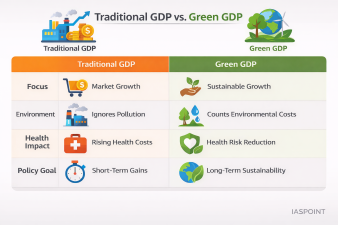
Resource Efficiency (RE) is the strategy of using the Earth’s limited resources in a sustainable manner while minimizing impacts on the environment. It involves creating more value with less input—effectively “decoupling” economic growth from resource consumption and environmental degradation. This concept is a core pillar of the Circular Economy, moving away from the traditional “Linear Economy” model of “Take-Make-Dispose.”
The 6R Principle of Resource Efficiency
To achieve holistic resource management, the RE framework expands beyond the traditional 3Rs.
- Reduce: Minimizing the quantity of raw materials used in production.
- Reuse: Extending the life of a product by using it again for the same or a different purpose.
- Recycle: Processing waste materials into new products.
- Refurbish: Repairing or restoring old products to a functional state.
- Redesign: Engineering products to be more durable, repairable, and recyclable at the end of their life.
- Recover: Extracting energy or materials from waste streams that cannot be recycled.
Institutional Framework in India
India is one of the first few countries to institutionalize resource efficiency through dedicated policy frameworks.
National Resource Efficiency Policy (NREP), 2019
Drafted by the Ministry of Environment, Forest and Climate Change (MoEFCC), the NREP aims to:
- Increase the life cycle of resources.
- Achieve a Circular Economy through zero waste to landfill.
- Establish a National Resource Efficiency Authority (NREA) to derive sector-specific action plans.
- Promote the use of Secondary Raw Materials (SRM) through standards and certification.
Resource Efficiency Cell
Established within the MoEFCC, this cell coordinates with various ministries and stakeholders to implement the Strategy on Resource Efficiency developed by NITI Aayog in collaboration with the European Union (EU).
Sector-Specific Resource Efficiency Measures
The government has identified several “priority sectors” where resource efficiency can yield maximum economic and environmental dividends:
| Sector | Key Efficiency Strategy |
| Automotive | Implementation of the Vehicle Scrappage Policy to recover steel, aluminum, and rubber. |
| Construction | Utilization of Construction and Demolition (C&D) Waste in bricks and paving stones. |
| Electronics | E-Waste Management Rules focusing on the recovery of precious metals like Gold, Silver, and Copper. |
| Plastic | Extended Producer Responsibility (EPR) mandating manufacturers to collect and recycle plastic packaging. |
| Steel | Promotion of “Green Steel” by using scrap metal in Electric Arc Furnaces (EAF). |
Economic and Environmental Benefits
- Resource Security: Reduces dependency on imports for critical raw materials (e.g., Lithium, Rare Earth Elements).
- Cost Savings: Lower input costs for industries due to material recovery and energy efficiency.
- Job Creation: Growth in the recycling, refurbishing, and waste management sectors (Green Jobs).
- Emission Reduction: Lowering the carbon footprint associated with mining and primary processing of raw materials.
Global Initiatives and Agreements
- G7 Alliance for Resource Efficiency: Established in 2015 to share best practices and promote international cooperation.
- UNEP International Resource Panel (IRP): Provides scientific assessments on the sustainable use of natural resources and their environmental impacts.
- SDG 12 (Responsible Consumption and Production): Specifically targets the sustainable management and efficient use of natural resources by 2030.
- Circular Economy Coalition: A global platform to support the transition to a circular economy, which India actively engages with.
Key Facts for UPSC Prelims
- Secondary Raw Materials (SRM): These are materials recovered from waste through recycling and fed back into the production cycle.
- Urban Mining: The process of reclaiming raw materials from spent products, buildings, and waste discarded in urban areas (specifically relevant for E-waste).
- Material Circularity Indicator (MCI): A metric used to measure how restorative or “circular” the material flows of a product or company are.
- Lighthouse Projects: Government-supported pilot projects intended to demonstrate the commercial viability of resource-efficient technologies.
- EPR Credits: Tradeable certificates generated by recyclers and purchased by producers to meet their Extended Producer Responsibility targets.