
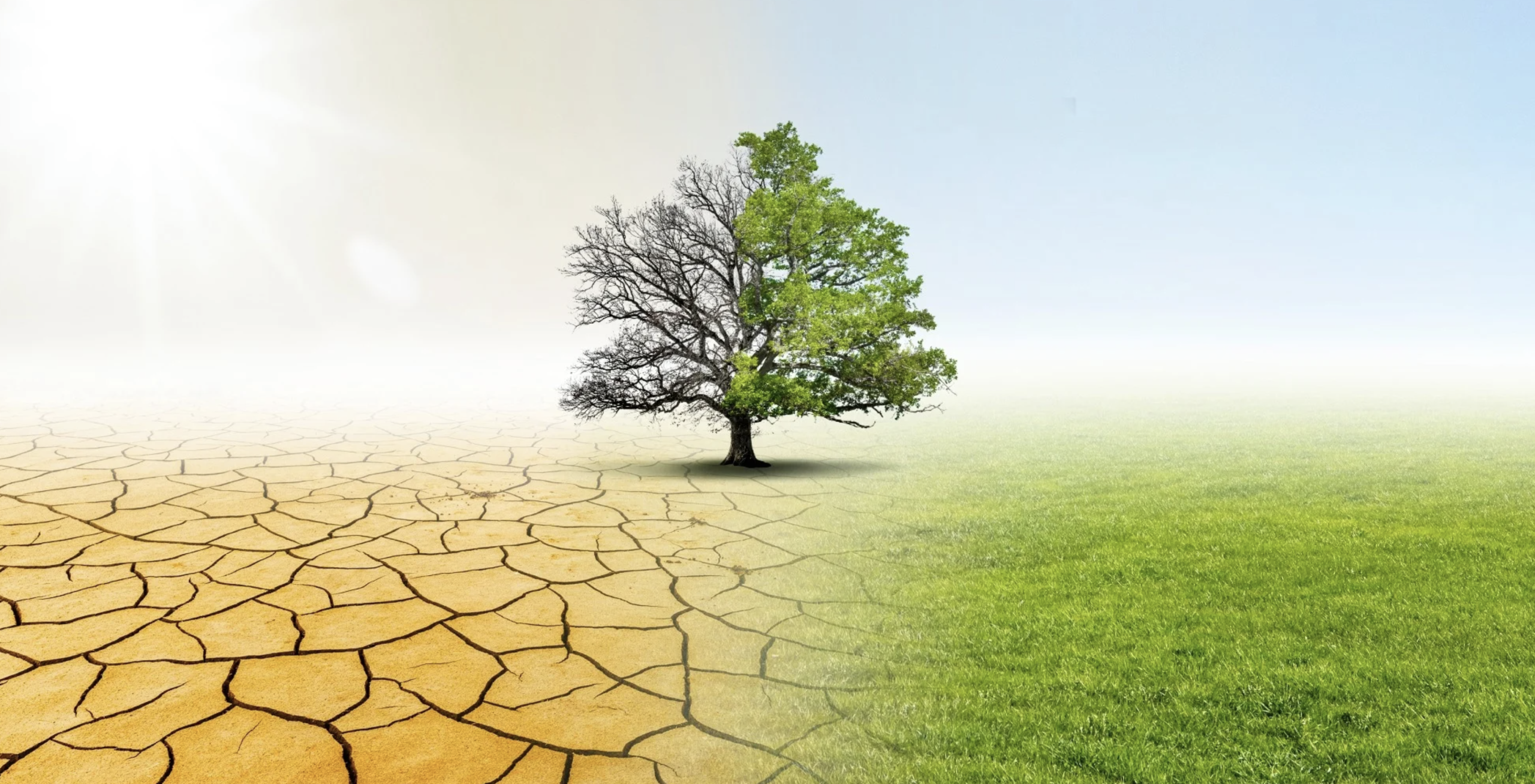
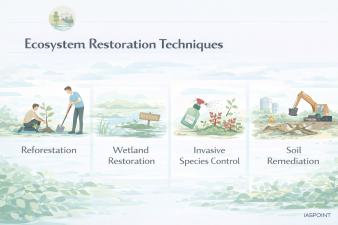
Ecosystem restoration is the process of assisting the recovery of an ecosystem that has been degraded, damaged, or destroyed. In the context of the UN Decade on Ecosystem Restoration (2021–2030), the focus is on reversing the trend of biodiversity loss and enhancing carbon sinks.
- Restoration vs. Rehabilitation: Restoration aims to return an ecosystem to its original state, while rehabilitation focuses on repairing ecosystem functions (e.g., soil fertility) without necessarily returning it to its exact original species composition.
- Reference Ecosystem: A model used to plan and evaluate restoration, usually based on a nearby undisturbed area or historical records.
Core Floral Restoration Techniques
Floral restoration involves specific botanical interventions to re-establish native plant communities.
1. Assisted Natural Regeneration (ANR)
This is a low-cost technique that focuses on protecting and nurturing wild seedlings already present in the soil.
- Mechanism: Instead of active planting, practitioners remove barriers to natural growth, such as invasive weeds, grazing pressure, or frequent fires.
- Application: Used extensively in the Degraded Forest Lands of Central India to allow species like Teak and Sal to recover.
2. Framework Species Method
This involve planting a small number of native tree species (20–30) that are fast-growing and have high survival rates.
- Goal: These “framework” trees quickly establish a canopy, shade out weeds, and attract seed-dispersing wildlife (birds, bats), which then bring in seeds of other plant species naturally.
- Suitability: Ideal for restoring Tropical Rainforests in the Western Ghats and North-East India.
3. Miyawaki Method (Urban Afforestation)
Developed by Japanese botanist Akira Miyawaki, this technique is popular for creating dense “urban forests.”
- Technique: Planting 2–4 species of native trees per square meter. The plants compete for sunlight, leading to growth that is 10 times faster and 30 times denser than traditional methods.
- Result: Creates a multi-layered forest (shrub, sub-tree, tree, canopy) in as little as 20–30 years instead of 200 years.
4. Seed Bombing (Aerial Seeding)
Seeds are wrapped in a mixture of clay, compost, and soil (the “ball”) and dispersed over large or inaccessible areas.
- Advantage: The ball protects the seeds from birds and rodents until the monsoon rains trigger germination.
- Application: Used by the Haryana Forest Department for greening the Aravalli hills and in regions with difficult terrain.
Specialized Ecological Techniques
Beyond tree planting, restoration involves soil and water-focused botanical strategies.
| Technique | Description | Application |
| Phytoremediation | Using plants to remove or neutralize pollutants from soil/water. | Cleaning industrial sites or urban drains (Canna, Vetiver). |
| Riparian Buffers | Planting native vegetation along riverbanks. | Prevents soil erosion and filters agricultural runoff (e.g., Ganga Rejuvenation). |
| Ecological Thinning | Selective removal of certain trees to reduce competition. | Used in overgrown monocultures to allow diverse native flora to thrive. |
| Translocation | Moving rare plants from a site slated for development to a protected area. | Often done with orchids and medicinal herbs in developmental zones. |
Biological Controls and Invasive Management
Restoration often cannot begin until invasive species are suppressed.
- Manual Uprooting: Effective for small areas but labor-intensive.
- Biological Control: Introducing a natural predator to control an invasive plant. (Example: Using the Mexican Beetle to control Parthenium).
- Chemical Control: Herbicides (e.g., Glyphosate), though controversial due to soil health impacts.
International and National Policy Links
- Bonn Challenge: A global effort to bring 150 million hectares of the world’s deforested and degraded land into restoration by 2020, and 350 million hectares by 2030. India has a target of 26 million hectares.
- Green India Mission (GIM): One of the eight missions under the National Action Plan on Climate Change (NAPCC). It focuses on protecting, restoring, and enhancing India’s diminishing forest cover.
- CAMPA (Compensatory Afforestation Fund): Funds collected from industries for forest diversion are used for these restoration techniques.
Key Facts for UPSC Prelims
- Pioneer Species: The first plants to colonize a restoration site (e.g., Lichens or hardy grasses). They modify the environment for later-successional species.
- Nurse Plants: Larger plants that provide shade and moisture for delicate seedlings of other species during the early stages of restoration.
- Seed Banks (Soil): Restoration often relies on the “soil seed bank”—seeds that have been dormant in the soil for years waiting for the right conditions.
- Ecological Succession: The predictable process by which the species and structure of a plant community change over time. Restoration is essentially “accelerated succession.”