
Ayurveda, the “Science of Life,” classifies herbs based on their pharmacological properties (Guna), potency (Virya), and post-digestive effect (Vipaka). From an environmental perspective, these herbs represent a vital component of India’s floral wealth, primarily concentrated in the Himalayan belt, the Western Ghats, and the Indo-Gangetic plains. Their conservation is governed by the Biological Diversity Act, 2002, which regulates access to these biological resources.
Classification based on Therapeutic Utility
Ayurvedic herbs are often categorized into groups based on their primary action on the human body. These categories are frequently referenced in the context of GI (Geographical Indication) tags and traditional knowledge protection.
Rasayana (Rejuvenators)
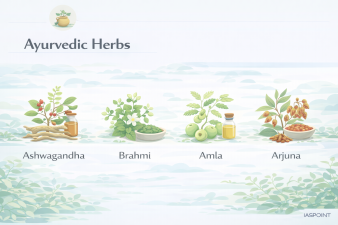
- Guduchi (Tinospora cordifolia): Known as Amrita (Nectar of Immortality). It is a deciduous climbing shrub. It is highly resilient and used for immunomodulation and treating chronic fevers.
- Amalaki (Phyllanthus emblica): A cornerstone of the Triphala formulation. It thrives in tropical forests and is essential for its high Vitamin C content and antioxidant properties.
- Brahmi (Bacopa monnieri): A creeping perennial herb found in wet, marshy wetlands. It is a renowned “Medhya Rasayana” (brain tonic) used to enhance memory and cognitive function.
Adaptogens (Stress-Relievers)
- Ashwagandha (Withania somnifera): Cultivated primarily in the arid regions of Rajasthan and Madhya Pradesh. It helps the body resist physical and mental stress.
- Shatavari (Asparagus racemosus): Known as the “Queen of Herbs,” it is a woody climber found throughout tropical India. It is primarily used for hormonal balance and reproductive health.
Geographic Distribution of Key Ayurvedic Flora
The distribution of these herbs is determined by specific agro-climatic zones, making them indicators of ecosystem health.
| Herb Name | Primary Habitat | Conservation Status/Notes |
| Guggulu (Commiphora wightii) | Arid regions (Gujarat, Rajasthan) | Critically Endangered due to over-tapping for its oleo-gum resin. |
| Kutki (Picrorhiza kurroa) | High Altitude Himalayas (3000-5000m) | Endangered; used for liver disorders and as a bitter tonic. |
| Chirayata (Swertia chirayita) | Temperate Himalayas | Used for malaria and skin diseases; faces threat from habitat loss. |
| Sariva (Hemidesmus indicus) | Pan-India (Deciduous forests) | Also known as Indian Sarsaparilla; used as a blood purifier. |
| Triphala Components | Tropical/Subtropical forests | A combination of Amalaki, Bibhitaki, and Haritaki. |
Regulatory and Conservation Framework
The Ministry of AYUSH and the Ministry of Environment, Forest and Climate Change (MoEFCC) collaborate to ensure the sustainable harvest of these herbs.
Forest Produce Classification
- Under the Indian Forest Act, 1927, many ayurvedic herbs are classified as Minor Forest Produce (MFP).
- The Scheduled Tribes and Other Traditional Forest Dwellers (Recognition of Forest Rights) Act, 2006, grants local communities the right to collect and sell non-timber forest produce, including medicinal herbs.
Good Agricultural and Collection Practices (GACP)
- Developed by the WHO and adopted by the NMPB, these guidelines ensure that the cultivation of ayurvedic herbs does not lead to soil degradation or loss of potency.
- Focuses on preventing heavy metal contamination (Lead, Arsenic, Mercury) which is a common concern in exported ayurvedic raw materials.
Major Challenges in the Ayurvedic Herbal Sector
- Adulteration: Due to high demand and low supply of rare Himalayan herbs, cheaper substitutes or “look-alikes” are often mixed, reducing medicinal efficacy.
- Unsustainable Harvesting: Destructive harvesting (e.g., uprooting the whole plant instead of collecting seeds/leaves) leads to local extinction of species like Aconitum heterophyllum (Ativisha).
- Genetic Erosion: The loss of wild varieties due to the promotion of standardized monocultures in commercial farming.
Notable Initiatives and Trivia
- Vrikshayurveda: An ancient Sanskrit text dedicated to the science of plant life, documenting the traditional methods of planting, soil selection, and pest control for medicinal herbs.
- Herb-Industrial Clusters: The Government of India has identified specific clusters (e.g., in Kerala for Sahyadri herbs) to process raw ayurvedic herbs into value-added extracts.
- National Gene Bank: Located at the National Bureau of Plant Genetic Resources (NBPGR), New Delhi, it preserves the seeds and germplasm of thousands of indigenous ayurvedic species.
- GI Tags: Several ayurvedic-related products, such as Navara Rice (used in Shashtika Shali Pinda Sweda) and Malabar Lemongrass, have received GI status, protecting their regional identity and traditional usage.