
An ecosystem is characterized by the interaction between its living and non-living constituents. These are broadly categorized into Abiotic (Physical) and Biotic (Biological) components. The structural integrity of an ecosystem depends on the exchange of energy and matter between these two groups.
Abiotic Components (Non-Living)
Abiotic factors are the chemical and physical parts of the environment that affect living organisms and the functioning of ecosystems. They act as limiting factors that determine the distribution and structure of the biotic community.
Physical and Climatic Factors
- Insolation (Sunlight): The primary source of energy. It governs photosynthesis and regulates biological rhythms (photoperiodism).
- Temperature: Influences the metabolic rates of organisms. Species are classified as Eurythermal (can tolerate a wide range of temperatures) or Stenothermal (restricted to narrow temperature ranges).
- Precipitation: Water availability determines the type of ecosystem (e.g., Tropical Rainforest vs. Desert).
- Atmospheric Pressure and Wind: Affects transpiration in plants and the dispersal of seeds and pollen.
Edaphic Factors
These relate to the structure and composition of the soil.
- Soil Texture: The proportion of sand, silt, and clay determines water-holding capacity and aeration.
- pH Levels: Soil acidity or alkalinity dictates the types of flora that can thrive.
- Mineral Composition: Presence of macro-nutrients (N, P, K) and micro-nutrients (Fe, Zn, Mg).
Inorganic and Organic Substances
- Inorganic: Elements like Carbon, Nitrogen, Oxygen, and Phosphorus that cycle through the ecosystem via biogeochemical cycles.
- Organic: Proteins, Carbohydrates, and Humus that bridge the gap between the living and non-living world.
Biotic Components (Living)
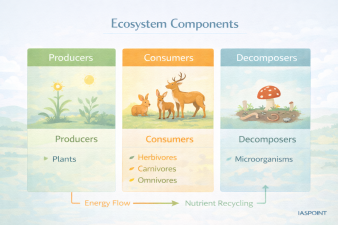
Biotic components include all living entities within an ecosystem, categorized based on their functional role in the energy hierarchy.
Producers (Autotrophs)
Organisms that synthesize their own food from inorganic raw materials using solar or chemical energy.
- Photoautotrophs: Use sunlight (e.g., green plants, phytoplankton, algae).
- Chemoautotrophs: Use chemical energy from oxidation of inorganic substances (e.g., nitrifying bacteria).
Consumers (Heterotrophs)
Organisms that cannot fix energy and must consume other organisms.
- Primary Consumers (Herbivores): Feed directly on producers (e.g., Zooplankton in aquatic systems, Grasshoppers in terrestrial systems).
- Secondary Consumers (Primary Carnivores): Feed on herbivores (e.g., Frogs, small fish).
- Tertiary Consumers (Secondary Carnivores): Feed on other carnivores (e.g., Snakes).
- Quaternary Consumers (Top Carnivores): Occupy the highest trophic level with no natural predators (e.g., Lion, Hawk).
Decomposers and Detritivores
These organisms are essential for nutrient recycling.
- Saprotrophs (Decomposers): Bacteria and fungi that break down dead organic matter by secreting enzymes outside their body (extracellular digestion).
- Detritivores: Organisms like earthworms or termites that ingest and break down detritus (dead organic matter) internally.
Trophic Levels and Interaction
The biotic components are organized into hierarchical levels known as Trophic Levels. Energy decreases as it moves up these levels due to metabolic heat loss.
| Trophic Level | Functional Role | Examples |
| First Trophic Level | Producers | Grass, Trees, Phytoplankton |
| Second Trophic Level | Primary Consumers | Cow, Rabbit, Deer |
| Third Trophic Level | Secondary Consumers | Wolf, Fox, Frog |
| Fourth Trophic Level | Tertiary Consumers | Tiger, Lion, Shark |
Key Terms for UPSC Prelims
- Standing State: The amount of all the inorganic substances (nutrients like P, Ca, N) present in the soil or water at any given time.
- Standing Crop: The total mass of living material (biomass) at a particular trophic level at a given time.
- Ecological Equivalence: Unrelated organisms that occupy similar niches in different geographical regions (e.g., Cacti in American deserts and Euphorbias in African deserts).
- Mixotrophs: Organisms that can act as both producers and consumers depending on environmental conditions (e.g., Euglena).
Relationship Between Components
The interaction between abiotic and biotic factors is not static. It involves two major processes:
- Nutrient Cycling (Biogeochemical Cycles): The exchange of nutrients is cyclic (Abiotic → Biotic → Abiotic).
- Energy Flow: The flow of energy is unidirectional and non-cyclic. It enters as light and leaves the system as heat.