

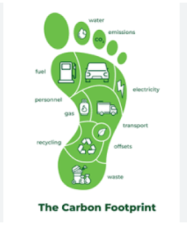
In an era marked by increasing environmental concerns and climate change, the concept of carbon footprint has gained significant attention. A carbon footprint is the total amount of greenhouse gases, primarily carbon dioxide, that are emitted directly or indirectly by an individual, organization, event, or product throughout its lifecycle.
Contribution to Carbon Footprint
- Energy Consumption: One of the primary contributors to an individual’s carbon footprint is energy consumption. Fossil fuels, such as coal, oil, and natural gas, release carbon dioxide when burned for electricity, heating, and transportation.
- Transportation: The mode of transportation plays a significant role in carbon emissions. Cars, planes, and ships powered by fossil fuels contribute substantially to an individual’s or a company’s carbon footprint.
- Diet and Agriculture: Food production and agriculture are responsible for a considerable portion of carbon emissions. Livestock farming, in particular, contributes to methane emissions, a potent greenhouse gas.
Calculating and Understanding Carbon Footprint
To effectively reduce carbon footprint, individuals and organizations need to first calculate and understand their emissions. Several online calculators and tools are available to estimate personal or organizational carbon footprints based on lifestyle, energy usage, and consumption patterns.
Key Data Table
| Category | Key Information |
| Definition | The total amount of greenhouse gases, primarily carbon dioxide, emitted directly or indirectly by an individual, organization, event, or product. |
| Global Carbon Footprint | – In 2019, global CO2 emissions reached 36.8 billion metric tons. |
| – The energy sector contributed to 73% of global emissions. | |
| – China, the United States, and India were the top three emitters, collectively responsible for over 50% of global emissions. | |
| Average Per Capita Emissions | – The average global per capita carbon footprint is approximately 4.8 metric tons per year. |
| – Developed countries often have higher per capita emissions compared to developing nations. | |
| Major Contributors | – Fossil fuel combustion (coal, oil, and natural gas) is the primary source of carbon emissions. |
| – Deforestation and land-use changes contribute significantly to increased carbon levels. | |
| Reduction Strategies | – Transitioning to renewable energy sources (solar, wind, hydro) can substantially reduce carbon emissions. |
| – Improving energy efficiency in industries, transportation, and buildings is crucial for emission reduction. | |
| – Afforestation and reforestation projects help absorb CO2 from the atmosphere. | |
| Individual Actions | – Reduce, reuse, and recycle to minimize the environmental impact of products. |
| – Choose energy-efficient appliances and vehicles. | |
| – Support businesses committed to sustainable practices. | |
| Corporate Initiatives | – Many companies are adopting carbon neutrality goals and incorporating sustainable practices in their operations. |
| – Carbon offset programs are being implemented by companies to balance out their emissions. | |
| Government Policies | – Governments worldwide are setting emission reduction targets in line with international agreements (e.g., Paris Agreement). |
| – Implementation of carbon taxes and cap-and-trade systems to encourage emission reduction. |
Strategies for Reducing Carbon Footprint
Renewable Energy Adoption
Shifting towards renewable energy sources like solar, wind, and hydropower can significantly reduce carbon emissions associated with energy consumption.
- Example: Installing solar panels on rooftops to generate clean energy for residential or commercial use.
Sustainable Transportation
Opting for public transportation, carpooling, or using electric vehicles can help minimize the carbon footprint associated with personal or business travel.
- Example: Switching from a conventional gasoline car to an electric vehicle for daily commuting.
Sustainable Diet and Agriculture
Embracing a plant-based diet, reducing food waste, and supporting sustainable agricultural practices contribute to lowering carbon emissions related to food production.
- Example: Choosing locally sourced and seasonal produce to reduce the carbon footprint associated with long-distance transportation of food.
Waste Reduction and Recycling
Minimizing waste generation, recycling materials, and adopting circular economy practices can help mitigate the environmental impact of waste disposal.
- Example: Implementing a comprehensive recycling program within a community or workplace.
Corporate Social Responsibility (CSR) Initiatives
Businesses play a crucial role in carbon footprint reduction. Implementing CSR initiatives and sustainable practices can not only benefit the environment but also enhance a company’s reputation.
Carbon Offsetting
Companies can invest in projects that capture or reduce greenhouse gas emissions elsewhere to compensate for their own emissions.
- Example: A tech company investing in reforestation projects to offset the carbon emissions from its operations.
Sustainable Supply Chain
Businesses can collaborate with suppliers who follow eco-friendly practices, thereby reducing the overall carbon footprint of the supply chain.
- Example: A clothing brand sourcing materials from sustainable and ethically produced sources.
Government Policies and Regulations
Governments worldwide play a crucial role in shaping policies and regulations that incentivize carbon reduction efforts. These policies can include carbon taxes, emission limits, and subsidies for sustainable practices.
- Example: Implementation of regulations requiring companies to report and reduce their carbon emissions, promoting a shift towards greener alternatives.
Reducing carbon footprint is an essential step towards mitigating the impacts of climate change. Individuals, businesses, and governments must work collectively to adopt sustainable practices, invest in renewable energy, and implement policies that encourage environmentally friendly choices.
Last Modified: February 23, 2024