

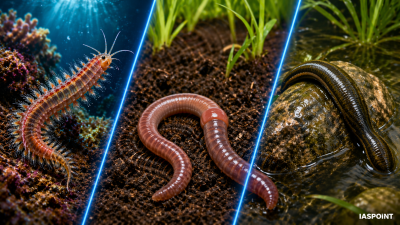
In the biological kingdom, “worms” are primarily categorized into three distinct phyla.
- Phylum Platyhelminthes (Flatworms): Dorso-ventrally flattened bodies; mostly endoparasites (e.g., Tapeworms, Liver fluke) or free-living (e.g., Planaria). They are acoelomate.
- Phylum Aschelminthes (Roundworms): Circular in cross-section; pseudocoelomate. Includes Ascaris and Wuchereria.
- Phylum Annelida (Segmented Worms): True coelomates with metameric segmentation. Includes Earthworms (Pheretima) and Leeches (Hirudinaria).
Ecological Importance: The Ecosystem Engineers
Worms, specifically Annelids, play a foundational role in maintaining soil health and nutrient cycling.
Nutrient Cycling and Soil Fertility
- Decomposition: Earthworms act as primary decomposers, breaking down organic matter (detritus) into simpler forms, facilitating the “Detritus Food Chain.”
- Humification: Through their digestive processes, worms convert organic waste into humus, increasing the soil’s C:N (Carbon-to-Nitrogen) ratio.
- Vermicast: The fecal matter of earthworms is rich in Nitrogen, Phosphorus, and Potassium (NPK), making it a superior natural fertilizer.
Soil Architecture and Aeration
- Bioturbation: The movement of earthworms through soil layers creates macro-pores. This improves soil aeration and water infiltration rates.
- Root Penetration: Tunnels created by worms reduce soil bulk density, allowing plant roots to penetrate deeper into the subsoil.
| Feature | Impact on Ecology |
| Nitrogen Fixation | Indirectly stimulated by increased microbial activity in worm burrows. |
| Soil Structure | Aggregation of soil particles through mucous secretions. |
| Biodiversity | Acts as a food source for birds, amphibians, and small mammals. |
Economic Importance: Agriculture and Industry
Worms provide significant economic benefits through waste management and commercial applications.
Vermicomposting: The “Black Gold”
- Process: Utilizing specific species like Eisenia fetida (Red Wiggler) to convert organic waste into high-quality compost.
- Economic Benefit: Reduces dependency on expensive chemical fertilizers and provides a secondary source of income for farmers via the sale of organic manure.
Pharmaceutical and Medical Applications
- Hirudotherapy: Medicinal leeches (Hirudo medicinalis) secrete Hirudin, a powerful anticoagulant. This is used in microsurgery to prevent blood clotting and improve circulation in reattached limbs.
- Biochemical Research: Roundworms like Caenorhabditis elegans are “Model Organisms” in genetic research, helping scientists understand aging and neurological diseases.
Biological and Pathogenic Impact (The Negative Economy)
While many worms are beneficial, parasitic worms (Helminths) impose a significant economic burden due to healthcare costs and livestock losses.
Human Pathogens
- Filariasis: Caused by Wuchereria bancrofti (Roundworm), leading to Elephantiasis.
- Ascariasis: Caused by Ascaris lumbricoides, leading to intestinal blockage and malnutrition.
- Taeniasis: Caused by Taenia solium (Tapeworm), often transmitted through undercooked pork.
Agricultural Pests
- Root-knot Nematodes: Species like Meloidogyne infect crop roots, causing significant yield losses in vegetables and cash crops like tobacco.
Comparison of Economic Traits
| Worm Group | Major Economic Role | Example Species |
| Annelida | Soil fertility, Vermicompost, Anticoagulants | Pheretima posthuma, Hirudo |
| Platyhelminthes | Parasitic diseases (Economic loss) | Fasciola hepatica (Liver fluke) |
| Aschelminthes | Biological research, Plant pests, Human diseases | C. elegans, Ancylostoma (Hookworm) |
Key Trivia for UPSC Prelims
- Aristotle’s Quote: Aristotle famously called earthworms the “Intestines of the Earth.”
- Charles Darwin: He spent 40 years studying earthworms and concluded that they played the most important role in the history of the world’s landscape.
- Hermaphroditism: Most Annelids and Platyhelminthes are monoecious (hermaphrodites), meaning they possess both male and female reproductive organs, ensuring high reproductive success.
- Regeneration: Planaria (Flatworm) possesses the highest power of regeneration in the animal kingdom.
- SynthID in Nature: While not a biological term, the “signature” of worm activity in soil is used by geologists to date sedimentary layers (Ichnology).