

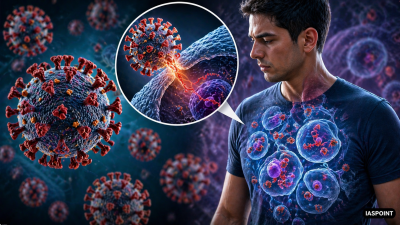
Viruses are submicroscopic infectious agents that replicate only inside the living cells of an organism.
Classification of Major Human Viral Diseases
Viral diseases are generally categorized based on the primary system they affect. The following table summarizes the most significant viral infections relevant to public health and competitive examinations.
| Disease | Causal Virus | Primary Target/Symptoms | Mode of Transmission |
| Smallpox | Variola virus | Skin eruptions, high fever | Droplet infection (Extinct) |
| Chickenpox | Varicella-zoster virus | Dew-drop rashes, fever | Direct contact, droplets |
| Common Cold | Rhinoviruses / Coronaviruses | Upper respiratory tract | Air-borne droplets |
| Influenza (Flu) | Myxovirus influenzae | Respiratory tract, body ache | Air-borne droplets |
| Poliomyelitis | Poliovirus | Motor neurons, limb paralysis | Fecal-oral route |
| Hepatitis | Hepatitis Virus (A, B, C, D, E) | Liver (Jaundice, Cirrhosis) | Water (A, E); Blood/Fluid (B, C) |
| Dengue | Flavivirus (DENV) | Platelet drop, joint pain | Aedes aegypti mosquito |
| Chikungunya | Chikungunya virus | Severe joint pain, rash | Aedes aegypti/albopictus |
| Measles | Rubeola virus | Red rashes, respiratory distress | Air-borne droplets |
| Mumps | Mumps virus | Parotid gland swelling | Saliva, droplets |
| Rabies | Lyssavirus | Central Nervous System (Hydrophobia) | Animal bites (Zoonotic) |
| AIDS | HIV (Retrovirus) | Immune system (T-cells) | Body fluids, blood |
Respiratory Viral Infections
Influenza and Variants
Influenza viruses are categorized into types A, B, and C. Type A is known for causing pandemics due to “Antigenic Shift.” Notable strains include H1N1 (Swine Flu) and H5N1 (Bird Flu). The “H” refers to Hemagglutinin and “N” to Neuraminidase, which are surface proteins used for virus classification.
Coronaviruses
This family includes SARS-CoV (2003), MERS-CoV (2012), and SARS-CoV-2 (COVID-19). These are zoonotic RNA viruses that primarily attack the lower respiratory tract, leading to pneumonia and Acute Respiratory Distress Syndrome (ARDS).
Hemorrhagic and Vector-Borne Viral Diseases
Dengue and Zika
Dengue is caused by four distinct serotypes (DEN-1 to DEN-4). A second infection with a different serotype often leads to Dengue Hemorrhagic Fever (DHF). Zika virus, also spread by Aedes mosquitoes, is particularly dangerous for pregnant women as it causes Microcephaly (stunted head growth) in newborns.
Ebola and Marburg
These are severe viral hemorrhagic fevers with high fatality rates. Transmission occurs through direct contact with infected blood, secretions, or organs of wild animals like fruit bats and primates.
Neurotropic and Immunological Viral Diseases
Poliomyelitis
The virus enters through the mouth and multiplies in the intestines, eventually invading the nervous system. India was declared “Polio Free” by the WHO in 2014 after three consecutive years of zero cases. The Pulse Polio Program utilizes the Oral Polio Vaccine (OPV – Sabin) and the Injectable Polio Vaccine (IPV – Salk).
HIV/AIDS
Human Immunodeficiency Virus (HIV) targets CD4+ T-helper cells, weakening the adaptive immune system. It is a retrovirus, meaning it uses reverse transcriptase to convert its RNA into DNA within the host cell. The diagnostic tests include ELISA (screening) and Western Blot (confirmatory).
Important Factoids for UPSC Prelims
Viral Vaccines and Eradication
- Smallpox remains the only human infectious disease to be globally eradicated (declared by WHO in 1980).
- Mission Indradhanush is India’s flagship program to ensure full immunization coverage for children, targeting diseases like Polio, Measles, and Hepatitis B.
- Interferons are proteins produced by host cells in response to viral infections to prevent further viral replication in neighboring cells.
Zoonotic Spillover
- Approximately 60% of known infectious diseases in humans are zoonotic.
- Nipah Virus (NiV): Transmitted from fruit bats (Pteropus genus) to humans, often through contaminated fruit or sap. It causes encephalitic syndrome.
- Kyasanur Forest Disease (KFD): Also known as “Monkey Fever,” it is endemic to Karnataka, India, and transmitted via tick bites.
Genetic Material Diversity
- DNA Viruses: Smallpox, Chickenpox, Hepatitis B, Herpes.
- RNA Viruses: HIV, Influenza, Polio, Measles, Ebola, SARS-CoV-2.
- RNA viruses generally have higher mutation rates than DNA viruses, making vaccine development more challenging.