

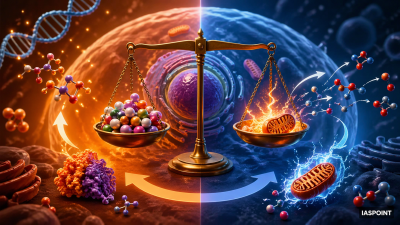
Overview of Anabolism and Catabolism
Metabolism is classified into two distinct but interdependent processes: Anabolism and Catabolism. These processes represent the “flow of energy” within a cell, ensuring that the organism can maintain its internal environment (homeostasis), grow, and perform work. The balance between these two is often referred to as the metabolic state.
Catabolism: The Energy-Releasing Process
Catabolism involves the breakdown of complex organic molecules into simpler ones. Its primary purpose is to harvest chemical energy and provide the building blocks required for anabolism.
- Energy Transformation: It is an exergonic process, meaning it releases energy. A portion of this energy is captured in the form of ATP (Adenosine Triphosphate), while the rest is lost as heat.
- Chemical Reaction: Generally involves oxidative reactions, where electrons are removed from “fuel” molecules like glucose or fatty acids.
- Examples of Catabolic Pathways:
- Cellular Respiration: Breaking down glucose into CO2 and H2O.
- Digestion: The enzymatic breakdown of proteins into amino acids or starch into glucose in the alimentary canal.
- Glycogenolysis: Conversion of stored glycogen into glucose.
Anabolism: The Energy-Consuming Process
Anabolism is the biosynthetic phase of metabolism, where simpler precursors are assembled into complex macromolecules such as proteins, lipids, and nucleic acids.
- Energy Requirement: It is an endergonic process, meaning it requires an input of energy, which is supplied by the hydrolysis of ATP generated during catabolism.
- Chemical Reaction: Generally involves reductive reactions, adding electrons and hydrogen to molecules to create higher-energy bonds.
- Examples of Anabolic Pathways:
- Photosynthesis: Synthesis of glucose from CO2 and water using light energy.
- Protein Synthesis: Linking amino acids together at the ribosome.
- Glycogenesis: Converting excess blood glucose into glycogen for storage.
Comparison Table: Anabolism vs. Catabolism
The Concept of the Amphibolic Pathway
While metabolism is divided into anabolism and catabolism, some pathways do not strictly fall into one category. These are called amphibolic pathways.
- The Krebs Cycle (TCA Cycle): It is primarily catabolic because it oxidizes acetyl-CoA to produce energy. However, it is also anabolic because many of its intermediates (like α-ketoglutarate) are withdrawn to synthesize amino acids or fatty acids.
- Metabolic Pool: The collection of intermediates in a cell that can be diverted to either catabolic or anabolic routes depending on the body’s energy status.
Hormonal Regulation of Metabolic States
The human body uses hormones to switch between anabolic and catabolic dominance.
- Anabolic Hormones: ” Insulin: Promotes glucose uptake and the synthesis of glycogen and fat.
- Growth Hormone: Stimulates protein synthesis and bone growth.
- Testosterone: Increases muscle mass through protein anabolism.
- Catabolic Hormones: ” Glucagon: Stimulates the breakdown of glycogen into glucose.
- Cortisol: Known as the “stress hormone,” it breaks down muscle protein to provide energy.
- Adrenaline (Epinephrine): Rapidly mobilizes energy stores during “fight or flight” responses.
UPSC Prelims Fact File
- Metabolic Equilibrium: A living system is in a non-equilibrium steady state. If a cell reaches true chemical equilibrium, it cannot perform work and is considered biologically dead.
- Metabolic Flux: This refers to the rate at which molecules move through a pathway. It is regulated by the “rate-limiting enzyme” of that specific pathway.
- Specific Dynamic Action (SDA): The energy required by the body to process food (a catabolic cost). Protein has the highest SDA compared to fats and carbohydrates.
- Gluconeogenesis: An anabolic process that occurs in the liver where glucose is synthesized from non-carbohydrate sources like lactic acid or glycerol during fasting.