

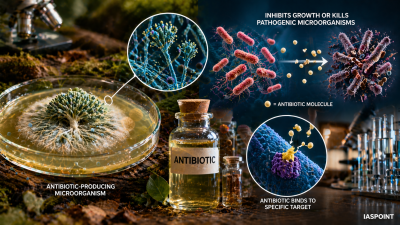
Antibiotics are chemical substances produced by certain microorganisms (primarily bacteria and fungi) that can inhibit the growth of or destroy other disease-causing microorganisms.
History and Discovery
- The First Antibiotic: Penicillin was discovered by Alexander Fleming in 1928 from the mold (fungus) Penicillium notatum.
- Mass Production: Howard Florey and Ernst Chain were instrumental in developing Penicillin for medicinal use, for which they shared the Nobel Prize with Fleming in 1945.
- Bacterial Sources: While the first antibiotic was fungal, the majority of modern antibiotics are derived from soil bacteria, particularly the genus Streptomyces.
Classification of Antibiotics
Antibiotics are categorized based on their range of effectiveness and their impact on bacterial cells.
Based on Spectrum of Action
- Broad-Spectrum Antibiotics: Effective against a wide range of both Gram-positive and Gram-negative bacteria (e.g., Tetracycline, Chloramphenicol).
- Narrow-Spectrum Antibiotics: Effective against only specific groups of bacteria (e.g., Penicillin G, which primarily targets Gram-positive bacteria).
Based on Mode of Action
- Bactericidal: These antibiotics directly kill the bacteria (e.g., Penicillin, Aminoglycosides).
- Bacteriostatic: These inhibit the growth and multiplication of bacteria, allowing the host’s immune system to eliminate the infection (e.g., Erythromycin, Tetracycline).
Key Antibiotics and Their Microbial Sources
The following table lists antibiotics frequently mentioned in biological and pharmaceutical contexts relevant to the UPSC syllabus.
| Antibiotic | Source Microorganism | Type of Microbe |
| Penicillin | Penicillium notatum | Fungus |
| Streptomycin | Streptomyces griseus | Bacterium (Actinomycetes) |
| Chloramphenicol | Streptomyces venezuelae | Bacterium |
| Tetracycline | Streptomyces aureofaciens | Bacterium |
| Erythromycin | Streptomyces erythreus | Bacterium |
| Bacitracin | Bacillus subtilis | Bacterium |
| Neomycin | Streptomyces fradiae | Bacterium |
Mechanism of Action: How They Work
Antibiotics target specific structures or metabolic pathways in bacteria that are absent in human cells, ensuring “selective toxicity.”
- Inhibition of Cell Wall Synthesis: Bacteria have a peptidoglycan cell wall; humans do not. Drugs like Penicillin prevent this wall from forming, causing the bacteria to burst.
- Inhibition of Protein Synthesis: Targeting bacterial ribosomes (which are different from human ribosomes) to stop the production of essential proteins (e.g., Streptomycin).
- Interference with Nucleic Acid Synthesis: Blocking the replication of DNA or transcription of RNA.
- Disruption of Plasma Membrane: Damaging the cell membrane’s integrity.
Antimicrobial Resistance (AMR)
AMR occurs when bacteria evolve mechanisms to protect themselves from the effects of antibiotics. This is a major global health threat and a recurring theme in UPSC Science & Technology.
Causes of AMR
- Overuse and Misuse: Taking antibiotics for viral infections (like the common cold) where they are ineffective.
- Incomplete Courses: Failing to finish a prescribed dose allows the strongest bacteria to survive and mutate.
- Agricultural Use: Using antibiotics as growth promoters in livestock and poultry.
Mechanisms of Resistance
- Enzymatic Inactivation: Bacteria produce enzymes like Beta-lactamase to destroy the antibiotic (e.g., rendering Penicillin useless).
- Efflux Pumps: Bacteria develop “pumps” that spit the antibiotic out of the cell before it can work.
- Target Modification: Changing the structure of the part the antibiotic usually attaches to.
Important Terminology and Trivia
- Zoonotic Resistance: Resistance that spreads from animals to humans via food chains or direct contact.
- Superbugs: Strains of bacteria that are resistant to several types of antibiotics (e.g., MRSA – Methicillin-resistant Staphylococcus aureus).
- Redline Campaign: An initiative by the Government of India to curb the over-the-counter sale of antibiotics; medicines are marked with a vertical red line on the packaging.
- The “Last Resort” Antibiotics: Drugs like Colistin and Carbapenems are reserved for the most severe, multi-drug resistant infections.
- Viruses vs. Antibiotics: Antibiotics are strictly ineffective against viruses because viruses lack the metabolic machinery (cell walls, ribosomes) that antibiotics target. Anti-virals are used for viral infections.