

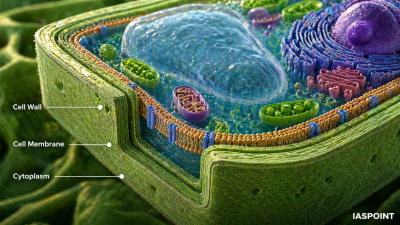
The cell wall is a rigid, non-living outer layer found external to the cell membrane in plants, fungi, bacteria, and some algae. It is a critical feature that distinguishes these organisms from animals, which lack cell walls entirely.
Structural Composition Across Kingdoms
The chemical makeup of the cell wall varies significantly depending on the organism, a fact frequently tested in competitive examinations.
| Organism Group | Primary Component | Functional Significance |
| Plants | Cellulose, Hemicellulose, Pectin | Provides tensile strength and maintains turgidity. |
| Fungi | Chitin | A nitrogen-containing polysaccharide; provides structural durability. |
| Bacteria | Peptidoglycan (Murein) | Protects against osmotic pressure; target for many antibiotics. |
| Algae | Cellulose, Galactans, Mannans | Often includes minerals like Calcium Carbonate. |
| Archaea | Pseudopeptidoglycan (Pseudomurein) | Allows survival in extreme environments (Extremophiles). |
Layers of the Plant Cell Wall
In higher plants, the cell wall is not a single layer but a complex structure consisting of three distinct regions:
- Middle Lamella: The outermost layer that acts as a “glue” between adjacent plant cells. It is primarily composed of Calcium and Magnesium Pectates.
- Primary Cell Wall: A thin, flexible, and extensible layer formed while the cell is growing. It is mainly composed of cellulose microfibrils.
- Secondary Cell Wall: Formed inside the primary wall once the cell is fully grown. It is thick and rigid, often containing Lignin, which provides waterproofing and mechanical support (abundant in wood/xylem).
Key Functions of the Cell Wall
- Structural Support: It determines the shape of the cell and prevents it from collapsing under its own weight, especially in large terrestrial plants.
- Protection: Acts as a mechanical barrier against pathogens (viruses, bacteria, fungi) and physical injury.
- Osmotic Regulation: It prevents the cell from bursting (Lysis) when water enters via osmosis. The wall exerts Turgor Pressure, which keeps the plant firm and upright.
- Cell-to-Cell Communication: Despite its rigidity, the cell wall contains microscopic channels called Plasmodesmata, which allow the transport of molecules and communication between neighboring cells.
Specialized Chemical Depositions
In various plant tissues, the cell wall is modified with specific substances to perform specialized roles:
- Lignin: Provides extreme rigidity; essential for the “woody” nature of plants.
- Suberin: A waxy, waterproof substance found in the cell walls of Cork (Bark) and the endodermis of roots.
- Cutin: A fatty substance found on the outer walls of epidermal cells, forming the Cuticle to prevent water loss (transpiration).
Facts and Trivia for UPSC Prelims
- Cellulose: It is the most abundant organic polymer on Earth. It is a complex carbohydrate that humans cannot digest (serves as dietary fiber or “roughage”).
- Pectin: This component of the middle lamella is what “sets” jams and jellies. When fruit ripens, enzymes break down pectin, making the fruit soft.
- Antibiotic Mechanism: Many antibiotics, such as Penicillin, work by inhibiting the synthesis of the peptidoglycan layer in bacterial cell walls. This causes the bacteria to burst and die without affecting human cells (since humans lack cell walls).
- Gram Staining: This laboratory technique differentiates bacteria into two groups (Gram-positive and Gram-negative) based on the thickness and composition of their peptidoglycan cell wall.
- Plasmolysis: When a plant cell is placed in a hypertonic (salty) solution, the protoplast shrinks away from the cell wall. However, the cell wall maintains the overall shape of the cell, preventing total collapse.