

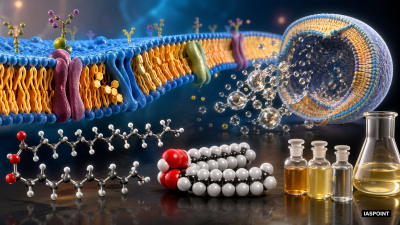
Lipids are a diverse group of organic compounds that are generally insoluble in water but highly soluble in organic solvents like ether, benzene, and chloroform. Unlike proteins and polysaccharides, lipids are not strictly polymers and are characterized by their smaller molecular weight, typically not exceeding 800 Da. However, they are found in the “acid-insoluble fraction” during tissue analysis because they form large vesicular structures when cell membranes are disrupted.
Chemical Composition and Building Blocks
The most fundamental components of many lipids are fatty acids and glycerol.
Fatty Acids
Fatty acids are long hydrocarbon chains ending in a carboxyl group (-COOH).
- Saturated Fatty Acids: Contain no double bonds between carbon atoms. They are typically solid at room temperature (e.g., Palmitic acid with 16 carbons, Stearic acid).
- Unsaturated Fatty Acids: Contain one or more double bonds (C = C). They are typically liquid at room temperature.
- Monounsaturated (MUFA): One double bond (e.g., Oleic acid).
- Polyunsaturated (PUFA): Two or more double bonds (e.g., Linoleic acid, Arachidonic acid with 20 carbons).
Glycerol
Also known as trihydroxy propane, glycerol is a simple three-carbon molecule with three hydroxyl groups (-OH).
Classification of Lipids
Lipids are categorized based on their structural complexity and chemical nature.
1. Simple Lipids
These are esters of fatty acids with various alcohols.
- Fats and Oils: Esters of fatty acids with glycerol, also called Triglycerides.
- Oils have lower melting points (e.g., gingelly oil) and remain liquid in winter.
- Fats have higher melting points and solidify at room temperature.
2. Compound (Complex) Lipids
These contain additional groups like phosphorus, carbohydrates, or proteins along with fatty acids and alcohol.
- Phospholipids: These contain a phosphate group. They are the essential components of cell membranes (e.g., Lecithin).
- Glycolipids: Lipids with a carbohydrate attached; vital for cell recognition.
3. Derived Lipids
These are produced by the hydrolysis of simple and compound lipids or possess the general properties of lipids.
- Steroids: Do not contain fatty acids but are grouped with lipids due to their solubility properties. The most common example is Cholesterol.
- Steroid Hormones: Include Testosterone, Progesterone, and Estrogen.
Biological Functions of Lipids
- Energy Storage: Lipids are the most concentrated source of energy, providing approximately 9 kcal/g, which is more than double the energy provided by carbohydrates or proteins.
- Structural Component: Phospholipids and cholesterol form the structural framework of the plasma membrane and organelle membranes.
- Insulation: Subcutaneous fat (adipose tissue) acts as a thermal insulator to maintain body temperature.
- Protection: Fat deposits around vital organs (kidneys, heart) act as shock absorbers.
- Solvent for Vitamins: Lipids are essential for the absorption of fat-soluble vitamins: A, D, E, and K.
Key Lipids and Their UPSC Relevance
| Lipid Type | Example | Significance |
| Phospholipid | Lecithin | Found in cell membranes and egg yolk. |
| Sterol | Cholesterol | Precursor for Vitamin D, bile salts, and steroid hormones. |
| Essential Fatty Acid | Linoleic Acid | Cannot be synthesized by the body; must be in the diet. |
| Nitrogenous Lipid | Sphingomyelin | Found in the myelin sheath of nerve fibers. |
Fact File for UPSC Prelims
- Saponification: The process of hydrolysis of fats by alkalis (like NaOH) to form soap and glycerol.
- Rancidity: The unpleasant odor and taste developed in fats and oils due to oxidation of unsaturated fatty acids.
- Trans Fats: Formed during the partial hydrogenation of vegetable oils. They are associated with increased risks of heart disease as they raise LDL (bad cholesterol) and lower HDL (good cholesterol).
- Brown Fat: A specialized type of adipose tissue in newborns and hibernating mammals that generates heat (thermogenesis) rather than ATP.
- Arachidonic Acid: A 20-carbon unsaturated fatty acid that serves as a precursor for Prostaglandins, which are local hormones involved in inflammation and blood clotting.