

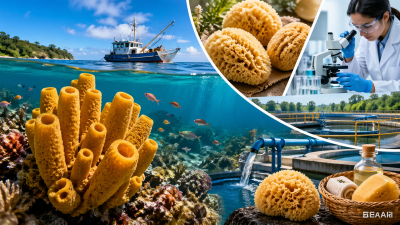
While sponges (Porifera) are biologically simple, their economic and ecological roles are significant for the biosphere and human industry.
Ecological Importance
Sponges serve as “ecosystem engineers” in marine and freshwater environments, performing critical functions that maintain the health of aquatic systems.
Nutrient Cycling and Water Filtration
- Biological Filters: Sponges are highly efficient filter feeders. A single sponge can filter thousands of liters of water daily, removing bacteria, plankton, and organic debris, thereby improving water clarity.
- The Sponge Loop: In coral reefs, sponges convert dissolved organic matter (DOM) into particulate organic matter (detritus), which is then consumed by other reef organisms. This “Sponge Loop” prevents energy from being lost and sustains the reef’s food web.
- Nitrogen Cycling: Many sponges harbor symbiotic microbes that facilitate nitrogen fixation and nitrification, contributing to the nutrient balance of the surrounding water.
Habitat and Biodiversity Support
- Benthic-Pelagic Coupling: They act as a bridge between the water column and the seafloor by consuming suspended matter and releasing nutrients into the benthos.
- Micro-refugia: The complex structural architecture of sponges (especially large barrel sponges) provides shelter, breeding grounds, and nurseries for small fish, crustaceans, and mollusks.
Symbiotic Relationships
- Cyanobacteria and Algae: Many sponges host photosynthetic organisms. These symbionts provide the sponge with food (carbon) while the sponge provides a protected environment and inorganic nutrients.
- Mutualism: Certain sponges live on the shells of hermit crabs, providing camouflage and protection from predators like octopuses, while the crab provides the sponge with mobility and access to diverse food sources.
Economic Importance
The economic value of sponges extends from traditional industries to cutting-edge pharmaceutical research.
Pharmaceutical and Biomedical Applications
Sponges are a “gold mine” for bioactive compounds because they produce chemical defenses to compensate for being sessile.
- Anticancer Agents: Compounds like Cytarabine (used for leukemia) and Vidarabine (an antiviral) were derived from chemicals found in the sponge Cryptotethya crypta.
- Antibiotics: Many sponges produce secondary metabolites that exhibit strong antibacterial and antifungal properties, essential for developing new drugs against antibiotic-resistant bacteria.
- Biomaterials: The collagen and silica spicules of sponges are being researched for use in tissue engineering and the creation of fiber optics.
Commercial Sponge Industry
- Bath Sponges: Species like Euspongia and Hippospongia (Wool Sponges) have been harvested for centuries. Their soft, durable spongin skeletons are used for bathing, cleaning, and professional painting.
- Sustainability: Unlike synthetic sponges, natural sponges are biodegradable and highly absorbent, though overharvesting is a concern for marine conservation.
Environmental and Scientific Significance
Bio-indicators of Pollution
- Sensitivity to Heavy Metals: Sponges accumulate heavy metals (like mercury and lead) and hydrocarbons in their tissues. Analyzing sponge tissue allows scientists to monitor the long-term health and pollution levels of marine ecosystems.
- Climate Change Indicators: Changes in sponge populations or bleaching (loss of symbionts) serve as early warning signs for rising ocean temperatures and acidification.
Summary Table: Key Roles of Sponges
| Category | Feature | Impact/Example |
| Ecological | Water Filtration | Removes up to 99% of bacteria from filtered water. |
| Ecological | Habitat | Known as “Living Hotels” for marine micro-fauna. |
| Economic | Medicine | Source of Discermolide, a potent anti-tumor agent. |
| Economic | Industry | Used in ceramics, jewelry polishing, and cosmetics. |
| Environmental | Bio-monitoring | Used to track concentrations of organochlorine pollutants. |
Trivia for UPSC Prelims
- Venus’s Flower Basket: Euplectella spicules are made of glass (silica) and have optical properties similar to modern fiber-optic cables, but are manufactured at ambient temperatures.
- Boring Sponges: Species like Cliona can bore into calcium carbonate shells (like those of oysters and corals), playing a role in the natural bio-erosion and recycling of calcium in the ocean.
- Freshwater Gemmules: The ability of Spongilla to produce gemmules allows it to survive in seasonal water bodies, a unique adaptation for an otherwise marine-dominated phylum.