

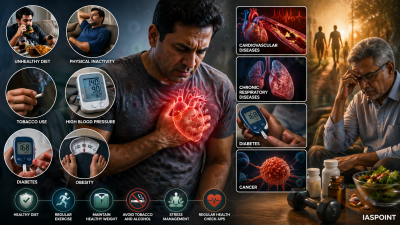
Non-infectious diseases, also known as Non-Communicable Diseases (NCDs), are medical conditions that are not caused by infectious agents and cannot be transmitted from one person to another. These are generally characterized by long duration and slow progression.
Classification of Non-Infectious Diseases
Lifestyle and Metabolic Diseases
These are primarily caused by physical inactivity, unhealthy diets, and the use of tobacco or alcohol. They account for a significant portion of the global disease burden.
- Diabetes Mellitus: A metabolic disorder where the body cannot regulate blood glucose levels. Type 1 is an autoimmune condition (insulin-dependent), while Type 2 is lifestyle-related (insulin resistance).
- Hypertension: Persistently high blood pressure which increases the risk of heart, brain, and kidney diseases.
- Cardiovascular Diseases (CVDs): Conditions affecting the heart and blood vessels, including Coronary Heart Disease and Stroke.
- Obesity: A condition characterized by excessive body fat accumulation that presents a risk to health, often measured by Body Mass Index (BMI).
Genetic and Congenital Disorders
These diseases are inherited or result from chromosomal abnormalities present at birth.
- Sickle Cell Anaemia: A genetic blood disorder where red blood cells are shaped like sickles, obstructing blood flow. India has launched the National Sickle Cell Anaemia Elimination Mission to eliminate it by 2047.
- Haemophilia: A genetic disorder that impairs the body’s ability to make blood clots, leading to excessive bleeding.
- Down Syndrome: A chromosomal disorder caused by the presence of an extra copy of chromosome 21 (Trisomy 21).
- Thalassemia: An inherited blood disorder that causes the body to have less hemoglobin than normal.
Deficiency Diseases
These result from the lack of specific vitamins, minerals, or proteins in the daily diet.
| Nutrient Deficiency | Disease/Condition | Primary Symptoms |
| Vitamin A | Xerophthalmia / Night Blindness | Inability to see in low light, dry eyes |
| Vitamin B1 (Thiamine) | Beriberi | Nerve damage, heart failure |
| Vitamin B12 | Pernicious Anaemia | Low RBC count, neurological issues |
| Vitamin C | Scurvy | Bleeding gums, skin spots |
| Vitamin D | Rickets (Children) / Osteomalacia (Adults) | Weak and soft bones |
| Iron | Anaemia | Fatigue, pale skin, reduced oxygen transport |
| Iodine | Goitre | Swelling of the thyroid gland |
| Protein | Kwashiorkor / Marasmus | Stunted growth, edema (in Kwashiorkor) |
Degenerative and Occupational Diseases
These are caused by the gradual deterioration of tissues or exposure to hazardous materials at the workplace.
- Alzheimer’s Disease: A progressive brain disorder that leads to memory loss and cognitive decline.
- Osteoporosis: A condition in which bones become weak and brittle.
- Silicosis: An occupational lung disease caused by inhalation of crystalline silica dust, common in mining and construction.
- Asbestosis: Lung tissue scarring caused by asbestos fibers.
Cancer: A Critical NCD
Cancer is characterized by the uncontrolled growth and spread of abnormal cells. It can be caused by external agents (carcinogens) or internal genetic factors.
- Carcinogens: Include physical agents (UV radiation), chemical agents (tobacco smoke, arsenic), and biological agents (certain viruses like HPV).
- Common Types in India: Breast cancer and Cervical cancer (females); Lung and Oral cancer (males).
- Metastasis: The process by which cancer cells spread from the primary site to other parts of the body.
Important Facts and Trivia for Prelims
- The “4×4” Framework: The WHO focuses on four major NCDs (CVDs, Cancer, Chronic Respiratory Diseases, and Diabetes) and four shared risk factors (Tobacco use, Unhealthy diet, Physical inactivity, and Harmful use of alcohol).
- Minamata Disease: A neurological syndrome caused by severe mercury poisoning (often from contaminated fish).
- Itai-Itai Disease: Caused by cadmium poisoning, leading to bone softening and kidney failure.
- Blue Baby Syndrome: Caused by high nitrate levels in drinking water, which interferes with the blood’s ability to carry oxygen.
Government Initiatives and Policies
- National Programme for Prevention and Control of Cancer, Diabetes, Cardiovascular Diseases and Stroke (NPCDCS): Focuses on strengthening infrastructure, human resource development, and early diagnosis.
- Fit India Movement: A nationwide campaign to encourage people to remain healthy and fit by including physical activities and sports in their daily lives.
- FSSAI Eat Right India: An initiative to transform the country’s food system to ensure safe, healthy, and sustainable food for all.
- National Programme for Healthcare of the Elderly (NPHCE): Addresses the specific health needs of the elderly population, who are most susceptible to NCDs.