

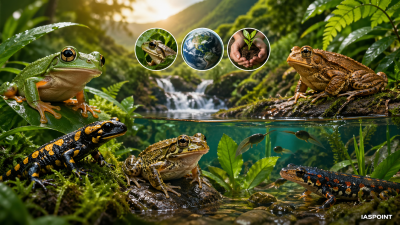
Amphibians are integral components of global biodiversity, serving as vital links in the food chain and providing significant services to both the environment and human society.
1. Ecological Importance
Amphibians play a dual role in the ecosystem due to their biphasic life cycle, influencing both aquatic and terrestrial food webs.
Biological Pest Control
- Insect Population Regulation: Adult amphibians are primarily insectivorous. They consume vast quantities of mosquitoes, flies, locusts, and beetles.
- Agricultural Benefit: By preying on crop-destroying insects and larvae, they act as natural pesticides, reducing the need for chemical interventions in farming.
- Disease Vector Control: By consuming mosquito larvae in water bodies, frogs and toads help control the spread of diseases like Malaria, Dengue, and Zika.
Nutrient Cycling and Food Web Dynamics
- Energy Transfer: Amphibians transfer energy from the invertebrate level (insects/worms) to higher trophic levels (birds, snakes, and mammals).
- Biomass Contribution: In some ecosystems, the total biomass of amphibians exceeds that of all other vertebrates combined, making them a significant food source for predators.
- Aquatic Health: Tadpoles are efficient grazers of algae. By regulating algal growth, they prevent eutrophication (oxygen depletion) in ponds and streams.
Amphibians as Bio-indicators
- Environmental Health Monitors: Due to their permeable skin and dual life cycle, amphibians are highly sensitive to pollution, UV radiation, and temperature changes.
- Early Warning System: A decline in amphibian populations or an increase in deformities (e.g., extra limbs) often signals an ecological imbalance, such as chemical runoff or ozone depletion, long before it affects other species.
2. Economic and Medical Importance
Beyond their ecological roles, amphibians contribute directly to various human industries and scientific advancements.
Medical and Pharmacological Research
- Bio-prospecting: The skin secretions of many amphibians contain bioactive peptides with potent antibacterial, antifungal, and antiviral properties.
- Analgesics: Chemicals derived from certain frogs (e.g., Epipedobates) have been used to develop painkillers that are significantly more potent than morphine but non-addictive.
- Regenerative Medicine: Salamanders and Axolotls are studied for their unique ability to regenerate entire limbs, heart tissue, and spinal cords, offering insights into human tissue repair.
Scientific and Educational Use
- Model Organisms: Amphibians like the African Clawed Frog (Xenopus laevis) are widely used in developmental biology and embryology research due to their large, easily observable eggs and rapid development.
Human Consumption and Trade
- Food Source: In several cultures, particularly in parts of East Asia and Europe, frog legs are a culinary delicacy.
- Pet Industry: Many amphibians, especially colorful poison dart frogs and axolotls, are part of the international pet trade, contributing to local and global economies (though this often poses a threat to wild populations).
3. Summary of Ecological vs. Economic Roles
| Aspect | Ecological Impact | Economic/Human Impact |
|---|---|---|
| Pest Management | Maintains balance in insect populations. | Reduces crop loss and healthcare costs from vector diseases. |
| Water Quality | Tadpoles prevent algal blooms. | Ensures cleaner freshwater resources for local communities. |
| Bio-indicator | Reflects ecosystem integrity. | Acts as an “early warning system” for environmental policy-making. |
| Medicine | Natural chemical defense evolution. | Source of new antibiotics and regenerative therapies. |
Export to Sheets
4. UPSC Prelims Trivia and Facts
- The Indian Bullfrog (Hoplobatrachus tigerinus): Listed under Schedule II of the Wildlife (Protection) Act, 1972, in India. Its export for food is banned to ensure it remains in the wild to control agricultural pests.
- Chytrid Fungus Threat: This fungal pathogen is currently the greatest threat to global amphibian biodiversity, leading to economic losses in the medical research and tourism sectors.
- Vomerine Teeth: Used for gripping prey, emphasizing their role as effective predators in the food chain.
- Ethical Concerns: The historical use of frogs for pregnancy tests (the “Hogben test”) and classroom dissections has largely been replaced by modern synthetic alternatives to protect wild populations.