

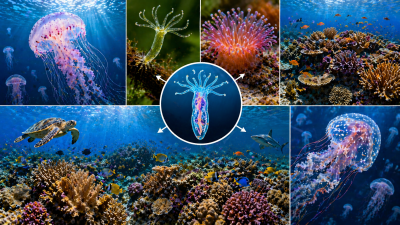
Cnidarians, ranging from microscopic hydras to massive coral reefs and venomous jellyfish, play a foundational role in marine ecology.
Ecological Importance of Cnidarians
Cnidarians are vital for maintaining the structural and functional integrity of marine environments.
Coral Reefs as “Rainforests of the Sea”
- Foundation Species: Reef-building corals (Class Anthozoa) create massive calcium carbonate structures that provide the primary habitat for approximately 25% of all marine life.
- Coastal Protection: Coral reefs act as natural buffers, absorbing up to 97% of wave energy, which prevents coastal erosion and protects human settlements from storm surges and tsunamis.
Carbon Sequestration and Nutrient Cycling
- Carbon Sink: Corals fix carbon dioxide (CO2) from the atmosphere into their calcium carbonate (CaCO3) skeletons, playing a subtle but long-term role in the global carbon cycle.
- Nutrient Concentration: In nutrient-poor “oceanic deserts,” cnidarians (especially those with symbiotic algae) concentrate nutrients, making them available to the wider food web.
Symbiotic and Trophic Roles
- Food Web Dynamics: Medusae (jellyfish) are significant predators of zooplankton and small fish, regulating their populations. Conversely, they serve as a primary food source for endangered species like the Leatherback Sea Turtle.
- Mutualism: The classic example is the sea anemone and the clownfish; the fish receives protection within the stinging tentacles, while the anemone receives nutrients from the fish’s waste and protection from polyp-eating fish.
Economic Importance of Cnidarians
The economic value of cnidarians spans traditional industries like jewelry to high-end medical research.
Biomedical and Scientific Research
- Green Fluorescent Protein (GFP): Originally isolated from the jellyfish Aequorea victoria, GFP has revolutionized molecular biology by allowing scientists to “tag” and track specific proteins in living cells. This discovery earned the Nobel Prize in Chemistry in 2008.
- Venom in Pharmacology: Cnidarian toxins are being researched for the development of new painkillers and treatments for neurological disorders like Alzheimer’s and Multiple Sclerosis.
- Bone Grafting: The porous structure of certain coral skeletons (e.g., Goniopora) is chemically and physically similar to human bone and is used in orthopedic and dental bone grafts.
Commercial and Decorative Uses
- Jewelry and Ornamentation: “Precious corals” (Red and Pink corals) are harvested for use in high-end jewelry and as gemstones in various cultures.
- Cuisine: In several Asian cultures (China, Japan, Korea), certain species of jellyfish are processed and consumed as a delicacy, supporting a multi-million dollar fishery.
- Aquarium Industry: Sea anemones and soft corals are highly sought after for the global marine aquarium trade.
Summary of Key Contributions
| Aspect | Significance | Specific Example |
| Environmental | Coastal Defense | Barriers against tsunamis and cyclones. |
| Scientific | Molecular Biology | Use of GFP (Green Fluorescent Protein). |
| Industrial | Precious Corals | Jewelry industry (e.g., Corallium rubrum). |
| Ecological | Biodiversity | Providing “micro-refugia” for juvenile fish. |
Threats and Conservation
The importance of cnidarians is highlighted by the risks they currently face:
- Ocean Acidification: As oceans absorb more CO2, the resulting acidity dissolves the calcium carbonate skeletons of corals, threatening the entire reef economy.
- Jellyfish Blooms: Overfishing of jellyfish predators and nutrient runoff (eutrophication) have led to massive “blooms,” which can clog power plant cooling systems and damage commercial fishing nets.
Facts and Trivia for UPSC Prelims
- Bio-luminescence: Many deep-sea cnidarians use light-producing chemical reactions for communication, defense, or attracting prey.
- Schedule Protection: Like sponges, many reef-building corals in India are protected under Schedule I of the Wildlife Protection Act, 1972.
- Nematocysts for Defense: The “Portuguese Man-of-War” (Physalia) is often mistaken for a jellyfish but is actually a siphonophore—a colony of specialized individuals that can deliver stings even after being washed up and dead on the beach.