

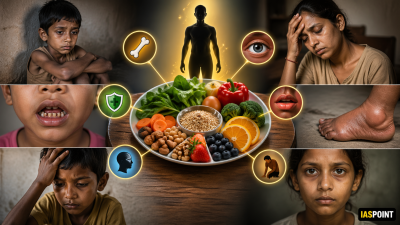
Deficiency diseases are disorders caused by the lack of essential nutrients—such as vitamins, minerals, or proteins—in the diet over a prolonged period. Unlike infectious diseases, these are non-communicable.
Vitamin Deficiency Diseases (Fat-Soluble)
Fat-soluble vitamins (A, D, E, K) are stored in the body’s fatty tissues and liver.
| Vitamin | Chemical Name | Deficiency Disease | Key Symptoms |
| Vitamin A | Retinol | Xerophthalmia / Night Blindness | Hardening of cornea, poor vision in dim light |
| Vitamin D | Calciferol | Rickets (Children) / Osteomalacia (Adults) | Soft and fragile bones, bow legs |
| Vitamin E | Tocopherol | Lessened fertility / Muscle weakness | Increased fragility of RBCs, reproductive failure |
| Vitamin K | Phylloquinone | Hemorrhage | Delayed blood clotting time |
Vitamin Deficiency Diseases (Water-Soluble)
Water-soluble vitamins (B-complex and C) are not stored in the body and must be supplied regularly through diet.
Vitamin B-Complex Group
- B1 (Thiamine): Causes Beriberi. Symptoms include loss of appetite, fatigue, and neurological cardiovascular issues (Wet vs. Dry Beriberi).
- B2 (Riboflavin): Causes Ariboflavinosis. Symptoms include Cheilosis (fissures at the corners of the mouth) and digestive disorders.
- B3 (Niacin): Causes Pellagra. Characterized by the “4 Ds”: Dermatitis, Diarrhea, Dementia, and Death.
- B5 (Pantothenic Acid): Deficiency leads to burning feet syndrome and fatigue.
- B6 (Pyridoxine): Deficiency causes convulsions in infants and certain types of anemia.
- B9 (Folic Acid): Causes Megaloblastic Anemia and neural tube defects in newborns.
- B12 (Cyanocobalamin): Causes Pernicious Anemia. It is the only vitamin containing a metal ion (Cobalt).
Vitamin C (Ascorbic Acid)
- Disease: Scurvy.
- Symptoms: Bleeding gums, delayed wound healing, and fragile blood vessels. It is easily destroyed by excessive heating during cooking.
Mineral Deficiency Diseases
Minerals are inorganic elements required for various physiological functions, from bone formation to nerve impulse conduction.
| Mineral | Deficiency Disorder | Clinical Manifestation |
| Iron | Anaemia | Low hemoglobin, fatigue, pale skin |
| Iodine | Goitre / Cretinism | Swelling of thyroid gland, mental retardation in children |
| Calcium | Osteoporosis / Hypocalcemia | Brittle bones, muscle spasms (Tetany) |
| Potassium | Hypokalemia | Muscle paralysis, cardiac dysrhythmia |
| Fluorine | Dental Caries | Weakening of tooth enamel |
| Copper | Menkes Disease | Kinky hair, growth failure |
Protein-Energy Malnutrition (PEM)
PEM is a major public health issue in developing nations, primarily affecting infants and children.
Kwashiorkor
- Cause: Severe protein deficiency despite adequate calorie intake.
- Symptoms: Edema (swelling of the face and limbs), “pot belly,” thinning of hair, and stunted growth.
Marasmus
- Cause: Simultaneous deficiency of proteins and total calories (carbohydrates and fats).
- Symptoms: Extreme emaciation (skin and bone appearance), thinning of limbs, and disappearance of subcutaneous fat. No edema is present.
Key Facts for UPSC Prelims
Bio-fortification
To combat “Hidden Hunger” (micronutrient deficiency), the government promotes bio-fortification—breeding crops to increase their nutritional value. Examples include:
- Golden Rice: Fortified with Beta-carotene (Pro-vitamin A).
- Protina/Shakti: Maize varieties rich in Lysine and Tryptophan.
Government Initiatives
- POSHAN Abhiyaan: Prime Minister’s Overarching Scheme for Holistic Nourishment aims to reduce stunting and low birth weight.
- Anaemia Mukt Bharat: A strategy to reduce the prevalence of anemia through prophylactic Iron and Folic Acid (IFA) supplementation.
- Food Fortification: FSSAI regulates the fortification of staples like rice, wheat, oil, and milk with added vitamins and minerals (identified by the +F logo).
Trivia for Quick Revision
- Vitamin D is also known as the “Sunshine Vitamin” because the skin can synthesize it in the presence of UV-B rays.
- Vitamin B12 is generally absent in plant-based foods; it is synthesized by bacteria in the gut of animals.
- Hypervitaminosis: Excessive intake of fat-soluble vitamins (A and D) can be toxic, a condition not usually seen with water-soluble vitamins as they are excreted in urine.