

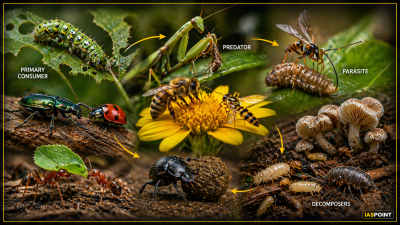
Insects serve as the functional backbone of most terrestrial ecosystems. Their high species richness and biomass allow them to occupy multiple trophic levels, acting as primary consumers, predators, parasites, and decomposers.
1. Pollination and Plant Reproduction
Insects are the primary biotic agents for pollination, a process essential for the survival of over 80% of flowering plants and approximately 75% of global food crops.
- Key Taxa: Hymenoptera (Bees, Wasps, Ants), Lepidoptera (Butterflies, Moths), and Diptera (Flies).
- Co-evolution: Many plants and insects have co-evolved specific morphological traits; for example, the length of a moth’s proboscis matching the depth of a specific flower’s nectar spur.
- Economic Impact: Insect-mediated pollination contributes significantly to global agricultural GDP, ensuring food security and genetic diversity in flora.
2. Nutrient Cycling and Soil Health
Insects facilitate the breakdown of organic matter, returning essential nutrients like nitrogen, carbon, and phosphorus to the soil.
- Decomposition: Scavenging insects, such as dung beetles and carrion beetles, accelerate the decomposition of animal waste and carcasses.
- Soil Aeration: Ground-dwelling insects like ants and termites create extensive tunnel systems. This activity improves soil porosity, allowing better water infiltration and root penetration.
- Formicidae Impact: Ants are often termed “ecosystem engineers” because they relocate large volumes of soil and concentrate nutrients near their nests.
3. Food Web Foundations (Trophic Links)
Insects represent a vital link between primary producers (plants) and higher-order consumers.
- Primary Consumers: By consuming plant matter, insects convert botanical energy into animal protein.
- Prey Base: They serve as the foundational food source for various taxa, including amphibians, reptiles, birds, and insectivorous mammals (e.g., bats, anteaters).
- Ecological Cascades: A significant decline in insect populations (the “Insect Apocalypse” phenomenon) can lead to a collapse of higher trophic levels.
4. Biological Control of Pests
Insects act as natural regulators of other arthropod populations, maintaining the ecological balance and reducing the need for chemical pesticides.
- Predatory Insects: Ladybugs (Coccinellidae) consume aphids, which are major agricultural pests.
- Parasitoids: Wasps (such as the Braconid wasp) lay eggs inside the larvae of other insects. The developing wasp larvae eventually kill the host, providing a natural check on pest populations.
Summary Table: Functional Roles of Insects
| Function | Primary Insect Groups | Ecological Benefit |
| Pollination | Bees, Butterflies, Moths | Plant reproduction and food security |
| Decomposition | Dung Beetles, Flies, Termites | Nutrient recycling and waste removal |
| Soil Modification | Ants, Termites, Crickets | Enhanced aeration and water retention |
| Pest Control | Ladybugs, Dragonflies, Mantids | Natural population regulation |
| Seed Dispersal | Ants (Myrmecochory) | Plant colonization and forest regeneration |
Specialized Ecological Concepts for UPSC
- Myrmecochory: A specialized relationship where ants disperse plant seeds. The seeds often have a lipid-rich attachment called an elaiosome to attract the ants.
- Bio-indicators: Certain insects, like dragonflies and stoneflies, are sensitive to pollution. Their presence or absence in a water body is used to assess the ecological health of aquatic ecosystems.
- Entomophagy: The practice of eating insects. Ecologically, insects are considered a more sustainable protein source than livestock because they require significantly less water, land, and feed, and produce fewer greenhouse gases.
- Keystone Species: Certain insects, like the honey bee or specific species of termites in African savannas, have an outsized impact on their environment relative to their biomass. Their removal would fundamentally alter the ecosystem structure.