

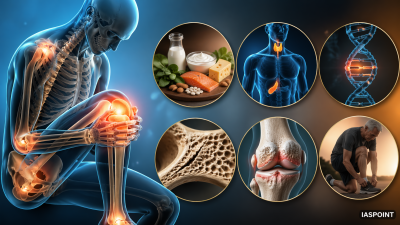
Diseases of the bone and cartilage primarily stem from nutritional deficiencies, hormonal imbalances, genetic mutations, or chronic wear and tear.
Metabolic Bone Disorders
These conditions arise when the body’s mineral homeostasis (calcium and phosphorus) or the bone remodeling process is disrupted.
Osteoporosis
- Nature: A systemic skeletal disorder characterized by low bone mass and micro-architectural deterioration of bone tissue.
- Mechanism: Bone resorption by osteoclasts outpaces bone formation by osteoblasts.
- Key Causes: Estrogen deficiency (post-menopausal women), aging, and lack of Vitamin D/Calcium.
- Fact: Often called a “silent disease” because bone loss occurs without symptoms until a fracture happens.
Rickets and Osteomalacia
- Rickets (Children): Failure of bone mineralization in children, leading to soft, weak bones and skeletal deformities like “bow legs.”
- Osteomalacia (Adults): The adult counterpart where existing bone is inadequately mineralized.
- Cause: Primarily a deficiency of Vitamin D, Calcium, or Phosphate.
Paget’s Disease (Osteitis Deformans)
- Nature: A chronic disorder that results in enlarged and misshapen bones.
- Mechanism: Excessive and haphazard bone remodeling, leading to bone that is structurally weak and prone to fractures.
Joint and Cartilage Disorders
These disorders affect the articular surfaces where bones meet, often involving the degradation of hyaline cartilage.
| Disease | Primary Site | Key Characteristic | Pathophysiology |
| Osteoarthritis | Weight-bearing joints (Knees, Hips) | Degenerative “Wear and Tear” | Breakdown of articular hyaline cartilage; bone-on-bone friction. |
| Rheumatoid Arthritis | Small joints (Hands, Feet) | Autoimmune Disorder | Immune system attacks the synovial membrane, causing inflammation and cartilage erosion. |
| Gout (Gouty Arthritis) | Big toe, ankles | Metabolic/Chemical | Accumulation of Uric Acid crystals in the joint space. |
| Slipped Disc | Intervertebral column | Herniation | The fibrocartilage disc protrudes, pressing on spinal nerves. |
Genetic and Functional Disorders
Osteogenesis Imperfecta (Brittle Bone Disease)
- Cause: A genetic mutation affecting the production of Type I Collagen.
- Effect: Bones break easily, often with little or no apparent cause.
Achondroplasia
- Nature: The most common form of dwarfism.
- Mechanism: A genetic mutation that prevents the conversion of cartilage to bone (ossification), particularly in the long bones of the arms and legs.
Inflammatory and Nutritional Trivia for UPSC
- Synovitis: Inflammation of the synovial membrane that lines the joint capsule, often a precursor to more severe arthritis.
- Bursitis: Inflammation of the bursa (small fluid-filled sacs that cushion joints), common in athletes and manual laborers.
- Role of Hormones: * Calcitonin deficiency can lead to high blood calcium and weak bones.
- Parathyroid Hormone (PTH) excess (hyperparathyroidism) causes excessive bone resorption, leading to fragile bones.
- Bone Density Testing: Measured using DEXA (Dual-Energy X-ray Absorptiometry) scans; T-scores are used to diagnose Osteopenia (precursor) and Osteoporosis.
- Fluorosis: Excessive intake of fluoride (often through groundwater in certain Indian states) leads to “Skeletal Fluorosis,” causing bone hardening and joint stiffness, contrasting with the softening seen in Rickets.
Summary of Diagnostic Terms
- Fracture: A break in the continuity of the bone tissue.
- Sprain: Injury to a ligament (bone-to-bone connective tissue).
- Strain: Injury to a muscle or tendon (muscle-to-bone connective tissue).
- Ankylosis: Stiffness or fixation of a joint due to the fusion of bones, often resulting from chronic inflammation.