

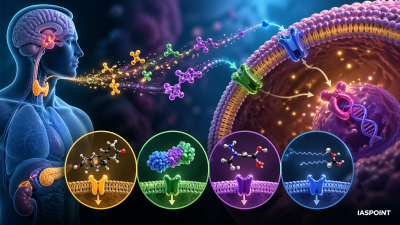
Hormones are non-nutrient chemicals which act as intercellular messengers and are produced in trace amounts. Based on their chemical nature, they are classified into four distinct groups, which determines how they interact with target cells.
- Peptide, Polypeptide, Protein Hormones: Insulin, glucagon, pituitary hormones, hypothalamic hormones.
- Steroids: Cortisol, testosterone, estradiol, and progesterone.
- Iodothyronines: Thyroid hormones (T3 and T4).
- Amino-acid derivatives: Epinephrine (Adrenaline).
Hormonal Action Mechanisms
Hormones produce their effects on target tissues by binding to specific proteins called hormone receptors.
- Membrane-bound Receptors: Water-soluble hormones (e.g., Protein hormones) cannot enter the target cell. They bind to surface receptors and generate secondary messengers like Cyclic AMP (cAMP), IP3, or Ca2+, which trigger biochemical responses.
- Intracellular Receptors: Lipid-soluble hormones (e.g., Steroids, Iodothyronines) cross the cell membrane and bind to receptors inside the nucleus. They interact with the genome to regulate gene expression or protein synthesis.
Major Human Hormones and Physiological Roles
Hypothalamic Hormones
The hypothalamus regulates the pituitary gland via two types of hormones:
- Releasing Hormones: e.g., Gonadotropin-releasing hormone (GnRH) stimulates the pituitary to release gonadotropins.
- Inhibiting Hormones: e.g., Somatostatin inhibits the release of Growth Hormone from the pituitary.
Pituitary Hormones (The Effectors)
The anterior pituitary secretes several tropic hormones that control other endocrine glands.
- Melanocyte Stimulating Hormone (MSH): Acts on melanocytes to regulate skin pigmentation.
- Luteinizing Hormone (LH): In males, it stimulates androgen synthesis; in females, it induces ovulation and maintains the corpus luteum.
- Follicle Stimulating Hormone (FSH): Regulates spermatogenesis in males and follicular development in females.
Thyroid and Parathyroid Hormones
These hormones are critical for basal metabolic rate (BMR) and ionic balance.
- Thyroxine (T4): Controls metabolism of carbohydrates, proteins, and fats. It also supports RBC formation.
- Calcitonin: A peptide hormone that prevents high blood calcium levels (hypocalcemic).
- Parathyroid Hormone (PTH): Increases Ca2+ levels in the blood by stimulating bone resorption and calcium absorption from digested food.
Hormones of the Adrenal Glands
| Hormone Category | Specific Hormone | Primary Physiological Action |
| Catecholamines | Adrenaline | Increases heart rate, glycogenolysis (glucose release), and lipid breakdown. |
| Glucocorticoids | Cortisol | Stimulates gluconeogenesis, lipolysis, and suppresses immune response (anti-inflammatory). |
| Mineralocorticoids | Aldosterone | Acts on renal tubules to reabsorb Na^+ and water; excretes K^+ and phosphate ions. |
| Androgenic Steroids | DHEA | Responsible for axial, pubic, and facial hair growth during puberty. |
Pancreatic Hormones and Glucose Homeostasis
The pancreas maintains blood glucose through a delicate feedback loop:
- Insulin: Acts on hepatocytes and adipocytes to increase cellular glucose uptake. It promotes glycogenesis (conversion of glucose to glycogen).
- Glucagon: Acts mainly on liver cells to stimulate glycogenolysis and gluconeogenesis, increasing blood sugar levels.
Non-Endocrine Organ Hormones
Several tissues not traditionally classified as endocrine glands also secrete vital hormones:
- Erythropoietin (Kidney): Stimulates the bone marrow to produce red blood cells in response to low oxygen.
- Atrial Natriuretic Factor (Heart): Secreted by the atrial wall when blood pressure increases; it causes vasodilation to lower BP.
- Gastrin (GI Tract): Stimulates secretion of hydrochloric acid and pepsinogen in the stomach.
- Secretin (GI Tract): Acts on the exocrine pancreas to stimulate secretion of water and bicarbonate ions.
- Cholecystokinin (CCK): Stimulates the secretion of pancreatic enzymes and bile juice from the gallbladder.
Summary of Key Hormonal Disorders
- Diabetes Mellitus: Caused by insulin deficiency or resistance; marked by high blood glucose.
- Diabetes Insipidus: Caused by a lack of ADH (Vasopressin); results in excessive thirst and urination.
- Exophthalmic Goitre (Graves’ Disease): Hyperthyroidism characterized by protruding eyeballs and increased BMR.
- Cushing’s Syndrome: Result of excess cortisol production, often leading to obesity and high blood pressure.
- Acromegaly: Result of excess Growth Hormone in adults, causing disfigurement (especially of the face).