

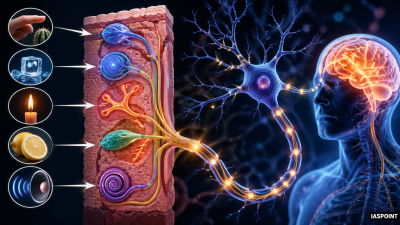
Receptors are specialized structures (nerve endings or cells) that convert environmental stimuli into electrical impulses. This process is known as Sensory Transduction. Receptors are classified based on the type of energy or stimulus they respond to.
1. Photoreceptors (Vision)
Photoreceptors are sensitive to light (electromagnetic radiation) and are located exclusively in the Retina of the eye.
- Rods: Highly sensitive to low-intensity light. They contain the pigment Rhodopsin, which requires Vitamin A for synthesis. They do not distinguish colors.
- Cones: Respond to high-intensity light and are responsible for color vision and visual acuity. They contain Iodopsin.
- Mechanism: Light causes a conformational change in photopigments, triggering a nerve impulse that travels via the Optic Nerve to the visual cortex of the brain.
2. Chemoreceptors (Smell and Taste)
Chemoreceptors respond to chemical substances dissolved in fluids (saliva or mucus). These are the most primitive types of receptors.
- Olfactory Receptors (Smell): Located in the olfactory epithelium in the upper nasal cavity. They detect volatile chemical molecules. The signal is sent via the Olfactory Nerve directly to the limbic system (emotions/memory).
- Gustatory Receptors (Taste): Located in the taste buds on the tongue’s papillae.
- Primary Gustatory Stimuli: Sweet, Sour, Salty, Bitter, and Umami (Savory).
- Internal Chemoreceptors: Found in the Carotid and Aortic bodies; they monitor blood pH and CO2 levels to regulate breathing.
3. Mechanoreceptors (Touch, Hearing, and Balance)
Mechanoreceptors are stimulated by mechanical deformations such as pressure, stretch, vibration, or sound waves.
- Phonoreceptors (Hearing): The Hair Cells in the Organ of Corti (Cochlea) convert fluid vibrations into electrical signals.
- Statoreceptors (Equilibrium): Found in the Vestibular Apparatus (Semicircular canals and Otolith organs) of the inner ear to detect head position and movement.
- Tactile Receptors (Skin):
- Meissner’s Corpuscles: Sensitive to light touch.
- Pacinian Corpuscles: Sensitive to deep pressure and vibration.
- Proprioceptors: Located in muscles, tendons, and joints; they provide information about body position and limb movement.
4. Thermoreceptors (Temperature)
Thermoreceptors are free nerve endings located primarily in the skin and the Hypothalamus (to monitor core body temperature).
- Krause End Bulbs: Historically associated with detecting cold.
- Ruffini Endings: Historically associated with detecting warmth.
- Function: They allow the body to initiate homeostatic responses like sweating (vasodilation) or shivering (vasoconstriction).
5. Nociceptors (Pain)
Nociceptors are a specialized category of receptors that respond to potentially damaging stimuli (extreme heat, mechanical trauma, or chemical irritants).
- Nature: They are generally free nerve endings.
- Non-Adaptive: Unlike other receptors that “get used” to a stimulus (sensory adaptation), nociceptors do not adapt easily, as pain serves as a critical protective warning signal.
Comparative Summary of Receptors
| Receptor Type | Primary Organ | Specific Stimulus | Key Feature/Example |
|---|---|---|---|
| Photoreceptor | Eye | Light | Rods (Night) and Cones (Day) |
| Chemoreceptor | Nose, Tongue | Chemicals | Olfactory and Gustatory cells |
| Mechanoreceptor | Ear, Skin | Physical Change | Hair cells in Cochlea; Pacinian Corpuscle |
| Thermoreceptor | Skin, Hypothalamus | Temperature | Detects Heat/Cold gradients |
| Nociceptor | Most Tissues | Tissue Damage | Responsible for the sensation of Pain |
Facts for UPSC Prelims
- Sensory Adaptation: The phenomenon where receptors stop responding to a constant, unchanging stimulus (e.g., you stop feeling the clothes on your skin).
- Smallest Bone: The Stapes in the middle ear is crucial for mechanical transduction, vibrating against the oval window of the cochlea.
- Hypothalamus: Acts as the “Thermostat” of the human body, utilizing internal thermoreceptors to maintain a constant 37∘C temperature.
- Chemical Senses: Smell and Taste are often called “chemical senses” because they both sample the chemical environment.