

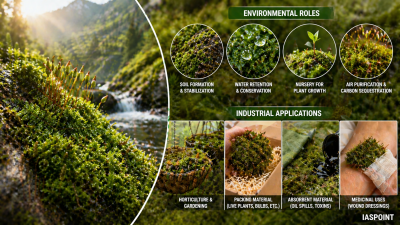
Bryophytes, while seemingly inconspicuous, play a vital role in environmental maintenance and have specific industrial applications.
Ecological Importance
1. Pioneers of Plant Succession
- Colonization: Mosses, along with lichens, are the first organisms to colonize bare rocks.
- Soil Formation: They secrete organic acids that gradually weather and decompose rocks. This process creates a thin layer of soil, making the substrate suitable for the growth of higher plants (Pteridophytes and Angiosperms).
2. Prevention of Soil Erosion
- Surface Cover: Mosses grow in dense, cushion-like mats on the soil surface.
- Impact Reduction: These mats act as a buffer, reducing the impact of falling rain and preventing the soil from being washed away by surface runoff.
3. Nutrient Cycling
- Retention: Bryophytes act as “sponges” that trap and retain nutrients from rainwater and dust, preventing them from leaching out of the ecosystem.
- Nitrogen Fixation: Certain bryophytes have symbiotic associations with nitrogen-fixing cyanobacteria, contributing to the nitrogen economy of the habitat.
Economic Importance
1. Peat Production (Sphagnum)
- Formation: Sphagnum (also known as Bog Moss or Peat Moss) grows in acidic marshes. Over time, dead and decayed Sphagnum accumulates and is compressed into a carbon-rich substance called Peat.
- Fuel Source: Dried peat is used as a traditional fuel source in several parts of the world.
- Industrial Use: Peat is a precursor to coal; it is also used in the production of ethyl alcohol and ammonia.
2. Horticulture and Packaging
- Water Retention: Sphagnum has an extraordinary capacity to hold water (up to 20 times its dry weight).
- Trans-shipment: It is used as a packing material for the trans-shipment of living materials (like seedlings, cut flowers, and tubers) to keep them hydrated during transit.
- Soil Conditioner: Peat is mixed with soil to improve its water-holding capacity and aeration.
3. Medicinal and Antibacterial Properties
- Antiseptic Properties: Because of their acidic nature and the presence of phenolics, certain bryophytes (like Sphagnum) have antiseptic properties.
- Historical Fact: Sphagnum was used as a surgical dressing during World War I to treat wounds when cotton was scarce.
- Bio-indicators: Bryophytes are highly sensitive to air pollution (especially Sulfur Dioxide). Their absence in an area often indicates high levels of atmospheric pollution.
Summary Table: Key Species and Their Uses
| Species | Primary Use | Category |
| Sphagnum | Peat formation, packaging living material, surgical dressings. | Economic |
| Polytrichum | Traditionally used to dissolve kidney and gallbladder stones. | Medicinal |
| Marchantia | Used in the treatment of pulmonary tuberculosis and liver infections. | Medicinal |
| Moss Carpets | Reducing soil erosion and facilitating plant succession. | Ecological |
UPSC Prelims Specific Trivia
- Bog Mummy: Peat bogs are highly acidic and anaerobic. This prevents decay, leading to the preservation of organic matter for thousands of years (e.g., “Bog bodies” found in Europe).
- Bio-monitoring: Bryophytes lack a cuticle, allowing them to absorb minerals directly from the air. This makes them excellent Bio-indicators for heavy metal pollution (like Lead and Zinc).
- Nitrogen Contribution: In tundra and boreal forests, bryophytes are the primary source of nitrogen through their association with cyanobacteria.