

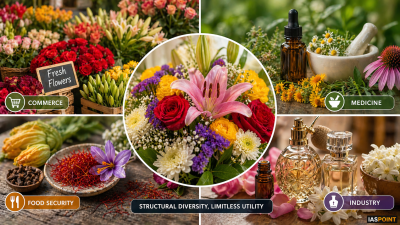
The economic importance of flowers and inflorescences extends beyond biological reproduction into commerce, medicine, and food security. The structural diversity of these organs dictates their utility in various global industries.
Culinary and Nutritional Value
Many human food sources are derived directly from floral structures rather than the fruits that follow them.
- Edible Inflorescences: High-fiber vegetables such as Cauliflower (Brassica oleracea var. botrytis) and Broccoli are technically immature inflorescences. The “curd” of the cauliflower is a pre-floral fleshy apical meristem.
- Spices and Flavoring: * Clove: The dried, unopened flower buds of Syzygium aromaticum.
- Saffron: Derived from the dried stigmas and styles of the Crocus sativus flower. It is one of the world’s most expensive spices by weight.
- Hops: The female inflorescences (cones) of Humulus lupulus are used in the brewing industry for flavor and stability.
- Nectar and Honey Production: Flowers are the primary source of nectar for honeybees. The type of flower (e.g., Eucalyptus, Manuka, or Sunflower) determines the medicinal grade and flavor profile of the honey.
Medicinal and Pharmaceutical Applications
Floral parts contain secondary metabolites such as alkaloids and essential oils used in traditional and modern medicine.
- Catharanthus roseus (Periwinkle): Extracts from the flower and leaves are used to produce Vincristine and Vinblastine, which are critical in chemotherapy for leukemia.
- Arnica montana: The flower heads (capitulum) are used in homeopathic treatments for bruising and inflammation.
- Hibiscus: The calyx and petals are used in herbal teas to manage blood pressure and liver health.
- Pyrethrum: Obtained from the dried flower heads of Chrysanthemum cinerariifolium, it is a potent natural insecticide.
Industrial and Ornamental Use
The aesthetics and chemical composition of flowers drive multi-billion dollar markets.
- Floriculture Industry: The global trade of cut flowers (Roses, Lilies, Carnations) is a major economic sector. In India, the National Horticulture Board (NHB) promotes the commercial cultivation of flowers like Marigold (for pigments) and Jasmine (for scent).
- Perfumery and Essential Oils: Flowers such as Jasmine, Rose, Lavender, and Tuberose are distilled to extract essential oils used in the “Attar” and high-end perfume industries.
- Natural Dyes: Petals of flowers like Safflower (Carthamus tinctorius) and Palas (Butea monosperma) are used to produce eco-friendly organic dyes for the textile industry.
Agricultural Significance
Inflorescence morphology directly impacts crop yield and agricultural technology.
- Hybrid Seed Production: Understanding the structure (unisexual vs. bisexual) is crucial for emasculation and artificial hybridization, which leads to high-yielding varieties (HYV).
- Pollination Management: The arrangement of flowers (e.g., the spadix of Maize) dictates whether a plant is self-pollinated or cross-pollinated, influencing the genetic diversity of the crop.
- Indicator Plants: Certain flowers act as bio-indicators for soil health or pollution levels.
Key Economic Examples by Type
| Plant Part | Economic Product | Biological Source |
| Flower Bud | Clove (Spice) | Syzygium aromaticum |
| Stigma/Style | Saffron (Spice/Dye) | Crocus sativus |
| Inflorescence | Broccoli/Cauliflower | Brassica oleracea |
| Capitulum | Pyrethrin (Pesticide) | Chrysanthemum |
| Petals | Essential Oils/Perfume | Rosa damascena |
UPSC Trivia: Economic Botany
- Banana “Flower”: In many cultures, the large purple bracts and the male flowers of the banana inflorescence are consumed as a nutrient-dense vegetable.
- Floral Solar Tracking: The heliotropism seen in the Sunflower inflorescence (moving with the sun) maximizes energy for growth and attracts 25% more pollinators than stationary flowers, directly impacting oilseed yield.
- Sanctity and Economy: The Lotus (Nelumbo nucifera), apart from being the national flower, has seeds and rhizomes with significant commercial value in the food and traditional medicine sectors of Southeast Asia.