

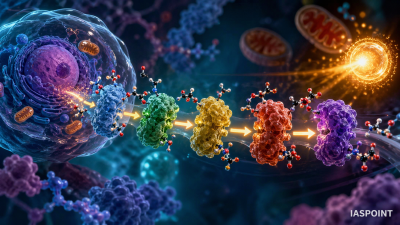
Metabolism refers to the sum total of all biochemical reactions occurring within a living organism to maintain life. These reactions are not isolated but occur in highly coordinated, multi-step sequences known as Metabolic Pathways. Every step in a metabolic pathway is catalyzed by a specific enzyme, ensuring that the rate of reaction meets the physiological demands of the cell.
The Dual Facets: Anabolism and Catabolism
Metabolism is broadly divided into two complementary processes that maintain a dynamic steady state in the body.
| Feature | Anabolism (Biosynthesis) | Catabolism (Degradation) |
| Definition | Building complex molecules from simpler ones. | Breaking down complex molecules into simpler ones. |
| Energy Requirement | Endergonic: Requires an input of energy (usually ATP). | Exergonic: Releases energy (stored as ATP). |
| Purpose | Growth, repair, and storage. | Providing energy for cellular work. |
| Examples | Photosynthesis, Protein synthesis, DNA replication. | Cellular Respiration, Digestion, Glycolysis. |
Metabolic Pathways and Intermediates
Metabolic pathways can be linear (e.g., Glycolysis) or cyclic (e.g., the Krebs Cycle). The substances produced during these reactions are called metabolites.
Primary Metabolites
These have identifiable functions and play direct roles in normal physiological processes like growth and reproduction.
- Examples: Amino acids, Sugars, Nucleotides, Vitamins.
Secondary Metabolites
These are produced primarily by plants, fungi, and microbes. While they are not essential for the basic survival of the producer, they often have ecological importance (e.g., defense) or economic value.
- Examples: Alkaloids (Morphine), Terpenoids, Essential oils, Antibiotics, Rubber, and Pigments.
Bioenergetics: The Role of ATP
The flow of energy in metabolism is mediated by Adenosine Triphosphate (ATP).
- Catabolic reactions release energy by breaking down “fuel” molecules like glucose.
- This energy is captured to synthesize ATP from ADP and inorganic phosphate (Pi).
- Anabolic reactions then consume this ATP to perform work, such as muscle contraction or building new tissues.
Key Metabolic Processes in Animals
1. Carbohydrate Metabolism
- Glycolysis: The breakdown of glucose into pyruvate in the cytoplasm. It is common to both aerobic and anaerobic respiration.
- Glycogenesis: Conversion of excess glucose into glycogen for storage in the liver and muscles.
- Glycogenolysis: Breakdown of glycogen back into glucose when blood sugar is low.
2. Lipid Metabolism
- Beta-oxidation: The process by which fatty acids are broken down in the mitochondria to generate a large amount of ATP.
- Lipogenesis: Synthesis of fatty acids and triglycerides from acetyl-CoA.
3. Protein Metabolism
- Deamination: The removal of the amino group from amino acids in the liver, leading to the production of Urea (Urea Cycle).
- Transamination: The transfer of an amino group to a keto acid to create a new amino acid.
Regulation of Metabolism
Metabolism is not a random occurrence but is strictly regulated to prevent “futile cycles” (where anabolism and catabolism of the same molecule happen simultaneously).
- Hormonal Control: Insulin promotes anabolic pathways (glucose storage), while Glucagon and Adrenaline promote catabolic pathways (glucose release).
- Feedback Inhibition: The end product of a pathway often acts as an allosteric inhibitor for the first enzyme of that pathway, shutting it down when levels are sufficient.
- Compartmentalization: Different pathways occur in different parts of the cell (e.g., Fatty acid synthesis in the cytoplasm vs. breakdown in the mitochondria).
Metabolic Rates
- Basal Metabolic Rate (BMR): The minimum amount of energy required by the body to maintain vital functions (breathing, heart rate) at complete rest.
- Factors Influencing BMR: Age, sex (males generally have higher BMR), body surface area, and thyroid hormone levels (Thyroxine).
UPSC Prelims Fact File
- Metabolic Flux: The rate at which metabolites flow through a pathway. It is highly dynamic and changes based on the body’s needs (e.g., rest vs. exercise).
- Dynamic State of Body Constituents: No biomolecule is permanent; they are constantly being broken down and replaced. This constant “turnover” is the hallmark of a living system.
- Amphibolic Pathway: A pathway that serves both catabolic and anabolic purposes. The Krebs Cycle is the best example, as it breaks down acetyl-CoA but also provides carbon skeletons for synthesizing amino acids.
- Inborn Errors of Metabolism: Genetic disorders where a specific enzyme is missing, leading to the toxic buildup of metabolites (e.g., Phenylketonuria (PKU) or Alkaptonuria).