

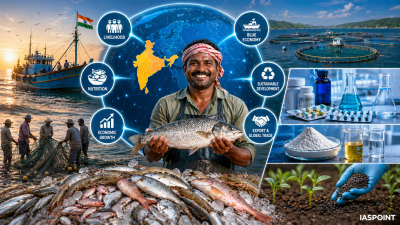
The fisheries sector is a cornerstone of the global and Indian economy, often described as the “Blue Economy.” Beyond direct consumption, fishes provide essential raw materials for pharmaceutical, industrial, and agricultural sectors.
1. Nutritional Security and Global Trade
Fishes are a primary source of high-quality animal protein, essential amino acids, and micronutrients.
- Nutrient Profile: Rich in Vitamin A, D, and B-complex, and minerals like Iodine, Selenium, and Phosphorus.
- Omega-3 Fatty Acids: High concentrations of Eicosapentaenoic Acid (EPA) and Docosahexaenoic Acid (DHA) found in fatty fish (e.g., Mackerel, Sardines) are critical for cardiovascular health and brain development.
- Export Earnings: Seafood is one of India’s largest agricultural exports. Frozen Shrimp (Pink Gold) remains the dominant item, followed by frozen fish and squid.
2. Essential Fish By-Products
Industrial utilization of fish waste and non-edible species adds significant value to the economy.
| By-Product | Source / Origin | Primary Use |
| Fish Liver Oil | Livers of Sharks, Cod, and Halibut. | Rich in Vitamins A and D; used in pharmaceutical supplements. |
| Fish Body Oil | Extracted from the whole body of oily fish (Sardines, Herring). | Used in manufacturing paints, varnishes, soaps, and lubricants. |
| Fish Meal | Dried and ground non-edible fish or fish offal. | High-protein feed for poultry, pigs, and aquaculture. |
| Isinglass | Dried swim bladders of fishes like Sturgeon and Carp. | Used as a clarifying agent in the brewing (beer) and wine industries. |
| Shagreen | Dried and treated skin of Sharks and Rays (Placoid scales). | Used as an abrasive (sandpaper) or for covering luxury boxes and sword hilts. |
| Fish Glue | Processed skin, bones, and connective tissue. | A high-quality adhesive used in bookbinding and woodwork. |
| Fish Guano | Waste left after oil extraction. | Nitrogen and phosphorus-rich organic fertilizer for agriculture. |
3. Biomedical and Scientific Importance
- Insulin Production: Historically, the Islets of Langerhans from fish pancreases were used to extract insulin for diabetic patients.
- Surgical Sutures: Certain fish skin extracts and collagen are used in regenerative medicine and for biodegradable surgical threads.
- Mosquito Control: Species like Gambusia (Mosquito fish) and Lebistes (Guppy) are used in Biological Control programs to consume mosquito larvae, preventing the spread of Malaria and Dengue.
4. Aesthetic and Decorative Value (Ornamental Fisheries)
The “Aquarium Industry” is a multi-million dollar sector involving the breeding and export of colorful fish.
- Exotic Species: Goldfish, Angel fish, and Siamese Fighting Fish.
- Indigenous Potential: India’s Western Ghats and North-East regions are hotspots for “Live Jewels”—native ornamental fish highly sought in international markets.
5. Role in Integrated Farming Systems
Fishes play a symbiotic role in traditional and modern agriculture, enhancing resource efficiency.
- Paddy-cum-Fish Culture: Common in West Bengal and Kerala, where fish are reared in flooded rice fields. Fish consume pests and provide nitrogenous waste (manure) to the crops.
- Aquaponics: A closed-loop system where fish waste provides nutrients for hydroponic plants, and plants filter the water for the fish.
6. Socio-Economic Impact in India
- Livelihood: Supports over 30 million people, particularly in the 9 coastal states and 2 UTs.
- Women Empowerment: Women constitute a large portion of the workforce in post-harvest activities, including fish drying, processing, and marketing.
- Infrastructure Growth: Development of Fishing Harbours, Cold Chains, and processing plants under the Pradhan Mantri Matsya Sampada Yojana (PMMSY) stimulates rural economy.
UPSC Trivia: Economic Terms
- Blue Revolution: Refers to the rapid increase in fish production and aquaculture.
- EEZ (Exclusive Economic Zone): The area up to 200 nautical miles from the coast where India has sovereign rights for fishing; currently under-utilized in the “Deep Sea” segment.
- Trombay / CIFE: The Central Institute of Fisheries Education (Mumbai) is a key body for research and development in fisheries science in India.