

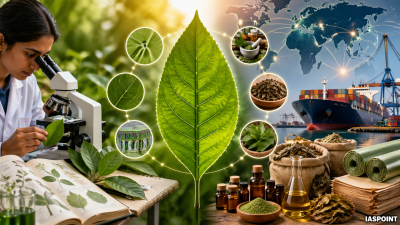
In the study of Plant Morphology, leaves are recognized not only as the “kitchen of the plant” but as high-value commodities in global trade, medicine, and industry.
Leaves as Primary Food and Nutrition
Leaves are concentrated sources of vitamins, minerals, and dietary fiber. They play a critical role in combating malnutrition.
- Leafy Vegetables: Spinach, Fenugreek (Methi), Cabbage, and Lettuce provide essential iron, calcium, and Vitamin A.
- Flavoring and Spices: Many aromatic leaves are used globally to enhance food flavor. Examples include Curry leaves (Murraya koenigii), Bay leaves (Tejpatta), Coriander, and Mint.
- Edible Storage: In the case of Onion and Garlic bulbs, the edible portion consists of fleshy scale leaves that store food for the plant.
Industrial and Commercial Applications
The physical and chemical properties of leaves are exploited for large-scale industrial manufacturing.
- Beverage Industry: The most significant leaf-based industry is Tea (Camellia sinensis). The young leaves and terminal buds are processed for their caffeine and tannin content.
- Natural Dyes: Henna (Lawsonia inermis) leaves are the source of Mehndi, a natural dye used for hair and skin. Indigo dye was historically extracted from the leaves of the Indigofera plant.
- Tendu Leaves: Leaves of Diospyros melanoxylon are used in India for the Bidi industry, providing a livelihood for millions in tribal and forest-fringe areas.
- Essential Oils: Eucalyptus and Citronella leaves are steam-distilled to extract oils used in disinfectants, perfumes, and insect repellents.
Medicinal and Pharmaceutical Importance
Leaves contain secondary metabolites like alkaloids and glycosides that serve as raw materials for modern medicine.
| Plant Name | Common Name | Medicinal Utility |
| Azadirachta indica | Neem | Antiseptic, antifungal, and used in skin treatments. |
| Ocimum sanctum | Tulsi | Adaptogen used for respiratory ailments and immunity. |
| Digitalis lanata | Foxglove | Source of Digoxin, a critical drug for heart failure. |
| Atropa belladonna | Belladonna | Source of Atropine, used in ophthalmology to dilate pupils. |
| Aloe vera | Aloe | Gel from fleshy leaves used in dermatology and cosmetics. |
Ecological and Traditional Utility
- Bio-pesticides: Leaves of Neem and Tobacco are used to prepare natural pesticides due to the presence of azadirachtin and nicotine, respectively.
- Traditional Plates: In India, leaves of the Sal tree (Shorea robusta) and Banana are used for making biodegradable plates and food wrappers.
- Fodder: Leaves of several trees (e.g., Leucaena, Mulberry) serve as high-protein fodder for livestock and silkworms.
UPSC Prelims Fact Sheet: Leaf Economics
- Saffron Stigma vs. Leaf: Saffron is obtained from the flower’s stigma, but the Crocus plant’s leaves are often used as high-grade fodder.
- Caffeine Content: While caffeine is found in coffee seeds, it is also highly concentrated in tea leaves.
- Biodiversity Conservation: The collection of “Non-Timber Forest Products” (NTFP), such as Tendu and Sal leaves, is governed under the Forest Rights Act (FRA), 2006, a frequent topic in UPSC environment sections.
- Photosynthetic Efficiency: In the context of “Carbon Sequestration,” leaves are the primary organs for atmospheric CO2 capture, making leaf area index (LAI) a critical metric in climate studies.