

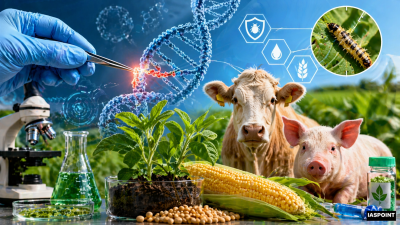
Genetically Modified Organisms (GMOs) are living organisms—plants, animals, or microorganisms—whose genetic material (DNA) has been altered using genetic engineering or recombinant DNA technology. This process involves the insertion of a specific gene from one species into the genome of another to introduce desirable traits such as pest resistance, drought tolerance, or enhanced nutritional profiles.
Regulatory Framework for GMOs in India
The regulation of GMOs in India is governed by the Rules for the Manufacture, Use, Import, Export and Storage of Hazardous Microorganisms, Genetically Engineered Organisms or Cells, 1989 under the Environment (Protection) Act, 1986.
Key Regulatory Bodies
- Genetic Engineering Appraisal Committee (GEAC): Functioning under the Ministry of Environment, Forest and Climate Change (MoEFCC), it is the apex body responsible for granting permits for large-scale field trials and commercial release of GE crops.
- Review Committee on Genetic Manipulation (RCGM): Functioning under the Department of Biotechnology (DBT), it monitors safety aspects of ongoing research projects and small-scale field trials.
- Institutional Biosafety Committee (IBSC): Established at every institution dealing with GMO research to ensure local compliance with safety guidelines.
Major Applications of GMOs in Agriculture
GMOs are primarily used in agriculture to increase yield and reduce dependency on chemical pesticides.
Bt Cotton (The Only Commercially Approved GE Crop in India)
- Mechanism: Incorporates genes from the soil bacterium Bacillus thuringiensis.
- Target: Produces Cry1Ac and Cry2Ab proteins toxic to the bollworm complex.
- Impact: India is one of the largest producers of cotton globally due to the adoption of Bt technology.
Bt Brinjal
- Status: Developed by Mahyco in collaboration with University of Agricultural Sciences, Dharwad. Though cleared by GEAC in 2009, it is under an indefinite commercial moratorium in India due to biosafety concerns.
- Global Context: Bangladesh successfully commercialized Bt Brinjal in 2013.
Dhara Mustard Hybrid-11 (DMH-11)
- Developer: Centre for Genetic Manipulation of Crop Plants (CGMCP), Delhi University.
- Technology: Uses the Barnase-Barstar system for hybridization in a self-pollinating crop like mustard.
- Objective: To increase per-acre yield and reduce India’s edible oil import bill.
Comparative Analysis of Major GMO Projects
| Crop | Introduced Gene/Trait | Developer | Status in India |
| Bt Cotton | cry1Ac (Bollworm resistance) | Mahyco/Monsanto | Commercially Cultivated |
| DMH-11 | Barnase-Barstar (Hybridization) | Delhi University | GEAC cleared for trials (2022) |
| Golden Rice | psy, crtI (Pro-vitamin A) | International Rice Research Institute | Not approved for cultivation |
| Bt Brinjal | cry1Ac (Fruit & Shoot Borer) | Mahyco/UAS Dharwad | Under Moratorium |
GMOs in Medicine and Industry
Beyond agriculture, GMO technology is fundamental to modern pharmacology and environmental management.
Recombinant Proteins and Vaccines
- Humulin: The first GE insulin produced using E. coli bacteria, replacing bovine/porcine insulin.
- Hepatitis B Vaccine: Produced using recombinant DNA technology in yeast (Saccharomyces cerevisiae).
- Monoclonal Antibodies: Used in treating cancers and autoimmune diseases.
Bioremediation
- Superbug (Pseudomonas putida): A genetically engineered bacterium developed by Dr. Ananda Mohan Chakrabarty, capable of breaking down crude oil components, making it vital for treating oil spills.
Ethical and Environmental Concerns
The deployment of GMOs is met with significant debate regarding long-term ecological and health impacts.
- Gene Flow: The risk of “transgenes” escaping into wild relatives, potentially creating “super-weeds” resistant to herbicides.
- Impact on Non-Target Organisms: Concerns that toxins meant for pests might harm beneficial insects like bees or butterflies.
- Monopoly and Seed Sovereignty: Reliance on multinational corporations for “terminator seeds” (seeds that do not produce fertile offspring) can impact farmer autonomy.
- Allergenicity: Potential for modified DNA to express proteins that trigger new allergic reactions in humans.
Fact Sheet and Trivia for UPSC Prelims
- First GMO: The first genetically modified organism was a bacterium created by Herbert Boyer and Stanley Cohen in 1973.
- First GE Food: The Flavr Savr tomato (1994) was the first GE food granted license for human consumption, designed for longer shelf life.
- Cartagena Protocol on Biosafety: An international agreement under the Convention on Biological Diversity (CBD) that regulates the movement of Living Modified Organisms (LMOs) from one country to another.
- Labeling Laws: In India, FSSAI (Food Safety and Standards Authority of India) regulates the labeling of GM foods. Current draft norms suggest labeling for products containing 1% or more GM ingredients.
- HTBT Cotton: Herbicide Tolerant Bt Cotton is a third-generation transgenic cotton. While not legally approved in India, illegal cultivation has been reported in several states.