

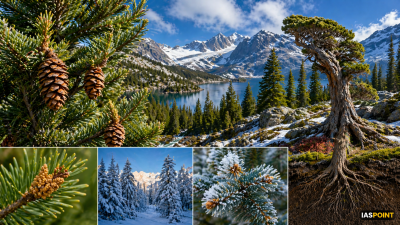
Gymnosperms are environmental stalwarts, particularly in temperate and arctic biomes where they often form the climax community. Their structural adaptations allow them to provide critical ecosystem services in harsh climates.
- Carbon Sequestration: Large coniferous forests (Taiga/Boreal forests) act as massive carbon sinks, absorbing atmospheric CO2 and playing a vital role in global climate regulation.
- Soil Conservation: The extensive root systems of conifers bind soil in mountainous regions, preventing landslides and erosion caused by heavy snowfall and rainfall.
- Habitat and Biodiversity: They provide essential cover and food for diverse wildlife. The dense canopy of evergreen gymnosperms offers thermal cover for animals during harsh winters.
- Water Cycle Regulation: Coniferous forests intercept snow and rain, regulating the flow of water into watersheds and preventing flash floods in downstream areas.
Economic Importance: Timber and Paper Industry
The “softwood” provided by gymnosperms is the backbone of several global industries due to its straight grain and ease of processing.
- Timber: Wood from Cedrus deodara (Deodar), Pinus (Pine), and Abies (Fir) is highly valued for construction, making railway sleepers, and furniture. Deodar wood is naturally resistant to insects and rot.
- Paper and Pulp: The long-fibered wood of Pinus and Picea (Spruce) is ideal for manufacturing high-quality paper, newsprint, and rayon.
- Matchstick Industry: Softwoods from gymnosperms are primarily used for making matchsticks and packing cases due to their light weight and strength.
Resins, Oils, and Industrial Extracts
Gymnosperms are chemically rich, providing various secondary metabolites used in industrial applications.
- Turpentine and Resins: Resins are obtained from Pinus species. Rosin (solid resin) is used in paper sizing, varnishes, and on violin bows. Turpentine (volatile oil) is a key solvent in the paint industry.
- Canada Balsam: Extracted from Abies balsamea, this resin has a refractive index close to glass and is used as a mounting medium for permanent microscopic slides.
- Cedarwood Oil: Extracted from the heartwood of Juniperus virginiana, it is used in perfumery and as an immersion oil in microscopy.
- Amber: Fossilized resin from extinct conifers (e.g., Pinites) is used as a precious gemstone and provides significant paleontological data by preserving ancient insects.
Medicinal and Pharmacological Value
Gymnosperms contribute significantly to both traditional and modern medicine, including life-saving pharmaceuticals.
| Product/Drug | Source | Application |
| Taxol | Taxus wallichiana (Yew) | A potent anti-cancer drug used in chemotherapy (Breast and Ovarian cancer). |
| Ephedrine | Ephedra | An alkaloid used to treat asthma, hay fever, and respiratory congestion. |
| Sago | Cycas revoluta | Edible starch used as a nutrient for patients with digestive issues. |
| Cedar Oil | Cedrus | Used as an expectorant and in treating skin diseases. |
Food and Nutritional Value
While not as diverse as angiosperms, several gymnosperms are important food sources.
- Edible Seeds: The seeds of Pinus gerardiana (Chilgoza) are highly nutritious and consumed as dry fruits.
- Sago Palm: Starch extracted from the pith of Cycas stems is processed into sago (Sabudana), a staple carbohydrate source in several tropical regions.
- Ginkgo Seeds: In some Asian cultures, the seeds of Ginkgo biloba are consumed after roasting, though they must be prepared carefully to remove toxins.
Summary Table for UPSC Quick Revision
| Category | Key Fact / Example |
| Tallest Tree | Sequoia sempervirens (Redwood) |
| Living Fossil | Ginkgo biloba |
| Anti-cancer Drug | Taxol from Taxus |
| Microscopy | Canada Balsam from Abies |
| Dry Fruit | Chilgoza from Pinus gerardiana |
| Nitrogen Fixation | Coralloid roots of Cycas (with Anabaena) |
| Softwood | Cedrus deodara, Pinus (Construction and Paper) |
Notable Trivia for Prelims
- Sperm Motility: Cycas possesses the largest ovule and the largest motile male gametes in the entire plant kingdom.
- The “Living Fossil” Ginkgo: It is unique because it is the only surviving member of its entire phylum (Ginkgophyta) and lacks any close living relatives.
- Resurrection Plant: Similar to some pteridophytes, certain species of Selaginella and Cupressus show remarkable drought tolerance.