

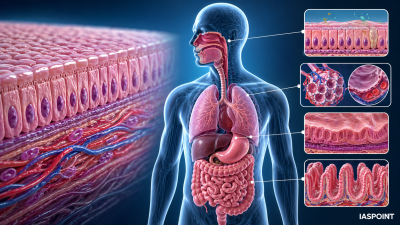
Epithelial tissue, or epithelium, serves as the primary protective layer covering the body’s external surfaces and lining internal organs and cavities.
Classification of Epithelial Diseases
Diseases affecting epithelial tissues are generally classified based on their etiology: neoplastic (cancerous), inflammatory, and genetic.
Neoplastic Diseases: Carcinomas
Carcinomas are malignancies that originate specifically in epithelial cells. They account for approximately 80% to 90% of all cancer cases.
- Adenocarcinoma: Originates in glandular epithelium (e.g., breast, prostate, pancreas, and lung).
- Squamous Cell Carcinoma: Affects the squamous epithelium, commonly found in the skin, lining of the digestive tract, and respiratory tract.
- Basal Cell Carcinoma: The most common form of skin cancer, originating in the deepest layer of the epidermis.
- Transitional Cell Carcinoma: Occurs in the urinary tract epithelium (urothelium) which has the ability to stretch.
Inflammatory and Autoimmune Disorders
These conditions occur when the protective barrier of the epithelium is compromised or attacked by the immune system.
- Psoriasis: A chronic autoimmune condition where the life cycle of skin cells (epithelial) accelerates, leading to a buildup of cells on the surface.
- Celiac Disease: An immune reaction to eating gluten that creates inflammation which damages the small intestine’s epithelial lining (villi), leading to malabsorption.
- Inflammatory Bowel Disease (IBD): Includes Crohn’s disease and Ulcerative Colitis, characterized by chronic inflammation of the epithelial lining of the gastrointestinal tract.
Epithelial Disorders by Organ System
| System | Specific Disease | Epithelial Type Affected | Key Fact for Prelims |
| Integumentary | Eczema (Dermatitis) | Stratified Squamous | Involves a breakdown of the skin barrier function. |
| Respiratory | Asthma/Bronchitis | Ciliated Columnar | Inflammation leads to excess mucus production by goblet cells. |
| Digestive | Peptic Ulcers | Simple Columnar | Erosion of the protective mucosal epithelium in the stomach. |
| Excretory | Nephrotic Syndrome | Glomerular Epithelium | Damage to podocytes (specialized epithelium) leads to protein loss in urine. |
Genetic and Functional Epithelial Diseases
Some diseases are rooted in the genetic dysfunction of epithelial cell components, such as transport proteins or structural integrity.
Cystic Fibrosis (CF)
Cystic Fibrosis is caused by a mutation in the CFTR gene, which affects the epithelial cells lining the lungs, pancreas, and sweat glands. This results in the production of abnormally thick and sticky mucus, leading to severe respiratory and digestive obstructions.
Epidermolysis Bullosa
A group of rare genetic disorders that cause the skin to be very fragile and to blister easily. It occurs due to a lack of “anchor” proteins that hold the epithelial layers together or to the underlying basement membrane.
Vital Facts and Trivia for UPSC Prelims
- Avascular Nature: Epithelial tissue is avascular (lacks blood vessels). It receives nutrients via diffusion from the underlying connective tissue through the basement membrane. Diseases affecting the basement membrane (like Goodpasture syndrome) can thus starve the epithelium.
- The “Barrier” Role: Most epithelial diseases result in “Leaky Gut” or “Barrier Dysfunction,” where the tight junctions between epithelial cells fail, allowing pathogens to enter the bloodstream.
- Metaplasia: This is a process where one type of mature epithelium is replaced by another due to chronic irritation. A classic example is Barrett’s Esophagus, where squamous epithelium in the esophagus changes to columnar epithelium due to acid reflux, increasing cancer risk.
- Endothelium vs. Epithelium: While both are lining tissues, the endothelium (lining blood vessels) is derived from the mesoderm, whereas general epithelium can be derived from all three germ layers (ectoderm, mesoderm, and endoderm).
- Regeneration: Epithelial tissue has the highest regenerative capacity of all human tissues, which is why it is the most prone to mutations and subsequent tumor formation.
Summary of Diagnostic Markers
In clinical pathology, specific filaments within epithelial cells called Cytokeratins are used as biomarkers. Identifying the specific type of cytokeratin helps doctors determine the origin of a metastatic cancer, as different epithelial tissues express different keratin patterns.
Last Modified: April 24, 2026