

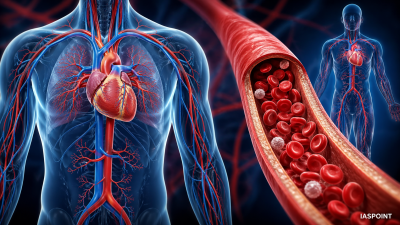
The human circulatory system, also known as the cardiovascular system, is an organ system that permits blood to circulate and transport nutrients, oxygen, carbon dioxide, hormones, and blood cells. In humans, it is a Closed Circulatory System, meaning blood flows through a continuous network of vessels and never leaves them to fill body cavities.
Components of the Circulatory System
The system is composed of three primary elements: the heart (the pump), the blood vessels (the pipes), and the blood (the fluid medium).
The Heart
The heart is a muscular organ derived from the mesoderm, situated in the thoracic cavity between the two lungs.
- Chambers: Humans possess a four-chambered heart (two atria and two ventricles), which prevents the mixing of oxygenated and deoxygenated blood.
- Valves: * Tricuspid Valve: Between the right atrium and right ventricle.
- Bicuspid (Mitral) Valve: Between the left atrium and left ventricle.
- Semilunar Valves: At the openings of the pulmonary artery and aorta.
- Nodes (Pacemakers):
- Sino-atrial Node (SAN): Located in the right atrium; initiates the heartbeat (Natural Pacemaker).
- Atrio-ventricular Node (AVN): Relays the impulse to the ventricles.
Blood Vessels
- Arteries: Carry oxygenated blood (except the Pulmonary Artery) away from the heart. They have thick, elastic walls and no valves.
- Veins: Carry deoxygenated blood (except the Pulmonary Vein) toward the heart. They have thin walls and possess valves to prevent backflow.
- Capillaries: Microscopic vessels where the actual exchange of gases and nutrients occurs between blood and tissues.
Mechanism of Circulation
The human body utilizes a Double Circulation mechanism, ensuring high efficiency in oxygen delivery.
Pulmonary Circulation
This pathway carries blood between the heart and the lungs.
- Route: Right Ventricle → Pulmonary Artery → Lungs → Pulmonary Veins → Left Atrium.
- Purpose: To oxygenate deoxygenated blood and release CO2.
Systemic Circulation
This pathway carries blood between the heart and all body tissues.
- Route: Left Ventricle → Aorta → Body Tissues → Vena Cava → Right Atrium.
- Purpose: To deliver oxygen and nutrients to tissues and collect metabolic waste.
The Cardiac Cycle
The cardiac cycle refers to the sequence of events during one heartbeat, lasting approximately 0.8 seconds.
- Joint Diastole: All four chambers are relaxed; blood flows into atria.
- Atrial Systole: Atria contract, pushing blood into ventricles.
- Ventricular Systole: Ventricles contract, closing AV valves (creating the “Lubb” sound) and pumping blood into the aorta and pulmonary artery.
- Ventricular Diastole: Ventricles relax, semilunar valves close (creating the “Dupp” sound).
Regulation of Cardiac Activity
While the heart is myogenic (generates its own impulse), its function can be modulated by external factors:
- Autonomic Nervous System (ANS): The Medulla Oblongata controls heart rate via sympathetic (increases rate) and parasympathetic (decreases rate) nerves.
- Hormones: Adrenaline and Noradrenaline (from adrenal medulla) significantly increase cardiac output during stress.
Portal Systems
A portal system is a part of the circulation where blood passes through a second capillary bed before returning to the heart.
- Hepatic Portal System: Carries blood from the intestine to the liver before it reaches the systemic circulation. This allows the liver to process nutrients and detoxify substances.
- Hypophyseal Portal System: Connects the hypothalamus to the anterior pituitary gland.
Disorders of the Circulatory System
| Disorder | Description |
| Hypertension | High blood pressure (Normal: 120/80 mmHg). Consistent readings above 140/90 indicate hypertension. |
| Coronary Artery Disease (CAD) | Also called Atherosclerosis; involves deposits of calcium, fat, and cholesterol in arteries supplying the heart muscle. |
| Angina Pectoris | Chest pain resulting from insufficient oxygen reaching the heart muscle. |
| Heart Failure | The state when the heart is not pumping blood effectively enough to meet the body’s needs. |
Important Facts for UPSC Prelims
- ECG (Electrocardiogram): A graphical representation of the electrical activity of the heart. The P-wave represents atrial depolarization, the QRS complex represents ventricular depolarization, and the T-wave represents ventricular repolarization.
- Blood Pressure Measurement: Conducted using a Sphygmomanometer.
- Open vs. Closed System: Arthropods and Molluscs generally have an open system (blood fills cavities called hemocoels), whereas Annelids and Chordates have a closed system.
- Single Circulation: Found in fish, where blood passes through the heart only once per cycle (Two-chambered heart).
- Incomplete Double Circulation: Found in amphibians and reptiles (Three-chambered heart, except Crocodiles).