

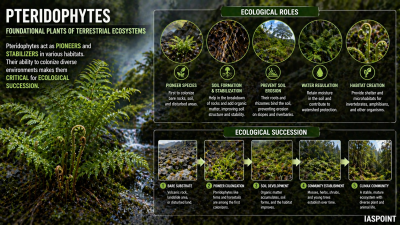
Pteridophytes play a foundational role in terrestrial ecosystems, acting as pioneers and stabilizers in various habitats. Their ability to colonize diverse environments makes them critical for ecological succession.
- Soil Binding and Erosion Control: Due to their extensive underground rhizomes and fibrous root systems, pteridophytes like Lycopodium and various ferns bind the soil particles together. This prevents soil erosion, particularly in hilly areas and slopes prone to landslides.
- Pioneer Species: Along with bryophytes, certain pteridophytes are early colonizers of rocky terrains and degraded lands. They contribute to soil formation (pedogenesis) by breaking down organic matter and trapped dust.
- Water Retention: Large fern colonies in forest understories help maintain microclimate humidity and moisture levels, which supports the growth of other shade-loving organisms.
- Nitrogen Fixation: The aquatic fern Azolla maintains a symbiotic relationship with the cyanobacterium Anabaena azollae. This association fixes atmospheric nitrogen, significantly enriching the nutrient profile of the water bodies they inhabit.
Economic Importance in Agriculture and Industry
The economic utility of pteridophytes spans from organic farming to the production of consumer goods.
- Bio-fertilizers: Azolla is widely used in South Asian countries as a bio-fertilizer in paddy (rice) fields. Because it fixes nitrogen, it reduces the dependency on chemical urea and increases crop yield by approximately 15% to 20%.
- Food Source: The young, coiled fronds of certain ferns, known as fiddleheads (e.g., Diplazium esculentum), are consumed as a nutrient-rich vegetable in various cultures, including parts of India.
- Scouring Agents: Equisetum (Horsetail) stems contain high silica content. Traditionally, these were used for cleaning and polishing metal utensils and wood, earning them the nickname “scouring rushes.”
- Bio-remediation: Some species are known as “hyper-accumulators.” For example, Pteris vittata (Brake fern) can absorb arsenic from contaminated soil, aiding in environmental cleanup.
Medicinal and Pharmacological Applications
Pteridophytes contain various alkaloids, flavonoids, and terpenoids that make them valuable in traditional and modern medicine.
| Species | Medicinal Use |
| Dryopteris filix-mas | Used as an anthelmintic (to expel intestinal worms, especially tapeworms). |
| Lycopodium | Spores are used in homeopathic medicine to treat digestive and urinary tract disorders. |
| Adiantum (Maidenhair fern) | Used in the treatment of cough, fever, and respiratory ailments. |
| Selaginella | Some species are used in traditional medicine to treat wounds and as a tonic to improve blood circulation. |
| Marsilea | Used in the treatment of skin diseases and as a sedative. |
Horticultural and Ornamental Value
The unique morphology of pteridophyte foliage makes them highly sought after in the landscaping and florist industries.
- Ornamental Ferns: Species such as Nephrolepis (Sword fern), Asplenium (Bird’s nest fern), and Adiantum are staples in indoor gardening and landscaping due to their intricate and evergreen fronds.
- Floral Industry: Fern fronds are extensively used as “greens” or fillers in floral bouquets and decorations because they remain fresh for a long duration after being cut.
Industrial and Historical Utility
- Spores in Industry: Lycopodium powder (spores) is highly flammable and was historically used in flash photography and pyrotechnics. Today, it is used in the pharmaceutical industry as a coating for pills to prevent them from sticking together.
- Coal Formation: The vast coal deposits found today are largely the result of the compression of giant tree ferns and other pteridophytes that dominated the Earth during the Carboniferous Period (approx. 300-360 million years ago).
Summary Table for UPSC Quick Revision
| Category | Key Fact / Example |
| Bio-fertilizer | Azolla (fixes Nitrogen with Anabaena) |
| Soil Conservation | Lycopodium, Selaginella (prevents erosion) |
| Medicine | Dryopteris (Anthelmintic), Lycopodium (Homeopathy) |
| Food | Diplazium esculentum (Fiddlehead fern) |
| Phytoremediation | Pteris vittata (Arsenic removal) |
| Industrial Use | Equisetum (Silica for polishing), Lycopodium (Pill coating) |