

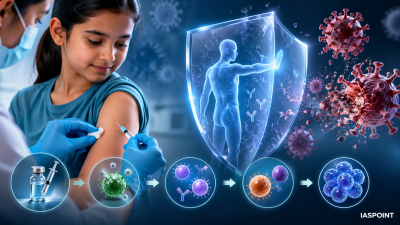
Vaccination is the process of introducing an antigenic substance (vaccine) into the body to induce immunity against a specific disease. It is based on the property of memory in the immune system. Upon exposure to a vaccine, the body generates a primary immune response and produces B and T-memory cells that recognize the pathogen quickly during subsequent natural exposures.
Mechanism of Action
- Primary Response: The vaccine introduces a weakened or inactivated pathogen. The body identifies the foreign antigen and produces antibodies and memory cells without causing the actual disease.
- Secondary Response: If the actual pathogen enters the body later, the existing memory cells recognize it immediately and produce a massive wave of antibodies (Anamnestic response), neutralizing the threat before it establishes an infection.
Types of Vaccines
Vaccines are classified based on the technology used to trigger the immune response.
| Vaccine Type | Description | Examples |
| Live-Attenuated | Uses a weakened form of the germ. Provides strong, long-lasting immunity. | BCG (Tuberculosis), OPV (Polio), MMR (Measles, Mumps, Rubella). |
| Inactivated (Killed) | Uses the killed version of the germ. Usually requires booster doses. | IPV (Injectable Polio), Covaxin, Hepatitis A. |
| Subunit/Polysaccharide | Uses specific pieces of the germ—like its protein, sugar, or capsid. | Hepatitis B, HPV, Hib. |
| Toxoid Vaccines | Uses a toxin made by the germ that causes the disease. Immunity is targeted at the toxin, not the germ. | Tetanus, Diphtheria. |
| mRNA Vaccines | Uses messenger RNA to teach cells how to make a protein that triggers an immune response. | Pfizer-BioNTech, Moderna (COVID-19). |
| Viral Vector | Uses a modified version of a different virus as a vector to deliver protection. | Covishield (AstraZeneca), Sputnik V. |
Generations of Vaccines
- First Generation: Whole-organism vaccines (Live-attenuated or Killed).
- Second Generation: Subunit vaccines or recombinant surface antigens (e.g., Hepatitis B).
- Third Generation: DNA or RNA vaccines; these are synthetic and highly stable.
Passive Immunization
In certain emergency scenarios, the body requires an immediate supply of antibodies rather than waiting for the immune system to produce them.
- Antitoxins: Preparations containing antibodies to a toxin (e.g., Tetanus antitoxin).
- Anti-venom: Pre-formed antibodies against snake venom are injected directly into the patient. This is a form of artificial passive immunity.
Recombinant DNA Technology in Vaccination
Modern biotechnology has revolutionized vaccine production by allowing the cloning of genes for antigenic polypeptides in bacteria or yeast.
- Scalability: Enables large-scale production (e.g., Yeast is used for the Hepatitis B vaccine).
- Safety: Since only a part of the pathogen is used, there is no risk of the vaccine causing the disease.
Important Facts for UPSC Prelims
- Universal Immunization Programme (UIP): Launched in 1985, it is one of the largest health programs in the world. It provides free vaccines against several diseases including Polio, Measles, and Rubella.
- Mission Indradhanush: Launched in 2014 to strengthen and re-energize the program and achieve full immunization coverage for all children and pregnant women.
- Adjuvants: Substances added to vaccines to enhance the body’s immune response to an antigen.
- Cold Chain: A system of transporting and storing vaccines within the recommended temperature range (usually 2°C to 8°C) from the point of manufacture to the point of administration. Failure in the cold chain renders vaccines ineffective.
The Concept of Herd Immunity
Herd immunity occurs when a large portion of a community becomes immune to a disease (through vaccination or prior illness), making the spread of disease from person to person unlikely. This protects individuals who cannot be vaccinated, such as newborns or those with compromised immune systems.
Last Modified: April 23, 2026