

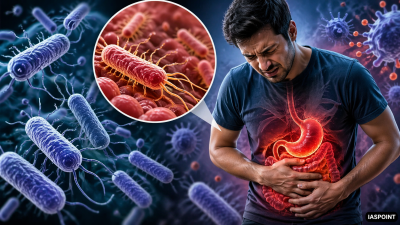
Bacterial diseases are caused by unicellular prokaryotic microorganisms. While many bacteria are beneficial to the human gut and environment, pathogenic bacteria cause disease by secreting toxins, damaging tissues, or triggering extreme immune responses.
Key Bacterial Diseases and Pathogens
Respiratory Bacterial Infections
These diseases primarily target the lungs and upper respiratory tract, often spreading through airborne droplets.
- Tuberculosis (TB): Caused by Mycobacterium tuberculosis. It primarily affects the lungs but can spread to the spine, brain, and kidneys. Diagnostic tests include the Mantoux tuberculin skin test and Sputum Smear Microscopy.
- Pneumonia: Caused by Streptococcus pneumoniae or Haemophilus influenzae. It leads to inflammation of the alveoli (air sacs) in the lungs, which fill with fluid.
- Diphtheria: Caused by Corynebacterium diphtheriae. It creates a thick gray membrane in the throat, making breathing difficult. It is covered under India’s Universal Immunization Programme (UIP).
- Pertussis (Whooping Cough): Caused by Bordetella pertussis. It is characterized by severe hacking cough followed by a high-pitched intake of breath.
Enteric (Gastrointestinal) Bacterial Infections
These are usually transmitted via the fecal-oral route through contaminated food and water.
- Typhoid Fever: Caused by Salmonella typhi. It resides in the small intestine and migrates into the blood. The Widal Test is the standard diagnostic tool for Typhoid.
- Cholera: Caused by Vibrio cholerae. It produces a toxin in the small intestine that causes rapid dehydration and “rice-water” stools.
- Dysentery (Bacillary): Caused by Shigella species. It causes inflammation of the colon leading to bloody diarrhea.
Other Significant Bacterial Diseases
- Tetanus (Lockjaw): Caused by Clostridium tetani. The bacteria enter through deep cuts or burns. It affects the nervous system, leading to muscle stiffness and spasms.
- Leprosy (Hansen’s Disease): Caused by Mycobacterium leprae. It affects the skin, peripheral nerves, and mucosal surfaces of the upper respiratory tract. India has achieved the goal of elimination at the national level (defined as <1 case per 10,000 population), but localized endemicity remains.
- Plague: Caused by Yersinia pestis. It is a zoonotic disease typically transmitted by the bite of an infected flea (Xenopsylla cheopis) carried by rodents.
- Anthrax: Caused by Bacillus anthracis. It is primarily a disease of herbivores but can infect humans through skin contact, inhalation, or ingestion of contaminated meat.
Summary of Bacterial Diseases: Agent and Impact
| Disease | Causative Bacterium | Primary Organ/System Affected |
| Syphilis | Treponema pallidum | Reproductive System / Skin |
| Gonorrhoea | Neisseria gonorrhoeae | Urino-genital tract |
| Meningitis | Neisseria meningitidis | Meninges (Brain/Spinal Cord lining) |
| Bubonic Plague | Yersinia pestis | Lymph nodes (Buboes) |
| Botulism | Clostridium botulinum | Nervous system (via Food Poisoning) |
Antimicrobial Resistance (AMR)
AMR occurs when bacteria evolve to withstand the effects of antibiotics that once killed them. This is a major focus area for UPSC.
- Causes: Overuse of antibiotics in humans and livestock, incomplete courses of treatment, and poor sanitation.
- MD-TB and XDR-TB: Multi-Drug Resistant TB (resistant to Isoniazid and Rifampicin) and Extensively Drug-Resistant TB are critical threats to public health in India.
- Red Line Campaign: An initiative by the Government of India to discourage the over-the-counter sale of antibiotics; indicated by a vertical red line on antibiotic packaging.
Important Facts and Trivia for Prelims
- Antibiotics: Alexander Fleming discovered the first antibiotic, Penicillin, from the mold Penicillium notatum. Antibiotics are effective against bacteria but not against viruses.
- Gram Staining: A method used to classify bacteria into two groups: Gram-positive (thick peptidoglycan layer) and Gram-negative (thin layer, often more resistant to antibiotics).
- BCG Vaccine: The Bacillus Calmette-Guérin vaccine is primarily used against Tuberculosis.
- DPT Vaccine: A triple vaccine that protects against Diphtheria, Pertussis, and Tetanus.
Government Missions and Global Targets
- National Leprosy Eradication Programme (NLEP): A centrally sponsored scheme under the National Health Mission.
- Stop TB Partnership: A global initiative to eliminate TB. India’s goal is elimination by 2025.
- One Health Approach: Integrating human, animal, and environmental health to combat zoonotic bacterial threats like Anthrax and Brucellosis.