

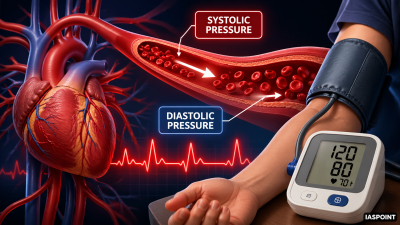
Blood Pressure (BP) is the lateral pressure exerted by the flowing blood on the walls of the arteries. Since the heart pumps blood rhythmically, the pressure in the arteries varies during the different phases of the cardiac cycle.
- Systolic Pressure: The maximum pressure in the arteries during ventricular systole (contraction). It represents the force when the heart pushes blood into the aorta.
- Diastolic Pressure: The minimum pressure in the arteries during ventricular diastole (relaxation). It represents the “resting” pressure between heartbeats.
Measurement of Blood Pressure
Blood pressure is measured using an instrument called a Sphygmomanometer. It is typically measured in the Brachial Artery of the upper arm and expressed in millimeters of mercury (mmHg).
- Standard Reading: In a healthy adult, the normal blood pressure is approximately 120/80 mmHg.
- Numerator (120): Represents the Systolic pressure.
- Denominator (80): Represents the Diastolic pressure.
Factors Affecting Blood Pressure
Several physiological and lifestyle factors influence BP levels:
- Cardiac Output: Higher volume of blood pumped per minute increases BP.
- Peripheral Resistance: Narrowing of blood vessels (vasoconstriction) increases resistance and BP.
- Blood Volume: Loss of blood (hemorrhage) decreases BP, while excess salt intake (water retention) increases it.
- Viscosity: Thicker blood (high RBC count) increases the effort needed to pump, raising BP.
- Elasticity of Arteries: Hardening of arteries (arteriosclerosis) leads to higher systolic pressure.
Clinical Disorders of Blood Pressure
| Condition | Pressure Range | Implications |
| Normal | 120/80 mmHg | Optimal circulatory health. |
| Hypertension | ≥ 140/90 mmHg | Chronic high BP; can lead to heart disease, stroke, and kidney damage. |
| Hypotension | ≤ 90/60 mmHg | Low BP; may cause dizziness, fainting, or inadequate oxygen delivery to the brain. |
Regulation of Blood Pressure
The body regulates BP through two primary mechanisms:
- Nervous Regulation: The Medulla Oblongata in the brain contains the cardiovascular center. Baroreceptors (pressure sensors) in the carotid sinus and aortic arch detect pressure changes and signal the brain to adjust heart rate or vessel diameter.
- Hormonal Regulation (RAAS Pathway): When BP drops, the kidneys release Renin, which leads to the production of Angiotensin II (a potent vasoconstrictor) and Aldosterone (which increases salt and water retention).
Key Terms and Trivia for Prelims
- Pulse Pressure: The difference between systolic and diastolic pressure (120 – 80 = 40 mmHg).
- Mean Arterial Pressure (MAP): The average pressure in a patient’s arteries during one cardiac cycle; it is considered a better indicator of perfusion to vital organs.
- Silent Killer: Hypertension is often termed the “silent killer” because it frequently shows no obvious symptoms until significant organ damage occurs.
- Adrenaline: Secreted by the adrenal medulla, this hormone increases heart rate and blood pressure during “fight or flight” situations.
- Vasodilation: The widening of blood vessels, which lowers peripheral resistance and decreases blood pressure.