

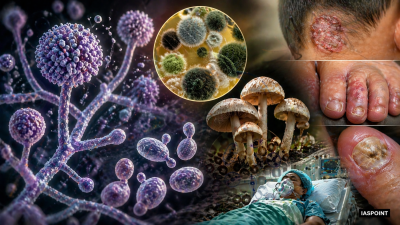
Fungi are eukaryotic organisms that include yeasts, molds, and mushrooms. While most fungi are saprophytic (living on dead matter), some are parasitic and cause infections known as Mycoses. Fungal diseases in humans are typically superficial, affecting the skin, hair, and nails, but can become systemic and life-threatening in immunocompromised individuals.
Classification of Human Fungal Diseases
Fungal infections are categorized based on the depth of tissue penetration and the site of infection.
| Disease Type | Common Name / Examples | Causative Agents | Affected Areas |
| Superficial | Tinea / Ringworm | Trichophyton, Microsporum | Skin, Nails, Scalp |
| Subcutaneous | Mycetoma | Madurella species | Deep skin layers, Bone |
| Opportunistic | Candidiasis, Mucormycosis | Candida albicans, Rhizopus | Mucous membranes, Blood |
| Systemic | Histoplasmosis | Histoplasma capsulatum | Lungs, Internal organs |
Superficial Mycoses: Ringworm and Athlete’s Foot
Despite the name, Ringworm is caused by fungi, not worms. These fungi are collectively known as Dermatophytes.
Ringworm (Tinea)
- Causative Genera: Trichophyton, Microsporum, and Epidermophyton.
- Symptoms: Appearance of dry, scaly lesions on various parts of the body such as the skin, nails, and scalp. These lesions are accompanied by intense itching.
- Transmission: Acquired from soil or by using towels, clothes, or even the comb of infected individuals. Heat and moisture help these fungi thrive in skin folds like the groin or between toes.
Athlete’s Foot (Tinea Pedis)
- Description: A specific form of ringworm that affects the skin between the toes. It is common in individuals whose feet become very sweaty while confined within tight-fitting shoes.
Opportunistic Fungal Infections
These infections occur primarily when the host’s immune system is weakened (e.g., due to HIV/AIDS, uncontrolled diabetes, or prolonged steroid use).
Mucormycosis (Black Fungus)
- Causative Agent: Mucormycetes (molds found in soil, plants, manure, and decaying fruits/vegetables).
- Significance: It gained prominence in India during the COVID-19 pandemic. It affects the sinuses, brain, and lungs.
- Key Risk Factors: Uncontrolled diabetes mellitus and immunosuppression.
Candidiasis (Yeast Infection)
- Causative Agent: Candida albicans.
- Manifestation: Often presents as “Oral Thrush” (white patches in the mouth) or vaginal infections. Candida is a part of the normal human flora but becomes pathogenic when the microbial balance is disturbed.
Aspergillosis
- Causative Agent: Aspergillus species.
- Impact: Primarily a respiratory disease caused by inhaling fungal spores. It can lead to “fungal balls” in the lungs.
Fungal Diseases and Public Health
Fungal infections are often neglected compared to bacterial or viral diseases, yet they pose a significant threat to global health security.
Antifungal Resistance
- Just like bacteria, fungi are developing resistance to standard medications (e.g., Fluconazole).
- Candida auris: An emerging multidrug-resistant fungus that represents a serious global health threat as it can cause outbreaks in healthcare settings.
Diagnostic Challenges
- Fungal infections often mimic bacterial or viral symptoms, leading to misdiagnosis.
- Diagnosis usually requires microscopic examination of skin scrapings (KOH mount), fungal cultures, or PCR-based molecular tests.
Key Facts for UPSC Prelims
- Symbiotic Fungi: Not all fungi are harmful; Lichens are a symbiotic association between fungi and algae, used as bio-indicators of air pollution (SO2 levels).
- Mycorrhiza: A symbiotic association between fungi and the roots of higher plants, which helps in phosphorus absorption.
- Mycotoxins: Some fungi produce toxins in food; for example, Aflatoxins (produced by Aspergillus flavus) contaminate stored grains and groundnuts and are carcinogenic to the liver.
- Ergotism: Caused by consuming rye or cereals infected with Claviceps purpurea, leading to gangrene or hallucinations.
Comparison: Fungal vs. Bacterial Diseases
- Cell Type: Fungi are Eukaryotic (have a nucleus); Bacteria are Prokaryotic.
- Cell Wall: Fungal cell walls are composed of Chitin; bacterial cell walls are made of Peptidoglycan.
- Treatment: Antibiotics (like Penicillin) are ineffective against fungi. Treatment requires antifungals which target the fungal cell membrane component called Ergosterol.